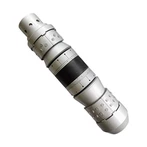
The wellhead is the critical surface termination of a wellbore. It comprises several key components-namely the casing head, tubing head, and Christmas tree-that work together to suspend downhole strings, seal annular spaces, and control production. A thorough understanding of this equipment is essential for ensuring safe and efficient oil and gas operations.
A comprehensive technical overview from the China International Pipeline Conference provides a detailed breakdown of these wellhead components, their functions, classifications, and sealing mechanisms.
Casing Head System
The casing head forms the foundation of the wellhead. It is a spool or housing attached to the top of the surface casing string. Its primary roles are to support the weight of subsequent casing strings (intermediate and production casing) via casing hangers and to seal the annular spaces between these casing strings.
- Key Functions of the Casing Head:
- Suspension: Supports the weight of all inner casing strings through casing hangers.
- Support: Provides a base for mounting blowout preventers (BOPs) during drilling and the tubing head and tree during production.
- Sealing: Provides a pressure-tight seal between the different casing annuli.
- Access: Offers side outlets (ports) for various purposes, such as:
1.Monitoring pressure in the casing annuli.
2.Pumping fluids (e.g., kill mud, cement) into the annulus.
3.Injecting corrosion inhibitors or performing special operations like squeeze cementing.
Classification of Casing Heads:
Casing heads are classified based on several parameters:
1.By Number of Casing Strings Suspended:
- Single: For shallow, low-pressure wells.
- Double: The most common type, used for wells with intermediate and production casing.
- Triple: Used in deep, high-pressure wells or exploration wells requiring multiple casing strings.
2.By Hanger Type:
- Slip (or Slip-and-Seal) Type: Uses segmented slips to grip and hang the casing. Common for surface and intermediate strings.
- Mandrel (or Threaded) Type: The casing is threaded directly into the hanger. Provides a robust, reliable seal and is often used for production casing strings.
- Welded Type: The hanger is welded directly to the casing.
3.By Body Connection: Flanged, Clamp (hub), or Threaded.
- Casing Hangers:
- The hanger is the component that actually supports the casing string within the casing head.
- Mandrel Hangers: The casing is threaded onto the hanger. They provide a positive stop and an excellent metal-to-metal seal path. They are commonly used for production casing where a reliable seal is paramount.
- Slip Hangers: The hanger consists of slips that wedge between the casing head body and the casing, gripping it as weight is set down. They are quick to install and are often used for surface and intermediate casing.
- Sealing Mechanisms: Seals between the hanger and the wellhead body are critical.
1.Rubber Seals (e.g., BT seals): Energized by injecting grease under pressure to form a seal. Often include test ports to verify seal integrity.
2.Metal-to-Metal Seals: Provide the highest integrity and reliability, especially in high-pressure, high-temperature (HPHT) wells. They rely on precise dimensions and interference fits to create a seal when energized mechanically or by weight.
Tubing Head System
The tubing head is installed on top of the uppermost casing head. Its main functions are:
- Suspend the Tubing String: It houses the tubing hanger, which supports the entire production tubing string and any downhole equipment.
- Seal the Tubing-Casing Annulus: It provides the pressure-tight seal between the tubing and the production casing.
- Transition Component: It serves as the connecting piece between the casing head below and the Christmas tree above.
- Provide Side Access: The tubing head spool has side outlets (usually flanged) that allow access to the tubing-casing annulus for operations like circulation, kill, or monitoring annulus pressure.
Key Components:
- Tubing Head Spool: The main body.
- Tubing Hanger: The device that lands in the spool to support the tubing. For offshore wells with subsurface safety valves (SSSV), the hanger is complex, featuring passages for hydraulic control lines and electrical cables (for ESPs), which must be reliably sealed.
- Lockdown Screws: Used to lock the tubing hanger in place, preventing upward movement from high pressures or thermal expansion.
Christmas Tree
The Christmas tree is the final assembly of valves, spools, and fittings installed on top of the tubing head. It is the primary control point for the well, managing production, providing access for well interventions, and enabling shut-in.
Primary Functions:
- Control Production: Regulates and directs the flow of hydrocarbons from the well.
- Provide Shut-in Capability: Master valves and wing valves can isolate the well.
- Allow Access: Provides a conduit for well intervention operations like wireline, coiled tubing, or slickline.
- Monitor Well: Ports for pressure and temperature gauges.
- Protect the Environment: Acts as the final barrier against uncontrolled release.
Classification:
1.By Configuration:
- Conventional (or Modular): Assembled from individual flanged valves and fittings. Common on land.
- Integral (or Block): Several valves (e.g., master valve, wing valve, swab valve) are combined into a single forged block. This reduces size, weight, and potential leak paths, making it ideal for offshore platforms and subsea applications.
2.By Number of Tubing Strings:
- Single Completion Tree: For wells with a single tubing string.
- Dual Completion Tree: Larger and more complex, used for wells where two separate tubing strings produce from two different zones independently. Requires a dual tubing hanger.
- Triple Completion Tree: An even more complex assembly for specialized applications involving three separate production strings.
3.By Application: Standard trees for oil or gas producers, water or gas injectors, and artificial lift systems (ESP, gas lift, etc.).
Key Components of a Christmas Tree:
- Master Valve: The primary isolation valve, closest to the tubing head. Usually, there are two (upper and lower master valves) for redundancy.
- Wing Valve (or Flow Wing Valve): The valve on the side outlet that controls flow to the production line.
- Swab Valve: The vertical valve at the very top, used during wireline intervention operations.
- Choke: A device used to control the flow rate by creating a pressure drop. It manages the production rate by adjusting the flow area. Chokes can be fixed (with interchangeable beans of specific diameters) or adjustable (variable orifice).
- Check Valve (or Non-Return Valve): Often installed downstream of the choke to prevent reverse flow from the production line back into the well.
- Pressure Gauges: To monitor tubing pressure (upstream of the master valve) and casing pressure (from the tubing head side outlet).
The wellhead assembly-from the foundational casing head and its hangers, through the tubing head, to the controlling Christmas tree-is a sophisticated engineered system. Each component is designed to perform specific, critical functions related to weight suspension, pressure containment, and flow control. A thorough understanding of these components, their sealing mechanisms, and their operational roles is fundamental for anyone involved in drilling, completion, production, or well intervention, as it ensures the safety, integrity, and productivity of the well throughout its entire lifecycle. For more detailed information , please don't hesitate to contact Vigor team for more detailed product information.