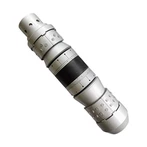
Logging operations, while essential for formation evaluation, are not without risk. Downhole tools and cables can become stuck, damaged, or even lost, leading to significant non-productive time and costly fishing jobs. A practical guide from industry source "Drilling Engineering Technology & Supervision" outlines the primary causes of these logging accidents and details the preventive measures and operational protocols necessary to mitigate them.
Analysis of Common Logging Accident Causes
Logging accidents, typically involving stuck tools or cables, can arise from a combination of borehole conditions, fluid properties, and operational errors.
1. Borehole and Mechanical Issues
- Damaged Casing: Wear from prolonged drilling and tripping can create longitudinal splits or sharp edges at the casing shoe, where tools can hang up.
- Irregular Open Hole: Severe washouts, ledges, or key seats in deviated wells can obstruct the passage of logging tools both while running in and pulling out.
- Borehole Instability: Formation caving or sloughing, especially in unstable shales or unconsolidated sands occurring during the logging run, can bury the tool string.
2. Drilling Fluid Problems
- Poor Solids Transport: If the mud's gel strength or viscosity is too low, it cannot effectively suspend and carry out drill cuttings or cavings. These solids can settle and form bridges ("sand bridges") that block the borehole.
- Differential Sticking: High mud solids, thick filter cake, and overbalance pressure can lead to the cable becoming embedded in the filter cake and stuck against the borehole wall.
3. Operational and Human Error
- Surface Mistakes: These include the rotary table inadvertently rotating and shearing the cable, the winch operator pulling the tool string into the top sheave with excessive force, or poorly secured pulleys leading to cable detachment.
- Mismanaging Stuck Tools: Continuing to run in hole after an obstruction is hit can cause the cable to coil and become irretrievably jammed. Exceeding the cable's tensile limit while attempting to pull free can part the cable, leaving the tool string in the hole.
- Well Control Events: A sudden kick or blowout during logging may force an emergency shutdown where the cable is cut and dropped to seal the well, resulting in lost tools.
Essential Preventive Measures
Preventing logging accidents requires meticulous planning and coordination between the drilling and logging teams, starting long before the logging unit arrives on site.
Pre-Logging Preparation: The Drilling Phase
- Maintain Wellbore Quality: Control dogleg severity and minimize washouts during drilling to create a suitable environment for later logging.
- Optimize Mud Properties: Use a mud system compatible with the formations to prevent sloughing. Ensure the mud has adequate carrying capacity and condition it properly before logging.
- Protect Casing: Use rubber protectors on drill pipe to minimize casing wear, especially on long or deep wells. Ensure the casing shoe is beveled (e.g., a 45° chamfer) to prevent tools from hanging up.
- Confirm Borehole Stability: Before logging, circulate the hole thoroughly to clean out cuttings and cavings. Consider a short trip (wiper trip) over the bottom 500 meters to confirm the hole is clear.
During Logging Operations: Communication and Vigilance
- Pre-Job Information Sharing: The drilling crew must provide the logging crew with a complete well status report, including total depth, casing shoe depth, known tight spots or ledges, mud properties, and any other relevant history.
- Manage Time and Hole Stability: Avoid excessively long logging runs. If all passes cannot be completed within a reasonable timeframe (e.g., 24 hours), consider making a conditioning trip to re-circulate mud and ensure hole stability before resuming.
- Maintain Hydrostatic Pressure: Continuously pump mud into the annulus as the cable is pulled out to compensate for the steel displacement and maintain bottom-hole pressure, preventing potential inflow or borehole collapse.
- Monitor Tension Constantly: The winch operator must always be aware of the cable tension. If resistance is met while pulling out, work the tool string carefully with up and down motion, never exceeding the cable's safe working limit.
Equipment and Procedures
- Use Depth Markers: Place at least two highly visible markers on the cable near the tool head to provide ample warning as the tools approach the surface, preventing over-pulling.
- Design for Safety: The connection between the cable and the tool string should be the mechanical weak point. It should be designed to part at a tensile load below the cable's breaking strength, ideally allowing the cable to be retrieved.
- Assess Risk Before Running: If a section is known to be tight, a cautious approach is needed. If tools encounter consistent resistance both down and up, it is often safer to pull out and condition the hole again rather than forcing the tools through.
- Secure the Work Area: Ensure all surface equipment (pulleys, sheaves) is firmly anchored. Lock the rotary table and ensure all non-essential activities on the rig floor are halted during the logging run.
- Maintain Continuous Watch: Both the logging operator and a designated member of the drilling crew should remain on the rig floor, maintaining constant communication throughout the operation.
Handling Stuck Tools
If an accident does occur, common fishing methods include:
- Concentric (or "Through-Tubing") Fishing: A method where the cable is cut at the surface, and a special fishing tool is run over the cable and screwed onto the stuck tool string to retrieve it.
- Overshot Fishing Tools: For lost tools (without cable), various tools like bowl-type overshots with spiral or basket grapples are used to catch and retrieve the fish based on its outer dimensions.
For more detailed information, please don't hesitate to contact Vigor team for more detailed product information.