After a well is drilled to total depth (TD), evaluated, cased, and cemented, engineers move to the critical phase of well completion. This process involves installing equipment designed to optimize production, whether for a complex or basic well. The driving force behind every completion strategy is to recover as much oil from the reservoir as possible at a reasonable cost.
From Formation Evaluation to Casing and Cementing
The decision to complete a well for production or to plug and abandon it as a dry hole largely depends on formation evaluation (FE) using open-hole logs. Once FE log analysis indicates potential commercial oil or gas reservoirs, steel casing is run into the wellbore and cement is pumped behind it. Subsequently, the completion engineer displaces the drilling fluid with a completion fluid – typically fresh water or a formulated brine that is non-reactive with the formation.
The primary goal of cementing is to prevent communication between production zones. Engineers run a cement bond log (CBL) to ensure the cement sheath between the casing and the borehole wall has no defects. If gaps exist, they perform a squeeze cementing operation by perforating the casing at appropriate depths and injecting cement.
Cement bond logs can detect poor results due to incorrect cement density, incomplete mud removal, premature gelation or hardening, and excessive fluid loss from the cement slurry.
Perforating and Cleanup
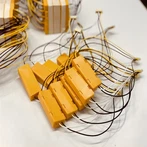
Engineers then perforate the casing and cement sheath into zones identified by FE analysis as favorable for hydrocarbon flow. Perforations are holes made through the casing, typically using shaped charges fired from a perforating gun conveyed by wireline, tubing, or coiled tubing. These operations often leave debris that can impede fluid flow. To mitigate this, engineers may pump a weak acid solution to dissolve the debris.
Well Testing
Depending on the level of knowledge about the formation, operators may conduct a well test. This is often performed using a drill pipe valve connected to the bottom of a work string (tubing or drill pipe). The valve is opened from surface, and well fluids flow through a separator (a surface vessel that separates oil, gas, water, and completion fluid). By measuring production rates, operators gain useful information about future well performance and reservoir characteristics.
Stimulation and Sand Control
If the formation has low permeability, engineers may create a hydraulic fracture by pumping water and sand (or other materials like slurry) at high pressure into the formation. The pressure fractures the rock, and the slurry is pumped into the new fractures. When pumping stops and the well is opened, water flows out, leaving sand (proppant) to keep fractures open, providing a high-permeability pathway for oil and gas.
In poorly consolidated formations, sand particles may migrate into the wellbore and plug perforations. To prevent this, engineers may inject chemicals to bind the sand grains together or employ sand control techniques – including various sand screens and gravel pack systems – that block sand movement while allowing fluid to pass freely.
Single-Zone vs. Multi-Zone Completions
Single-zone completion: A packer seals inside the production casing, hydraulically isolating the tubing string from the annulus above the packer. The annulus contains completion fluid with corrosion inhibitors.
Multi-zone completion: Uses at least two packers to separate production zones. Fluids from all zones can be commingled, or upper zones can be shut off via sliding sleeves until operators determine that commingling is optimal.
Downhole Hardware (Jewelry) and Tubing
Production tubing is the conduit between the producing zone and the surface. Its strength, material, weight per unit length, and internal diameter are determined by expected production rates, fluid type, pressure, depth, temperature, and corrosivity. Seals (packers) isolate production zones within the casing-tubing annulus.
For wells with multiple producing zones, fluids enter the well between upper and lower packers and pass through a sliding sleeve (a valve opened or closed mechanically using wireline or coiled tubing) into the tubing.
Safety Valves and Intelligent Completions
Almost all completions include a subsurface safety valve installed within the tubing a few hundred feet below the surface. It automatically shuts the well if the surface control system is compromised and can be manually closed to add a barrier between the well and the atmosphere.
Where well intervention is costly or problematic, intelligent completions (ICs) are used. ICs include permanent, real-time remote pressure and temperature sensors and remotely operated flow control valves at each formation.
Artificial Lift and Injection
When reservoir pressure is insufficient to lift fluids to surface, wells must be equipped with pumps or gas lift systems:
- Electric submersible pumps (ESPs): Use rotors and stators to pump liquids to surface.
- Rod pumps (sucker rod pumps): Use reciprocating vertical motion to lift liquids.
- Gas lift: Injects gas into the casing annulus; gas enters the tubing below the liquid column, reducing fluid density and allowing buoyancy to lift fluids. Injection volume can be regulated by valves distributed along the tubing.
In low-pressure reservoirs, water or gas may be injected through one well to push oil through the formation to a producing well. Producing wells may be equipped with inflow control devices (ICDs) to manage the volume and location of fluid inflow.
Engineers consider multiple factors when designing a completion: type and volume of fluids to be produced, downhole and surface temperatures, production zone depth, production rate, well location, and surrounding environment. Solutions range from basic open-hole completions (possibly without a production casing string) to extremely complex multilateral wells (multiple horizontal or high-angle wellbores drilled from a single main wellbore, each with its own completion).
Essential elements for optimal completion include reliable finite element analysis, data from offset wells, and flexibility. With reliable knowledge of the target zone and how nearby wells have drilled and produced these formations, engineers can often plan basic completions before drilling, while recognizing that not every well will perform identically.
For more detailed information, please don't hesitate to contact Vigor team for more detailed product information.