




Hey there! As an OCTG (Oil Country Tubular Goods) supplier, I've seen firsthand how crucial it is for OCTG to play nice with other downhole tools. In this blog, I'm gonna break down how OCTG interacts with these tools and why it matters in the oil and gas industry.
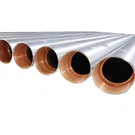
Let's start with the basics. OCTG includes stuff like Casing, tubing, and drill pipes. These are the backbone of any oil or gas well, providing structural support and a pathway for the extraction of hydrocarbons. But they don't work alone. They need to team up with a whole bunch of other downhole tools to get the job done.
One of the most common interactions is between OCTG and drilling tools. When you're drilling a well, you're using a drill bit at the end of a drill string, which is made up of drill pipes (a type of OCTG). The drill pipes need to be strong enough to transfer the torque and weight from the surface to the drill bit. If the drill pipes aren't up to the task, they can twist, bend, or even break, which can be a major headache.


The connection between the drill pipes is also super important. That's where Premium Connection comes in. These connections are designed to be more reliable and leak-resistant than standard connections. They ensure that the drill string stays intact under high pressure and torque, which is essential for efficient drilling.
Once the well is drilled, it's time to install the casing. Casing is like the protective shell of the well. It prevents the wellbore from collapsing, isolates different rock formations, and provides a barrier between the well and the surrounding environment. But installing the casing isn't as simple as just dropping it down the hole. You need to use casing running tools, which are specialized downhole tools that help guide and secure the casing in place.
The casing needs to be properly centered in the wellbore to ensure that the cement can be evenly distributed around it. That's where centralizers come in. Centralizers are small devices that attach to the casing and keep it in the middle of the wellbore. They're usually made of metal or plastic and have a series of fins or blades that help create a gap between the casing and the wellbore wall.
After the casing is installed, it's time to cement it in place. Cementing is a critical step in the well construction process. It helps to seal the annulus between the casing and the wellbore, preventing fluid migration and providing additional support for the casing. Cementing tools, such as cementing heads and plugs, are used to pump the cement down the casing and displace the drilling fluid.
The interaction between the casing and the cement is also important. The casing needs to have a rough surface to allow the cement to bond properly. That's why some casings are treated with special coatings or textures to improve the cement bond.
Another important interaction is between OCTG and completion tools. Completion tools are used to prepare the well for production. They include things like packers, valves, and perforating guns. Packers are used to isolate different zones in the wellbore, allowing for selective production or injection. Valves are used to control the flow of fluids in and out of the well. Perforating guns are used to create holes in the casing and the surrounding rock formation, allowing the hydrocarbons to flow into the wellbore.
The D10 Coupling is often used in completion operations. It provides a reliable connection between different sections of tubing or casing, ensuring that the completion tools can be installed and operated effectively.
The interaction between OCTG and downhole tools also affects the overall efficiency and safety of the well. If the OCTG and the downhole tools don't work together properly, it can lead to problems such as leaks, equipment failures, and even wellbore instability. That's why it's so important to choose high-quality OCTG and downhole tools that are designed to work together.
As an OCTG supplier, I understand the importance of providing products that are compatible with a wide range of downhole tools. That's why we offer a variety of OCTG products, including different types of casing, tubing, and connections. We also work closely with our customers to understand their specific needs and provide them with the best solutions.
If you're in the market for OCTG or have any questions about how it interacts with other downhole tools, I'd love to hear from you. Whether you're a small independent operator or a large multinational company, we can help you find the right products for your needs. Just reach out to us, and we'll be happy to start a conversation about your project.
In conclusion, the interaction between OCTG and other downhole tools is a complex but essential part of the oil and gas industry. By understanding how these components work together, we can ensure the efficient and safe operation of oil and gas wells. So, if you're looking for high-quality OCTG products that are designed to play nice with other downhole tools, don't hesitate to get in touch.
References
- "Oil and Gas Well Construction Handbook" by John Doe
- "Downhole Tools and Equipment" by Jane Smith
- Industry standards and guidelines related to OCTG and downhole tools