


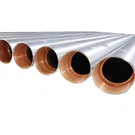


Hey there! As a supplier of 7" casing, I've seen firsthand how the chemical composition can have a huge impact on the performance of these casings. In this blog, I'm gonna break down the key elements in the chemical makeup of 7" casing and explain how they affect its performance.
First off, let's talk about carbon. Carbon is one of the most important elements in steel, and it plays a crucial role in determining the strength and hardness of 7" casing. Generally speaking, the higher the carbon content, the stronger and harder the casing will be. But there's a trade - off. High - carbon steel can be more brittle, which means it's more likely to crack under stress. So, finding the right balance of carbon is super important. A typical 7" casing might have a carbon content ranging from 0.2% to 0.4%. This level gives the casing a good combination of strength and toughness, making it suitable for a variety of downhole applications.
Next up is manganese. Manganese is added to the steel to improve its hardenability and strength. It also helps to reduce the brittleness caused by sulfur, another element that can be present in the steel. Manganese reacts with sulfur to form manganese sulfide, which is less harmful to the steel's properties. A proper amount of manganese in the 7" casing can enhance its ability to withstand high - pressure environments down in the wellbore. Usually, the manganese content in 7" casing is around 0.6% to 1.6%.
Now, let's consider chromium. Chromium is well - known for its corrosion - resistant properties. When added to the chemical composition of 7" casing, it forms a thin, protective oxide layer on the surface of the steel. This layer acts as a barrier, preventing oxygen and moisture from reaching the underlying metal and causing corrosion. In environments where the wellbore fluid is corrosive, such as in some oil and gas wells, a 7" casing with a higher chromium content can last much longer. Chromium content can vary, but in corrosion - resistant 7" casings, it might be around 12% or more.
Nickel is another element that can be added to improve the performance of 7" casing. Nickel enhances the toughness and ductility of the steel, especially at low temperatures. This is really important in areas where the wellbore temperature can drop significantly. It also helps to improve the casing's resistance to corrosion and oxidation. A 7" casing with a small amount of nickel, say around 0.5% to 3%, can have better overall performance in challenging downhole conditions.
Molybdenum is often used in combination with other elements to further enhance the strength and hardenability of 7" casing. It can also improve the casing's resistance to high - temperature creep, which is the gradual deformation of the material under long - term stress at high temperatures. In high - pressure, high - temperature wells, a 7" casing with molybdenum in its chemical composition can maintain its shape and integrity better. Molybdenum content is typically in the range of 0.15% to 1%.
The presence of sulfur and phosphorus in the chemical composition of 7" casing is generally something we want to keep to a minimum. Sulfur can make the steel brittle and reduce its weldability, while phosphorus can also contribute to brittleness and decrease the steel's impact resistance. Most 7" casings are manufactured with sulfur and phosphorus content kept below 0.035% each.
Now, how do these chemical compositions translate into real - world performance? Well, in terms of strength, a 7" casing with the right balance of carbon, manganese, and other elements can handle the high pressures exerted by the surrounding rock and fluid in the wellbore. This is crucial for preventing the casing from collapsing or deforming, which could lead to wellbore instability and production problems.


Corrosion resistance is another major factor. In oil and gas wells, the wellbore fluid can contain various corrosive substances like hydrogen sulfide, carbon dioxide, and saltwater. A 7" casing with a good amount of chromium, nickel, and other corrosion - resistant elements can withstand these harsh conditions for a longer time, reducing the need for frequent replacements and maintenance.
When it comes to weldability, a casing with low sulfur and phosphorus content and a proper amount of other elements can be easily welded. This is important during the installation process, as well - welded joints ensure the integrity of the entire casing string.
If you're in the market for high - quality 7" casing, you might also be interested in other related products. For instance, Line Pipe is often used in the transportation of oil and gas from the wellhead to the processing facilities. It also has specific chemical composition requirements to ensure its performance. And Slotted Casing is used in some wells to allow fluid to flow into the wellbore while keeping out larger particles. The chemical composition of slotted casing also affects its strength and corrosion resistance. Additionally, Premium Connection is an important part of the casing system, and its performance can be influenced by the overall chemical makeup of the casing.
In conclusion, the chemical composition of 7" casing is a complex but critical factor that affects its performance in various ways. As a supplier, I'm always working to ensure that our 7" casings have the optimal chemical composition to meet the diverse needs of our customers. Whether you're dealing with high - pressure, high - temperature wells or corrosive environments, the right chemical makeup can make all the difference.
If you're looking for reliable 7" casing for your oil and gas projects, don't hesitate to reach out. We're here to provide you with the best products and solutions tailored to your specific requirements. Let's start a conversation about how we can meet your 7" casing needs and ensure the success of your operations.
References
- ASM Handbook Volume 1: Properties and Selection: Irons, Steels, and High - Performance Alloys
- API Specification 5CT: Specification for Casing and Tubing