


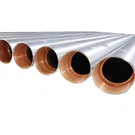


As a seasoned supplier in the OCTG (Oil Country Tubular Goods) industry, I've witnessed firsthand the diverse needs and requirements of the oil and gas sector. One of the most common inquiries we receive is about the typical sizes of OCTG, which play a crucial role in ensuring the efficiency and safety of drilling operations. In this blog, I'll delve into the common sizes of OCTG and their applications, shedding light on how these sizes are chosen to meet the unique demands of various projects.
Understanding OCTG and Its Importance
Before diving into the specifics of OCTG sizes, let's briefly understand what OCTG is and why it's so important in the oil and gas industry. OCTG refers to a specific category of steel pipes used in oil and gas extraction, including casing, tubing, and drill pipes. These pipes are essential for the proper functioning of oil and gas wells, providing structural support, maintaining well integrity, and facilitating the flow of hydrocarbons from the reservoir to the surface.
Common Sizes of Casing
Casing is the large-diameter pipe that is inserted into the wellbore and cemented in place to support the well and prevent the collapse of the surrounding rock formation. It also isolates different geological formations and prevents the migration of fluids between them. The common sizes of casing range from 4 1/2 inches to 20 inches in outside diameter (OD), with wall thicknesses varying depending on the well depth, pressure, and other operating conditions.
- 4 1/2 inches: This is one of the smallest casing sizes commonly used in oil and gas wells. It's typically used in shallow wells or as an intermediate casing string in deeper wells. The thinner wall thickness of 4 1/2-inch casing makes it lightweight and easy to handle, but it may not be suitable for high-pressure applications.
- 5 inches: Another popular casing size, 5-inch casing offers a good balance between strength and weight. It's often used in medium-depth wells and can withstand moderate pressure and temperature conditions.
- 7 inches: A robust casing size, 7-inch casing is commonly used in deeper wells and high-pressure environments. Its thicker wall provides greater strength and durability, making it suitable for challenging drilling conditions.
- 9 5/8 inches: This larger casing size is typically used as the surface casing or the conductor casing in a well. It provides the initial support and protection for the wellbore and helps to prevent contamination of the surrounding groundwater.
- 13 3/8 inches and 20 inches: These are the largest casing sizes commonly used in oil and gas wells. They are typically used as the surface casing or the conductor casing in large-diameter wells and provide the necessary structural support for the entire wellbore.
Common Sizes of Tubing
Tubing is the smaller-diameter pipe that is inserted inside the casing and used to transport the extracted hydrocarbons from the reservoir to the surface. It's designed to withstand the high pressures and temperatures associated with oil and gas production and must be corrosion-resistant to ensure long-term performance. The common sizes of tubing range from 1 1/4 inches to 4 1/2 inches in OD, with wall thicknesses varying depending on the well conditions and production requirements.
- 1 1/4 inches and 1 3/8 inches: These are the smallest tubing sizes commonly used in oil and gas wells. They are typically used in low-production wells or in applications where space is limited, such as in offshore platforms.
- 2 3/8 inches and 2 7/8 inches: Popular tubing sizes, 2 3/8-inch and 2 7/8-inch tubing are commonly used in medium-production wells. They offer a good balance between flow capacity and strength and can withstand moderate pressure and temperature conditions.
- 3 1/2 inches and 4 1/2 inches: These larger tubing sizes are typically used in high-production wells or in applications where high flow rates are required. They have a larger internal diameter, which allows for greater fluid flow and higher production rates.
Common Sizes of Drill Pipe
Drill pipe is the pipe used to transmit the rotational force and drilling fluid from the surface to the drill bit at the bottom of the well. It's subjected to high torsional and axial loads during drilling operations and must be strong and durable to withstand these forces. The common sizes of drill pipe range from 2 3/8 inches to 6 5/8 inches in OD, with wall thicknesses varying depending on the drilling depth and the type of drilling operation.
- 2 3/8 inches and 2 7/8 inches: These are the most common drill pipe sizes used in shallow to medium-depth wells. They are lightweight and easy to handle, making them suitable for rigs with limited lifting capacity.
- 3 1/2 inches: A popular drill pipe size, 3 1/2-inch drill pipe is commonly used in medium to deep wells. It offers a good balance between strength and weight and can withstand the higher loads associated with deeper drilling operations.
- 4 1/2 inches and 5 inches: These larger drill pipe sizes are typically used in deep wells and high-pressure drilling applications. They have a thicker wall and greater strength, which allows them to withstand the extreme conditions encountered in deep drilling.
- 6 5/8 inches: This is the largest drill pipe size commonly used in the oil and gas industry. It's typically used in ultra-deep wells and high-pressure drilling operations where the highest levels of strength and durability are required.
Choosing the Right Size of OCTG
Selecting the appropriate size of OCTG is a critical decision that can significantly impact the success of an oil and gas project. Several factors need to be considered when choosing the right size, including the well depth, pressure, temperature, production rate, and the type of drilling operation.
- Well Depth: Deeper wells generally require larger-diameter and thicker-walled OCTG to withstand the higher pressures and temperatures encountered at greater depths.
- Pressure and Temperature: High-pressure and high-temperature wells require OCTG with greater strength and corrosion resistance to ensure long-term performance.
- Production Rate: Higher production rates may require larger-diameter tubing to accommodate the increased fluid flow.
- Drilling Operation: The type of drilling operation, such as vertical, horizontal, or directional drilling, can also influence the choice of OCTG size.
Our Offerings and Quality Assurance
At [Our Company], we understand the importance of providing high-quality OCTG products that meet the specific needs of our customers. As a leading [Our Company], we offer a comprehensive range of OCTG sizes and specifications to suit a variety of oil and gas applications. Our products are manufactured to the highest industry standards and undergo rigorous quality control inspections to ensure their reliability and performance.


We also offer a variety of premium connections, such as the Premium Connection, which provide enhanced sealing and torque performance, reducing the risk of leaks and failures. In addition, we offer cold-rolled pipes, such as the Cold Rolled Pipe, which have superior surface finish and dimensional accuracy, making them ideal for critical applications.
For customers with specific requirements, we also offer special clearance couplings, such as the Special Clearance Coupling, which provide a precise fit and ease of installation, ensuring the integrity of the wellbore.
Contact Us for Your OCTG Needs
If you're in the market for high-quality OCTG products, we invite you to contact us to discuss your specific requirements. Our experienced sales team is ready to provide you with expert advice and assist you in selecting the right size and type of OCTG for your project. Whether you're a small independent operator or a large multinational corporation, we're committed to delivering the best products and services at competitive prices.
References
- American Petroleum Institute (API). (2023). API Specification 5CT - Specification for Casing and Tubing.
- American Petroleum Institute (API). (2023). API Specification 5DP - Specification for Drill Pipe.
- National Association of Corrosion Engineers (NACE). (2023). NACE MR0175/ISO 15156 - Petroleum and Natural Gas Industries - Materials for Use in H₂S-Containing Environments in Oil and Gas Production.