


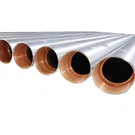


Rotary subs are essential components in the field of oil and gas drilling, playing a crucial role in ensuring the smooth operation of the drilling process. As a reputable Rotary Sub supplier, I am well - versed in the various components that make up these vital tools. In this blog, I will delve into the key components of a Rotary Sub, explaining their functions and importance.
1. Housing
The housing is the outer structure of the Rotary Sub, which provides protection and support for all the internal components. It is typically made of high - strength steel to withstand the harsh downhole conditions, including high pressure, high temperature, and abrasive drilling fluids. The housing is designed to be durable and resistant to corrosion, ensuring a long service life.
The shape and size of the housing are carefully engineered to fit into the drilling string. It has a specific thread design at both ends, which allows it to be easily connected to other drilling tools such as Drilling Stabilizer. The housing also has ports and passages for the flow of drilling fluids, which are essential for cooling the drill bit and carrying the cuttings to the surface.
2. Bearing Assembly
The bearing assembly is one of the most critical components of a Rotary Sub. It allows the inner shaft to rotate smoothly within the housing while supporting the axial and radial loads generated during drilling. There are different types of bearings used in Rotary Subs, such as roller bearings and ball bearings.
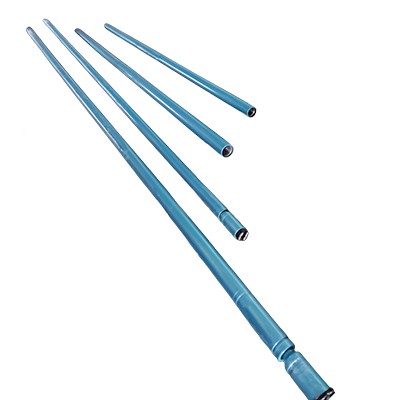

Roller bearings are commonly used because they can handle high - load applications. They consist of cylindrical rollers that are arranged between the inner and outer races. The rollers reduce friction and allow for efficient rotation. Ball bearings, on the other hand, are used in applications where high - speed rotation is required. They use spherical balls to support the load and provide smooth movement.
Proper lubrication of the bearing assembly is essential to ensure its longevity. Drilling fluids are often used as a lubricant, and the bearing assembly is designed to prevent the ingress of contaminants that could damage the bearings.
3. Shaft
The shaft is the central component of the Rotary Sub that transmits torque from the drilling rig to the drill bit. It is a long, cylindrical rod that is made of high - strength alloy steel. The shaft is precisely machined to ensure a proper fit within the bearing assembly and to transmit the torque efficiently.
The shaft has a keyway or spline at one end, which allows it to be connected to the drill string. At the other end, it may have a threaded connection for attaching the drill bit or other downhole tools. The shaft must be able to withstand the torsional and bending stresses generated during drilling, as well as the axial loads.
4. Sealing System
The sealing system in a Rotary Sub is crucial for preventing the leakage of drilling fluids and the ingress of contaminants. It consists of various seals, such as O - rings, lip seals, and mechanical seals.
O - rings are simple yet effective seals that are made of elastomeric materials. They are placed in grooves around the shaft and housing to create a tight seal. Lip seals are used to prevent the leakage of fluids along the shaft surface. They have a flexible lip that presses against the shaft, providing a dynamic seal.
Mechanical seals are more complex and are used in high - pressure and high - temperature applications. They consist of two flat surfaces that are held together by a spring or hydraulic pressure. The mechanical seals provide a reliable seal even under extreme conditions.
5. Valve System
Some Rotary Subs are equipped with a valve system, which can be used to control the flow of drilling fluids. One example of such a valve is the Multiple Activation Bypass Valve (MCBV).
The valve system can be used to divert the flow of drilling fluids to different parts of the drill string or to bypass certain sections. This can be useful in situations where it is necessary to change the drilling parameters or to clean the wellbore. The valve system is typically operated hydraulically or mechanically, and it must be reliable and easy to control.
6. Coupling
The coupling is used to connect the Rotary Sub to other components in the drilling string. It is designed to provide a secure and reliable connection that can transmit torque and axial loads. There are different types of couplings, such as threaded couplings and quick - connect couplings.
Threaded couplings are the most common type. They have a male and female thread that are designed to fit together tightly. The threads are carefully machined to ensure a proper seal and to prevent loosening during drilling. Quick - connect couplings, on the other hand, allow for rapid connection and disconnection of the Rotary Sub, which can be useful in situations where time is of the essence.
7. Sensor and Monitoring System
In modern Rotary Subs, sensor and monitoring systems are increasingly being used to provide real - time information about the operating conditions. These systems can measure parameters such as temperature, pressure, torque, and vibration.
The sensors are typically installed within the housing or on the shaft. They are connected to a data acquisition system on the surface, which can analyze the data and provide feedback to the drilling crew. This information can be used to optimize the drilling process, detect potential problems early, and prevent equipment failure.
Importance of Quality Components
Using high - quality components in Rotary Subs is of utmost importance. Inferior components can lead to premature failure, which can result in costly downtime, lost production, and even safety hazards. As a Rotary Sub supplier, we source our components from trusted manufacturers and conduct rigorous quality control tests to ensure that they meet the highest standards.
We understand that every drilling operation is unique, and we work closely with our customers to provide customized solutions that meet their specific requirements. Whether it is a high - temperature application or a high - torque drilling operation, we have the expertise and the product range to deliver the right Rotary Sub.
Contact for Procurement
If you are in the market for Rotary Subs or have any questions about the components and their functions, I encourage you to reach out to us. We have a team of experienced professionals who can provide you with detailed information and assist you in making the right choice for your drilling needs. Our commitment to quality and customer satisfaction makes us a reliable partner in the oil and gas industry.
References
- American Petroleum Institute (API). API Standards for Drilling Equipment.
- Industry research reports on downhole drilling tools.
- Technical papers from leading drilling technology conferences.