


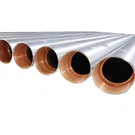


What is the pressure rating of a Pup Joint in underwater applications?
As a supplier of Pup Joints, I often encounter inquiries from clients about the pressure rating of these crucial components, especially in underwater applications. Understanding the pressure rating of a Pup Joint is essential for ensuring the safety and efficiency of underwater operations. In this blog post, I will delve into the factors that determine the pressure rating of a Pup Joint in underwater settings and why it matters.
Understanding Pup Joints
Before we discuss pressure ratings, let's briefly understand what Pup Joints are. Pup Joints are short sections of pipe that are used to connect other pipes or components in a pipeline system. They are commonly used in oil and gas exploration, underwater pipelines, and other industrial applications. Pup Joints come in various sizes and materials, and their design and construction are tailored to meet specific operational requirements.
In underwater applications, Pup Joints play a vital role in connecting different sections of pipelines, casings, or other equipment. They need to withstand the high pressures and harsh environmental conditions associated with underwater operations. This is where the pressure rating of a Pup Joint becomes crucial.
Factors Affecting the Pressure Rating of Pup Joints in Underwater Applications
Several factors influence the pressure rating of a Pup Joint in underwater applications. Let's take a closer look at these factors:
Material Quality
The material used to manufacture the Pup Joint is one of the most significant factors affecting its pressure rating. High - quality materials with excellent mechanical properties, such as high - strength steels, are commonly used in underwater Pup Joints. These materials can withstand the high pressures exerted by the surrounding water and the fluids flowing through the pipeline. For example, API 5CT - compliant steels are often used in the oil and gas industry for their reliable performance under high - pressure conditions.
Wall Thickness
The wall thickness of the Pup Joint also plays a crucial role in determining its pressure rating. A thicker wall can withstand higher pressures as it provides more resistance to deformation. Engineers carefully calculate the appropriate wall thickness based on the expected operating pressures, the diameter of the Pup Joint, and the material properties. In underwater applications, where pressures can be extremely high, Pup Joints with thicker walls are often preferred to ensure safety and reliability.
Joint Design
The design of the joint between the Pup Joint and other components is another critical factor. A well - designed joint can effectively transfer the pressure and forces between the connected parts without leakage or failure. Premium Connection technologies are often used in underwater Pup Joints to provide a secure and reliable connection. These connections are designed to withstand high pressures, torque, and bending forces, ensuring the integrity of the pipeline system.
Corrosion Resistance
Underwater environments are highly corrosive due to the presence of saltwater, oxygen, and other chemical substances. Corrosion can weaken the Pup Joint over time, reducing its pressure - bearing capacity. Therefore, Pup Joints used in underwater applications need to have excellent corrosion resistance. Coatings, such as epoxy or polyethylene coatings, are often applied to the surface of the Pup Joint to protect it from corrosion. Additionally, the use of corrosion - resistant materials, such as stainless steel or alloy steels, can enhance the longevity and pressure rating of the Pup Joint.
Calculating the Pressure Rating of Pup Joints
The pressure rating of a Pup Joint is typically calculated using industry - standard formulas and codes. These calculations take into account the factors mentioned above, such as material properties, wall thickness, and joint design. For example, the Barlow's formula is commonly used to estimate the internal pressure capacity of a cylindrical pipe:
[P=\frac{2St}{D}]


where (P) is the internal pressure, (S) is the allowable stress of the material, (t) is the wall thickness, and (D) is the outside diameter of the pipe.
However, in real - world underwater applications, additional factors need to be considered, such as external hydrostatic pressure, temperature variations, and dynamic loads. Therefore, more complex finite element analysis (FEA) and computational fluid dynamics (CFD) simulations are often used to accurately determine the pressure rating of Pup Joints in underwater settings.
Importance of Pressure Rating in Underwater Applications
The pressure rating of a Pup Joint is of utmost importance in underwater applications for several reasons:
Safety
Ensuring that the Pup Joint can withstand the expected pressures is crucial for the safety of the underwater operation. A failure of the Pup Joint due to over - pressure can lead to leaks, spills, and even explosions, posing a significant risk to personnel, the environment, and the equipment. By using Pup Joints with appropriate pressure ratings, the risk of such failures can be minimized.
Operational Efficiency
A Pup Joint with a proper pressure rating can maintain the integrity of the pipeline system, allowing for smooth and efficient fluid flow. This reduces the likelihood of downtime due to leaks or blockages, ensuring continuous operation and maximizing productivity.
Regulatory Compliance
In many industries, there are strict regulations regarding the design, installation, and operation of underwater pipelines. These regulations often specify the minimum pressure ratings for Pup Joints and other pipeline components. By using Pup Joints that meet or exceed these regulatory requirements, companies can avoid costly fines and legal issues.
Applications of Pup Joints in Underwater Settings
Pup Joints are used in a wide range of underwater applications, including:
Oil and Gas Exploration
In offshore oil and gas fields, Pup Joints are used to connect different sections of Casing and tubing. They need to withstand high pressures from the reservoir fluids as well as the external hydrostatic pressure of the seawater. The pressure rating of these Pup Joints is carefully selected to ensure the safe and efficient extraction of oil and gas.
Underwater Pipelines
Pup Joints are also used in underwater pipelines for transporting various fluids, such as oil, gas, and water. These pipelines can span long distances and operate at high pressures. The use of Pup Joints with appropriate pressure ratings is essential for maintaining the integrity of the pipeline and preventing leaks.
Subsea Equipment
In subsea equipment, such as wellheads and manifolds, Pup Joints are used to connect different components. These components are often subjected to high pressures and dynamic loads. By using Pup Joints with high - pressure ratings, the reliability and performance of the subsea equipment can be ensured.
Choosing the Right Pup Joint for Underwater Applications
When selecting a Pup Joint for underwater applications, it is essential to consider the following:
Pressure Requirements
Determine the maximum expected operating pressure, including both internal and external pressures. Choose a Pup Joint with a pressure rating that exceeds these requirements to ensure safety and reliability.
Material and Coating
Select a material with high strength and excellent corrosion resistance. Consider applying appropriate coatings to further enhance the corrosion protection of the Pup Joint.
Joint Type
Choose a joint design that is suitable for the application. Premium Connection technologies can provide a more secure and reliable connection, especially in high - pressure and high - torque applications.
Compliance
Ensure that the Pup Joint meets all relevant industry standards and regulations, such as API 5CT and ISO 13679.
Conclusion
In conclusion, the pressure rating of a Pup Joint in underwater applications is determined by several factors, including material quality, wall thickness, joint design, and corrosion resistance. Understanding these factors and accurately calculating the pressure rating is essential for ensuring the safety, efficiency, and regulatory compliance of underwater operations. As a Pup Joint supplier, we are committed to providing high - quality Pup Joints with appropriate pressure ratings for a wide range of underwater applications.
If you are in need of Pup Joints for your underwater project, we invite you to contact us for a detailed discussion about your requirements. Our team of experts can help you select the right Pup Joints to ensure the success of your operation.
References
- API 5CT, Specification for Casing and Tubing, American Petroleum Institute.
- ISO 13679, Petroleum and natural gas industries - Calculation of pressure containment capacity of tubular connections, International Organization for Standardization.
- ASME B31.8, Gas Transmission and Distribution Piping Systems, American Society of Mechanical Engineers.