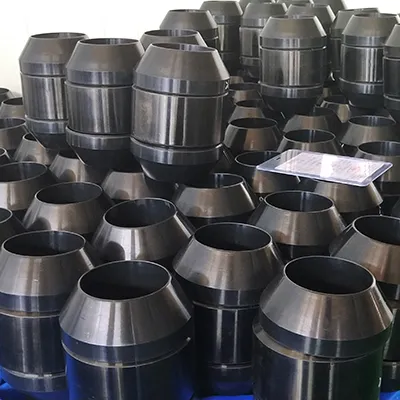
When a coiled tubing string is run into a live well, the pipe itself is the only conduit between surface and reservoir, and any failure of that conduit-a parted string, a burst section, or a surface equipment malfunction-turns the tubing into a path for uncontrolled backflow. The industry's answer is a series of internal blowout prevention tools at the bottom of the string, of which the dual-flapper check valve is the most widely deployed. Its two independent closures provide redundancy where a single point of failure is not acceptable, and an integrated lock-out sleeve extends its function to a controllable downhole barrier.
Why a Dual-Flapper Check Valve Instead of One
A single flapper check valve stops flow in one direction, but a damaged seat, a stuck-open flapper, or a seal failure removes the barrier with no backup. The dual design stacks two flapper cartridges inside one valve body, so that if either cartridge is compromised by debris, erosion, or repeated closure cycles, the second still holds well pressure. Each flapper closes against its seat by spring force when flow stops, and the valve is oriented in the string so that wellbore pressure assists closure while pumping from surface holds both flappers open. This two-stage arrangement gives operators a verifiable dual barrier during running, pulling, and pumping operations, a requirement that single-flapper tools cannot meet.
Lock-Out Sleeve Operation
The lock-out sleeve is what separates an advanced dual-flapper valve from a plain check valve. During run-in, the sleeve holds both flappers forced open so the string can be tripped in without the flappers cycling or fluid hammering against closed closures; in this state the flappers are also shielded from erosion while fluids are pumped past. When a downhole safety barrier is required, a ball is dropped and pumped to shift the sleeve, releasing the flappers to function as a normal check valve, or the sleeve can be manipulated hydraulically from surface. In coiled tubing drilling and milling applications, the lock-out sleeve also transmits torque through the valve body to the motor and bit, which a conventional ball-type check valve cannot do.
Sealing System and Cartridge Design
Modern cartridges combine two sealing mechanisms in one seat: an elastomeric seal handles low-pressure closure while full metal-to-metal contact carries high-pressure duty, covering the service envelope without relying on one material. The cartridge is built as a single-piece subassembly that drops into the valve body, minimizing leak paths and allowing the whole sealing package to be swapped in minutes at the wellsite. Flapper and seat materials are selected for the pumped fluids, with corrosion-resistant alloys specified for acid, brine, and H2S service.
Valve bodies are typically rated to 10,000 psi working pressure, with sizes from 1.5 to 3.1 inches OD covering common coiled tubing diameters.
The flow area through the open flappers equals or exceeds the seat bore area, keeping pressure drop across the valve low during pumping, and cartridges are rated to 350 degrees Fahrenheit for hot wells.
Flow Passage and Tool Compatibility
Because the valve sits directly in the pumping path, its internal diameter governs what can pass through the string. The dual-flapper design keeps a large bore that accepts wiper plugs, drop balls for disconnects, and other small tools without removing the valve, and its geometry is deliberately non-clogging: scale, paraffin, and dried hydrocarbons that would plug a ball-type check valve simply pass through or wash off the flapper surfaces. Compact cartridge construction lets the same body accept different bore sizes and connections, and the outer profile works with standard motorhead assemblies above the valve in the bottom-hole assembly.
Field Applications of the Dual-Flapper Check Valve
Dual-flapper check valves are standard equipment for acidizing, fracturing, nitrogen lifting, and coiled tubing drilling, where maintaining a barrier while pumping high-rate, abrasive, or corrosive fluids is the norm. Service life is governed by erosion of flapper and seat-a function of flow velocity, solids content, and exposure time-so operators inspect cartridges after each job and replace them when pitting or groove wear appears. The coiled tubing services market, projected to grow from roughly USD 4.5 billion in 2026 toward USD 7 billion by 2032, continues to adopt dual-barrier toolstrings as well control requirements tighten across mature and unconventional basins.
The dual-flapper check valve with lock-out sleeve converts a passive flow-prevention device into an active, controllable downhole barrier, and its redundant sealing makes it the component of choice for critical coiled tubing interventions. China Vigor manufactures dual-flapper check valves and lock-out sleeves engineered for high-pressure, high-rate coiled tubing operations, with sizes and metallurgy matched to the job.
For more information, please contact China Vigor at info@vigorpetroleum.com or call +0086 29 81161513.