Casing hangers and tubing hangers in high-pressure high-temperature (HPHT) wells must contain reservoir fluids for service lives that routinely exceed twenty years, yet the sealing elements they depend on face two conflicting demands. Elastomers offer the conformability needed to close microscopic leak paths, while metal structures are required to resist extrusion when component gaps open under pressure. Conventional O-ring designs frequently fail through explosive decompression or extrusion damage when wells are killed, pressure-tested, and returned to production. This is why the industry has progressively moved toward hybrid elastomer-to-metal bonded seals that combine both behaviors inside a single engineered component, and why metal end cap seals have become a core solution in modern wellhead hardware.
Bonded Construction and Anti-Extrusion Design
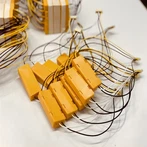
The metal end cap seal is manufactured by vulcanizing a precision-molded elastomer core onto corrosion-resistant metal end caps, so the elastomer supplies the sealing force while the caps establish positive metal-to-metal interference with the mating hardware upon assembly. When well pressure acts on the seal, the end caps deflect and conform to the extrusion gap, shielding the elastomer body from being forced into the clearance. Finite element analysis (FEA) is applied during the design phase to map stress distribution through the elastomer volume, ensuring that the most heavily loaded region remains within the compound's allowable limits across the complete pressure-temperature envelope, which is validated up to 20,000 psi for HPHT service.
Metal end caps engineered specifically for casing hanger and tubing hanger service
FEA-optimized stress distribution prevents premature elastomer failure
Explosive Decompression Resistance in Gas Service
Rapid gas decompression (RGD) damage occurs when gas absorbed into an elastomer at high pressure expands violently during sudden pressure bleed-off, blistering or cracking the seal body. RGD-qualified compounds, validated to test procedures such as NACE TM0297 and NORSOK M-710, limit gas uptake and crack propagation so that the seal survives repeated blowdown cycles without losing its pressure boundary, with qualification testing typically performed at 150°C. This capability is decisive for gas wells, gas lift completions, and subsea trees, where pressure is often dumped quickly during routine operations. Compounds selected for sour service additionally demonstrate documented hardness and amine resistance, maintaining their mechanical properties when exposed to hydrogen sulfide and acid stimulation fluids.
Material Selection Across API Material Classes
Seal compounds and metal components are paired to match API 6A material classes from AA through HH, spanning both sweet and sour service conditions. In corrosive wells, the metal end caps are produced from corrosion-resistant alloys hardened to approximately 35 HRC that preserve their strength in brines, carbon dioxide, and H2S-bearing fluids, while the elastomer core is chosen for chemical compatibility with the produced stream. This pairing allows one seal geometry to be adapted across casing heads, tubing heads, gate valves, and blowout preventer equipment without compromising the pressure boundary, simplifying inventory and qualification for operators running multiple wellhead configurations.
Qualification Through Pressure and Temperature Cycling
Metal end cap seals are qualified through API 6A Appendix F performance testing, including pressure and temperature cycle testing at Performance Requirement Level 2 (PR-2). PR-2 subjects seals to repeated cycles between minimum and maximum rated pressure and temperature conditions, simulating the load spectrum experienced during installation, production, shut-in, and restart. In field practice, these seals are applied in wells with shut-in pressures above 15,000 psi and temperatures beyond 350°F, conditions under which elastomer-only seals would extrude or degrade prematurely. The bonded architecture also simplifies installation, because the end caps act as integral anti-extrusion components rather than requiring separate backup rings.
Downhole Application of Bonded Seal Technology
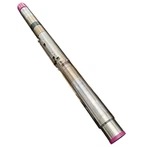
The same bonded seal technology extends beyond surface wellhead equipment into downhole completion tools, including packers, flow control valves, and subsurface safety valves. Seal stacks are sized to the tool OD envelope, with groove geometry tailored to the expected diametrical clearance and worst-case misalignment of the sealing surfaces. Because the metal caps provide continuous anti-extrusion support, the seal remains stable during running, setting, and production, even when tools are conveyed through deviated wellbores with tight clearances and formation temperatures up to 175°C. Field records indicate that bonded seal assemblies routinely outlast conventional elastomer stacks in equivalent service, reducing the frequency of workover interventions.
Conclusion
Well integrity ultimately rests on sealing elements that can contain extreme pressure, temperature, and sour fluids over the full life of the well. Bonded metal end cap seals deliver the extrusion resistance of metal and the conformability of elastomer within one component, qualified to recognized industry standards for both surface and downhole service. China Vigor's engineered sealing portfolio applies this design philosophy across its wellhead and completion product lines.
For more information, please contact China Vigor at info@vigorpetroleum.com or call +0086 29 81161513.