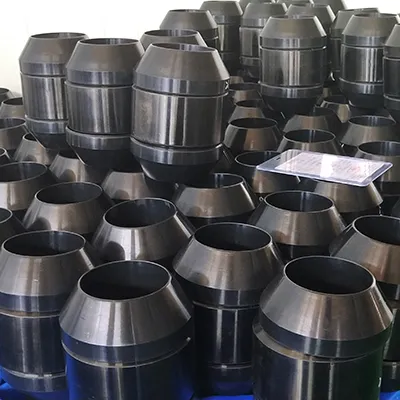
As operators push lateral sections beyond 30,000 feet measured depth and target thinner pay zones in unconventional basins, maintaining wellbore stability while simultaneously reaming presents a critical operational challenge. Traditional separate trips for stabilization and reaming consume 8-12 hours of rig time per section, adding $120,000-$180,000 in operating costs per well in deepwater environments. The convergence of stabilizer and reamer functions into a single bottomhole assembly tool offers a compelling solution that dramatically reduces non-productive time and improves overall drilling economics.
Market Growth and Demand Dynamics
The global downhole stabilizer market was valued at approximately $1.42 billion in 2026 and is projected to reach $2.17 billion by 2035, expanding at a CAGR of 4.80%. Integral blade stabilizers currently command over 52% of market share, reflecting operator preference for monolithic designs that eliminate mechanical joint failure risks in high-torque environments exceeding 35,000 ft-lbs. Spiral blade and rigid blade variants are especially valued in unconventional shale campaigns across the Permian Basin, where lateral lengths exceeding 15,000 feet are now routine. The market also benefits from sustained deepwater development in the Gulf of Mexico and Southeast Asia, where specialized heavy-duty stabilizers engineered for extended-reach wells are in growing demand.
Stabilizer-Reamer Integration Benefits
Combined stabilizer-reamer downhole drilling tools with fixed reaming blades prevent wellbore spiraling and deliver superior borehole quality compared to sequential separate-trip operations. Field-proven diamond-impregnated insert technology provides over 2,500 times greater wear resistance than standard tungsten carbide, with documented service records exceeding 750,000 feet drilled without gauge loss. Modern friction-reducing geometries lower friction variance by up to 55%, enabling superior directional control in high-angle and horizontal sections while reducing stick-slip vibration that damages sensitive MWD equipment.
Typical replacement cycles in Permian extended-reach wells: every 4-6 sections per set
Average cost savings from combined tripping operations: $15,000-$25,000 per section
North America accounts for $287 million or 31% of global stabilizer demand in 2025
Material Advancements and Certification Standards
Premium high-chrome steel and non-magnetic aluminum bronze alloys are increasingly specified for deepwater and high-H2S environments, where corrosion resistance and MWD compatibility are non-negotiable requirements. Stabilizers manufactured from AISI 4145H modified alloy steel with certification to API 7-1 and ISO 10424-1 standards deliver superior fatigue resistance in directional applications exceeding 35,000 ft-lbs. The tightening of API Specification 7-1 material traceability mandates is accelerating procurement shifts toward documented alloy-grade stabilizers, especially among major drilling contractors operating in regulatory-heavy jurisdictions such as the North Sea and Gulf of Mexico. Integrated back reamer designs further enhance performance by enabling bi-directional reaming capability without tripping the string.
Regional Market Distribution
North America leads global consumption at $287 million, driven by intensive Permian and Appalachian shale programs where per-well lateral footage continues increasing 8-10% year over year. The Middle East and Africa follow at $255 million, buoyed by large-scale field redevelopment and gas expansion initiatives in Saudi Arabia and Qatar. Asia Pacific at $196 million is the fastest-growing region, fueled by Chinese domestic drilling expansion and emerging Southeast Asian unconventional activity. Deepwater exploration in Brazil's pre-salt formations and the Eastern Mediterranean presents untapped demand for premium stabilizer-reamer solutions, with operators increasingly specifying combined-function tools for frontier HPHT environments exceeding 15,000 psi and 175°C.
Operational Efficiency Impact
Extended-reach drilling programs are compressing stabilizer replacement cycles by 20-30% and driving contractors toward integrated BHA refresh programs rather than spot procurement of discrete components. Operators deploying combined bidirectional reaming stabilizers report 15-20% overall drilling efficiency improvement and 25-35% reduction in downhole vibration events compared to conventional separate-trip approaches, translating to measurable cost-per-foot reductions of $8-12 per foot in extended-reach laterals. EPA methane emissions rules and OSHA silica exposure limits are further linking tool reliability to compliance-linked procurement decisions, as unplanned trips for replacement directly affect emissions reporting and personnel safety metrics.
Conclusion
The integration of stabilization and reaming into a single combined downhole tool delivers measurable efficiency gains, extended service life, and superior borehole quality across the most demanding drilling environments, making it an increasingly essential component in modern bottomhole assembly design.
For more information, please contact China Vigor at info@vigorpetroleum.com or call +0086 29 81161513.