In the field of geological exploration and drilling, success hinges not just on powerful equipment, but on choosing the right equipment for the specific conditions underground. A poor match between the drilling assembly and the formation can lead to inefficiency, equipment damage, and project failure.
A recent in-depth analysis from the industry source "Geological Miscellany" explores the critical considerations for selecting and configuring three core components of any drilling operation: the drill rig, the mud pump, and the drill pipe. The key takeaway is that parameters must be carefully adapted based on the target borehole diameter and the ever-changing nature of the geological formations encountered.
1. The Drill Rig: Matching Power to the Task
The drill rig provides the fundamental power and force for the entire operation. Its selection is the first and most critical decision. According to the analysis, choosing a rig involves balancing several factors:
- Power and Torque: This is the primary consideration. The required power and torque are directly dictated by the target depth and the hardness of the rock. A rig that is underpowered for hard rock will stall, while an overpowered rig in soft ground may cause damage or operational issues.
- Stability and Safety: Different formations present different stability challenges. A rig with a robust, stable platform is essential to minimize risks, especially when drilling through unstable or fractured zones.
- Operational Efficiency: Modern rigs with user-friendly controls and automation can significantly improve penetration rates and reduce non-productive time.
- Environmental Adaptability: The rig must be suited to the surface environment, whether that requires special protection for extreme heat, humidity, or arctic conditions.
Adaptation Strategy: The core principle is to match the rig's output to the formation's resistance.
- For Soft Formations (e.g., clay, sand): A configuration favoring high rotational speed but lower torque is often effective for rapid penetration.
- For Hard Rock (e.g., granite, basalt): The strategy shifts to high torque and low speed to effectively grind and fracture the rock without stalling the drill string.
- For Large Diameter Holes: Larger holes require more energy to cut a greater volume of rock and to handle a heavier drill string. This necessitates a rig with significantly higher hoisting capacity and overall power.
2. The Mud Pump: The Circulation System's Heart
The mud pump is responsible for the critical task of circulating drilling fluid (mud) down the drill string and back up the annulus. This fluid cools and lubricates the bit, cleans the hole by carrying cuttings to the surface, and maintains borehole stability through hydrostatic pressure. The article highlights key pump selection criteria:
- Flow Rate and Pressure: These are the pump's most vital parameters. They must be sufficient to lift cuttings from the bottom of the hole to the surface, a task that becomes exponentially harder in deeper wells. Insufficient flow leads to cuttings buildup and stuck pipe.
- Wear Resistance: Drilling fluid is an abrasive slurry containing rock particles. Pump components must be constructed from highly durable, wear-resistant materials to withstand this constant erosion.
- Maintainability and Efficiency: Pumps run continuously during drilling. Easy maintenance and good energy efficiency are crucial for minimizing downtime and operating costs.
Adaptation Strategy: Pump configuration is a direct response to hole geometry and depth.
- Small Diameter / Shallow Holes: These operations can typically be served by pumps with lower flow rates.
- Large Diameter / Deep Holes: These require pumps capable of delivering high flow rates to sweep a larger hole volume, combined with the high pressure needed to overcome friction losses in a long drill string.
- Challenging Formations: When drilling through formations prone to collapsing (caving) or those with high pore pressure, a specialized, high-pressure pump is essential to maintain borehole stability and prevent blowouts.
3. The Drill Pipe: The Critical Connector
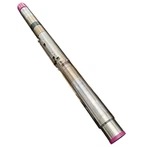
The drill pipe forms the mechanical link between the surface rig and the downhole bit. It must transmit torque and thrust while withstanding immense tensile, compressive, and torsional loads in a harsh environment. The analysis emphasizes that pipe selection is a detailed engineering decision based on:
- Material Selection: This is paramount.
1.High-Strength Steel is the standard for most applications, especially in hard rock, due to its robustness.
2.Aluminum Alloys can be used in softer formations where weight reduction is a priority, improving portability and reducing stress on the rig.
3.Special Alloys are required for extreme conditions, such as very hard, abrasive rock.
- Strength and Wall Thickness: The pipe must withstand the specific tensile and collapse pressures expected at target depths. In areas prone to getting the pipe stuck (like salt formations or swelling clays), heavy-wall, reinforced pipe provides an extra margin of safety.
- Diameter Matching: The pipe diameter must be appropriately sized for the borehole. A pipe that is too small may not provide enough stiffness or will create too large an annulus, affecting hole cleaning. A pipe that is too large increases the risk of becoming stuck.
- Connection Integrity: The threaded connections between pipe joints must be robust and precisely machined to prevent fatigue failures downhole.
Adaptation Strategy: The pipe is selected based on a hierarchy of formation challenges.
- Soft Ground (Sand, Clay): Smaller diameter, moderately strong steel or even aluminum pipe is often sufficient.
- Medium-Hard Rock (Limestone, Sandstone): This requires stepping up to larger diameter, high-strength steel pipe to handle increased drilling forces.
- Extremely Hard Rock (Granite, Basalt): Demands specialized, ultra-high-strength alloy pipes to transmit maximum power without failing.
-
Extreme Environments:
1.Deep, High-Temperature Wells: Pipe materials must be qualified for high-temperature performance to prevent softening or embrittlement.
2.Corrosive Environments (e.g., offshore, saline formations): Corrosion-resistant alloys or stainless steel are necessary for longevity.
3.High Risk of Sticking: Thick-walled, "heavy-weight" drill pipe is used to provide greater stiffness and reduce the risk of differential sticking.
Efficient and safe drilling is not about individual pieces of equipment, but about a holistic system. The rig, pump, and drill pipe must be selected and configured together, with a clear understanding of the planned borehole diameter and the varying geological conditions expected at each depth. By carefully matching these core components to the specific challenges of the earth, operators can maximize penetration rates, minimize costly problems, and ensure a successful project from spud to target depth. For more detailed information , please don't hesitate to contact Vigor team for more detailed product information.