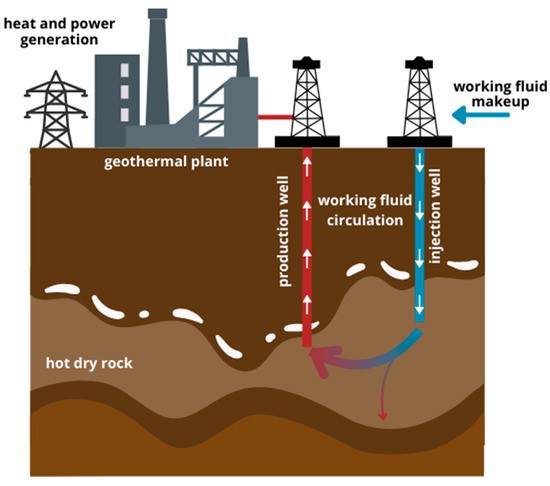
An enhanced geothermal system (EGS) generates geothermal electricity without natural convective hydrothermal resources. Traditionally, geothermal power systems operated only where naturally occurring heat, water, and rock permeability are sufficient to allow energy extraction. However, most geothermal energy within reach of conventional techniques is in dry and impermeable rock.EGS technologies expand the availability of geothermal resources through stimulation methods, such as 'hydraulic stimulation'.
In many rock formations natural cracks and pores do not allow water to flow at economic rates. Permeability can be enhanced by hydro-shearing, pumping high-pressure water down an injection well into naturally-fractured rock. The injection increases the fluid pressure in the rock, triggering shear events that expand pre-existing cracks and enhance the site's permeability. As long as the injection pressure is maintained, high permeability is not required, nor are hydraulic fracturing proppants required to maintain the fractures in an open state.
Hydro-shearing is different from hydraulic tensile fracturing, used in the oil and gas industry, which can create new fractures in addition to expanding existing fractures.
Water passes through the fractures, absorbing heat until forced to the surface as hot water. The water's heat is converted into electricity using either a steam turbine or a binary power plant system, which cools the water. The water is cycled back into the ground to repeat the process.
EGS plants are baseload resources that produce power at a constant rate. Unlike hydrothermal, EGS is apparently feasible anywhere in the world, depending on the resource depth. Good locations are typically over deep granite covered by a 3–5 kilometres layer of insulating sediments that slow heat loss.
Advanced drilling techniques penetrate hard crystalline rock at depths of up to or exceeding 15 km, which give access to higher-temperature rock (400 ℃ and above), as temperature increases with depth.
EGS plants are expected to have an economic lifetime of 20–30 years.
EGS systems are under development in Australia, France, Germany, Japan, Switzerland, and the United States. The world's largest EGS project is a 25-megawatt demonstration plant in Cooper Basin, Australia. Cooper Basin has the potential to generate 5,000–10,000 MW.
(All content is sourced from Wikipedia)
As an expert in the oil and gas industry, our technical team has always kept abreast of the development trend of the world's energy industry and insisted on increasing investment in the research and development of new products. As the latest trend in the development of the oil and gas industry, Vigor has invested a lot of time and cost in preparing related technologies and products in advance, if you are interested in geothermal well related products, please do not hesitate to get in touch with the Vigor team, we are also looking forward to your Vigor team for in-depth communication and cooperation.
For more information, you can write to our mailbox info@vigorpetroleum.com & mail@vigorpetroleum.com