


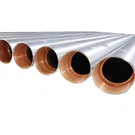


Hey there! As a supplier of 4" Casing, I often get asked a bunch of questions from our customers. One question that pops up quite a bit is, "Does 4" Casing need to be grounded?" Well, let's dive into this topic and figure it all out.
First off, let's talk a bit about what 4" Casing is. It's a type of pipe used in various industries, mainly in oil and gas drilling, but also in some construction projects. The "4"" refers to its diameter, and it's designed to provide structural support and protection for the wellbore or other underground structures.
Now, grounding is basically connecting an electrical conductor to the earth. This is done to prevent electrical shock, reduce electrical noise, and protect equipment from damage caused by electrical surges. But does 4" Casing really need this kind of protection?
In the oil and gas industry, safety is super important. Electrical hazards are a big deal, especially when you're dealing with all the equipment and machinery on a drilling site. If there's an electrical fault in the system, ungrounded 4" Casing can become energized. This poses a huge risk to workers on the site. A person coming into contact with the energized casing could get a serious electrical shock, which could even be fatal. So, from a safety perspective, grounding 4" Casing makes a lot of sense.
Another reason for grounding is to protect the casing itself. Electrical currents can cause corrosion. When the casing corrodes, its structural integrity is compromised. This can lead to leaks, collapses, and other problems that can be really costly to fix. By grounding the casing, we can divert the electrical currents away from it, reducing the risk of corrosion.
Let's look at some of the technical aspects. The electrical conductivity of 4" Casing plays a role here. Most casings are made of steel, which is a good conductor of electricity. If there's an electrical charge in the system, the casing can easily carry that charge. Without proper grounding, this charge can build up and cause problems.
Now, I know some of you might be thinking, "But what about the cost? Does grounding add a lot of expense?" Well, it's true that there are some costs associated with grounding. You need to buy the grounding materials, like grounding rods and cables, and you have to pay for the labor to install them. However, when you compare this cost to the potential cost of an electrical accident or a casing failure due to corrosion, it's a no - brainer. The cost of grounding is a small price to pay for the safety and longevity of the casing.
In some cases, regulations also require grounding. Different regions and industries have their own safety standards. For example, in the oil and gas industry, regulatory bodies often mandate that all electrical equipment, including 4" Casing, must be properly grounded. If you don't follow these regulations, you could face fines and other penalties.


Let's also touch on the installation process. Grounding 4" Casing isn't overly complicated, but it does require some knowledge and expertise. First, you need to choose the right grounding materials. Grounding rods are usually made of copper or galvanized steel. They need to be driven deep into the ground to ensure a good connection. Then, you connect the rods to the casing using grounding cables. These cables should be properly sized to handle the electrical current.
There are also some factors that can affect the effectiveness of grounding. The soil conditions around the casing are important. If the soil has high resistivity, it can make it harder for the electrical current to flow into the ground. In such cases, you might need to use additional grounding techniques, like adding grounding enhancers to the soil.
Now, let's talk about the different types of pipes related to 4" Casing. You might be interested in CRA Pipe. CRA stands for Corrosion - Resistant Alloy. These pipes are great when you're dealing with harsh environments where corrosion is a big concern. They can be used in combination with 4" Casing to provide extra protection.
Another type is Tubing. Tubing is often used inside the casing. It's smaller in diameter and is used to transport fluids, like oil and gas, from the wellbore to the surface. The grounding principles for tubing are similar to those for casing, but the installation might be a bit different due to its smaller size.
And then there's Cold Rolled Pipe. Cold - rolled pipes are made through a different manufacturing process, which gives them a smoother finish and more precise dimensions. They can also be used in some applications where 4" Casing is used, and grounding them is just as important for the same safety and protection reasons.
In conclusion, yes, 4" Casing generally needs to be grounded. It's a crucial step for ensuring the safety of workers, protecting the casing from corrosion, and complying with regulations. While there are some costs involved, the benefits far outweigh them.
If you're in the market for 4" Casing or have any questions about grounding or other related topics, I'd love to have a chat with you. Whether you're starting a new project or looking to replace some existing casing, we've got the expertise and the products to meet your needs. Reach out to us to start a discussion about your requirements and let's work together to find the best solutions for your project.
References
- Oil and Gas Safety Standards Handbook
- Electrical Safety Guidelines for Industrial Installations
- Corrosion Prevention in Oil and Gas Pipelines - A Technical Guide