




Coupling in chemical reactions is a fascinating and crucial concept that plays a significant role in various industrial and scientific applications. As a coupling supplier, I am often asked about the mechanisms and processes behind coupling reactions. In this blog post, I will delve into the details of how coupling occurs in chemical reactions, exploring the fundamental principles and highlighting some real - world examples.
Understanding the Basics of Coupling Reactions
Coupling reactions generally involve the joining of two molecular fragments. These fragments can be organic or inorganic compounds, and the reaction results in the formation of a new chemical bond. The driving force behind coupling reactions can be attributed to several factors, including thermodynamics and kinetics.
Thermodynamic Considerations
Thermodynamics provides insights into the spontaneity of a reaction. A coupling reaction is thermodynamically favorable if the change in Gibbs free energy (∆G) is negative. This means that the products of the reaction are more stable than the reactants. For example, in many coupling reactions involving the formation of carbon - carbon bonds, the release of energy due to the formation of a more stable bond contributes to the negative ∆G value. The overall stability of the products is often influenced by factors such as bond energy, resonance, and steric effects.
Kinetic Aspects
Kinetics, on the other hand, deals with the rate at which a reaction occurs. Even if a coupling reaction is thermodynamically favorable, it may not proceed at a reasonable rate without the presence of a suitable catalyst or under appropriate reaction conditions. Catalysts lower the activation energy of the reaction, allowing it to occur more rapidly. They do this by providing an alternative reaction pathway with a lower energy barrier. For instance, transition - metal catalysts are commonly used in coupling reactions because they can form intermediate complexes that facilitate the bond - forming process.
Common Mechanisms of Coupling Reactions
There are several well - established mechanisms for coupling reactions, each with its own unique characteristics and applications.
Transition - Metal - Catalyzed Coupling
Transition - metal - catalyzed coupling reactions are among the most important and widely studied types of coupling reactions. These reactions use transition - metal complexes such as palladium, nickel, and copper as catalysts. One of the most famous examples is the Suzuki - Miyaura coupling, which involves the coupling of an organoboron compound with an organic halide or triflate in the presence of a palladium catalyst.
The mechanism of the Suzuki - Miyaura coupling typically involves three main steps: oxidative addition, transmetalation, and reductive elimination. In the oxidative addition step, the palladium catalyst reacts with the organic halide, resulting in the formation of a palladium(II) complex. The transmetalation step then involves the transfer of the organic group from the organoboron compound to the palladium complex. Finally, reductive elimination occurs, leading to the formation of the coupled product and the regeneration of the palladium(0) catalyst.
Radical Coupling Reactions
Radical coupling reactions involve the combination of two free radicals to form a new bond. Free radicals are highly reactive species with an unpaired electron. These reactions are often initiated by heat, light, or the presence of radical initiators. For example, in the coupling of alkyl radicals, the reaction can be initiated by the homolytic cleavage of a peroxide or an azo compound.


The mechanism of radical coupling is relatively straightforward. Once the radicals are generated, they can collide and combine to form a new covalent bond. However, radical coupling reactions can be challenging to control because radicals are highly reactive and can participate in side reactions such as disproportionation or reaction with solvents.
Nucleophilic - Electrophilic Coupling
Nucleophilic - electrophilic coupling reactions involve the reaction between a nucleophile (a species with a lone pair of electrons or a negative charge) and an electrophile (a species that is electron - deficient). For example, in the reaction between an alkyl halide (an electrophile) and a Grignard reagent (a nucleophile), a new carbon - carbon bond is formed.
The mechanism of nucleophilic - electrophilic coupling typically involves the attack of the nucleophile on the electrophilic center, followed by the displacement of a leaving group. This type of coupling reaction is widely used in organic synthesis for the construction of complex organic molecules.
Applications of Coupling Reactions
Coupling reactions have a wide range of applications in various industries, including pharmaceuticals, materials science, and petrochemicals.
Pharmaceutical Industry
In the pharmaceutical industry, coupling reactions are used to synthesize complex drug molecules. For example, many anti - cancer drugs are synthesized using transition - metal - catalyzed coupling reactions. These reactions allow chemists to precisely control the structure and stereochemistry of the drug molecules, which is crucial for their biological activity.
Materials Science
In materials science, coupling reactions are used to prepare polymers and functional materials. For instance, the coupling of monomers can be used to synthesize polymers with specific properties such as conductivity or mechanical strength. Additionally, coupling reactions can be used to modify the surface of materials, improving their adhesion and compatibility with other substances.
Petrochemical Industry
In the petrochemical industry, coupling reactions are used in the production of high - value chemicals. For example, the coupling of olefins can be used to produce longer - chain hydrocarbons, which are important feedstocks for the production of plastics, fuels, and lubricants.
Our Offerings as a Coupling Supplier
As a coupling supplier, we understand the importance of high - quality coupling products in chemical reactions. We offer a wide range of coupling solutions, including Special Clearance Coupling, CRA Pipe, and Tubing. Our products are designed to meet the diverse needs of our customers in various industries.
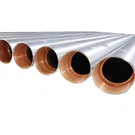
Our Special Clearance Coupling is engineered to provide a secure and reliable connection in chemical processes. It is made from high - quality materials that can withstand harsh chemical environments and high pressures. Our CRA Pipe is corrosion - resistant, making it ideal for applications where the pipes are exposed to corrosive chemicals. And our Tubing is available in a variety of sizes and materials, ensuring that we can meet the specific requirements of our customers.
Contact Us for Procurement
If you are interested in our coupling products and would like to discuss your specific needs, we encourage you to contact us. Our team of experts is ready to provide you with detailed information about our products, offer technical support, and assist you in the procurement process. We are committed to providing high - quality products and excellent customer service. Whether you are a small research laboratory or a large industrial enterprise, we have the coupling solutions to meet your needs.
References
- Smith, M. B., & March, J. (2007). March's Advanced Organic Chemistry: Reactions, Mechanisms, and Structure. John Wiley & Sons.
- Hartwig, J. F. (2010). Organotransition Metal Chemistry: From Bonding to Catalysis. University Science Books.
- Carey, F. A., & Sundberg, R. J. (2007). Advanced Organic Chemistry: Part B: Reactions and Synthesis. Springer.