


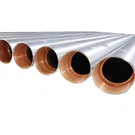


As an OCTG (Oil Country Tubular Goods) supplier, I've seen firsthand how the thermal conductivity of OCTG plays a crucial role in high - temperature wells. Let's dig into how this property impacts the performance of these essential oilfield components.
Understanding Thermal Conductivity
First off, thermal conductivity is the ability of a material to conduct heat. In the context of OCTG, it's all about how well the tubing, Premium Connection, and Coupling can transfer heat. Different materials used in OCTG have varying thermal conductivities. For example, steel, which is commonly used in OCTG, has a specific thermal conductivity value.
In high - temperature wells, the temperatures can soar to extreme levels. These high temperatures can have a significant impact on the mechanical properties of the OCTG. When heat is involved, the material can expand, and if the thermal conductivity is not properly managed, it can lead to a whole host of problems.
Impact on Mechanical Integrity
One of the main concerns in high - temperature wells is the mechanical integrity of the OCTG. The thermal conductivity affects how the material responds to temperature changes. If the thermal conductivity is too high, the material may expand too rapidly. This can cause stress on the Tubing and its connections. For instance, the expansion can lead to misalignment of the Premium Connection, which is designed to provide a secure and leak - free seal. A misaligned connection can result in leaks, which are not only a safety hazard but also a costly problem for oil and gas operations.
On the other hand, if the thermal conductivity is too low, the heat may not be dissipated effectively. This can lead to localized overheating in the OCTG. Overheating can cause the material to lose its strength and ductility. In extreme cases, it can even lead to the failure of the tubing, which can disrupt the entire well operation.
Corrosion Resistance
Thermal conductivity also has an impact on the corrosion resistance of OCTG in high - temperature wells. High temperatures can accelerate the corrosion process. When the thermal conductivity is high, the heat is distributed more evenly across the surface of the tubing. This can help prevent the formation of hot spots, which are areas where corrosion is more likely to occur.
However, if the thermal conductivity is not optimized, the uneven distribution of heat can create areas of high and low temperature on the tubing surface. The areas with higher temperatures are more prone to corrosion. This is because the chemical reactions that cause corrosion are often accelerated by heat. So, by ensuring the right thermal conductivity, we can help protect the OCTG from corrosion and extend its service life.
Fluid Flow
In high - temperature wells, the fluid flow is also affected by the thermal conductivity of the OCTG. The heat transfer between the fluid and the tubing can impact the viscosity of the fluid. If the thermal conductivity is high, the heat from the fluid can be transferred more efficiently to the tubing. This can reduce the viscosity of the fluid, making it easier to flow through the well.
Conversely, a low thermal conductivity can result in less heat transfer. This can cause the fluid to maintain a higher viscosity, which can impede the flow. In some cases, it can even lead to blockages in the tubing, which can be a major headache for oil and gas operators.
Choosing the Right OCTG
As an OCTG supplier, I know that choosing the right OCTG for high - temperature wells is crucial. We need to consider the thermal conductivity of the materials when making our selections. Different applications may require different levels of thermal conductivity. For example, in wells where the temperature is extremely high, we may need to use materials with a higher thermal conductivity to ensure efficient heat transfer.
We also need to take into account the other properties of the OCTG, such as its strength, corrosion resistance, and the quality of the Premium Connection and Coupling. A well - balanced combination of these properties is essential for optimal performance in high - temperature wells.
Testing and Quality Assurance
To ensure that the OCTG we supply meets the requirements for high - temperature wells, we conduct rigorous testing. We test the thermal conductivity of the materials to make sure they fall within the desired range. We also test the mechanical properties, corrosion resistance, and the integrity of the connections.
Quality assurance is a top priority for us. We want to make sure that our customers receive OCTG that can perform well in high - temperature environments. By providing high - quality products, we can help our customers avoid costly downtime and ensure the smooth operation of their wells.
Conclusion
The thermal conductivity of OCTG has a profound impact on its performance in high - temperature wells. It affects the mechanical integrity, corrosion resistance, and fluid flow. As an OCTG supplier, we play a crucial role in providing the right products for these challenging environments.
If you're in the market for OCTG for high - temperature wells, we're here to help. Our team of experts can assist you in choosing the right materials and products based on your specific needs. We offer a wide range of Tubing, Premium Connection, and Coupling options to meet the demands of high - temperature wells. Contact us to start a discussion about your OCTG requirements and let's work together to find the best solutions for your operations.
References
- Smith, J. (2020). "Thermal Properties of Materials in Oil and Gas Applications." Journal of Petroleum Engineering.
- Johnson, R. (2019). "High - Temperature Well Operations and OCTG Performance." Oil and Gas Review.
- Brown, A. (2018). "Corrosion in High - Temperature Wells and the Role of OCTG." International Journal of Corrosion Science.