


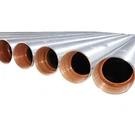


As an OCTG (Oil Country Tubular Goods) supplier, I'm often asked about the manufacturing process of these essential products. OCTG plays a crucial role in the oil and gas industry, and understanding how it's made is key to appreciating its quality and performance. In this blog, I'll take you through the step-by-step process of manufacturing OCTG.
Raw Material Selection
The first and most critical step in OCTG manufacturing is the selection of raw materials. High-quality steel is the primary material used for OCTG. The steel must have specific chemical and mechanical properties to meet the demanding requirements of the oil and gas industry. These properties include strength, toughness, corrosion resistance, and weldability.
We source our raw materials from reputable steel mills that adhere to strict quality control standards. The steel is typically in the form of billets or blooms, which are large rectangular or circular pieces of steel. These billets are then inspected for any defects or impurities before they are used in the manufacturing process.
Heating and Rolling
Once the raw materials are selected, they are heated to a specific temperature in a furnace. The heating process is crucial as it softens the steel, making it easier to shape. The heated billets are then sent to a rolling mill, where they are passed through a series of rollers to reduce their diameter and increase their length. This process is known as hot rolling.
Hot rolling is a continuous process that requires precise control of temperature, pressure, and speed. The rollers are designed to gradually reduce the size of the billet until it reaches the desired diameter and wall thickness. The rolled steel is then cooled rapidly to improve its mechanical properties.
Piercing
After hot rolling, the steel is ready for piercing. Piercing is the process of creating a hole in the center of the steel billet to form a tube. This is done using a piercing mill, which consists of a pair of conical rolls and a mandrel. The mandrel is a long, cylindrical rod that is inserted into the center of the billet. As the billet passes through the rolls, the mandrel forces the steel to flow around it, creating a tube.
The piercing process is critical as it determines the internal diameter and wall thickness of the tube. The mandrel must be carefully selected to ensure that it is the correct size and shape for the desired tube dimensions. The pierced tube is then further processed to improve its surface finish and dimensional accuracy.
Cold Drawing
Cold drawing is a process that is used to further reduce the diameter and wall thickness of the tube. This is done by pulling the tube through a series of dies, which are gradually smaller in diameter. The cold drawing process improves the surface finish, dimensional accuracy, and mechanical properties of the tube.
Cold drawing is a precise process that requires careful control of the drawing speed, tension, and lubrication. The dies are made of high-quality steel and are designed to provide a smooth and uniform surface finish. The cold-drawn tube is then inspected for any defects or imperfections before it is further processed.
Heat Treatment
Heat treatment is an important step in the manufacturing process of OCTG. It is used to improve the mechanical properties of the tube, such as strength, toughness, and hardness. Heat treatment involves heating the tube to a specific temperature and then cooling it at a controlled rate.
There are several types of heat treatment processes, including annealing, normalizing, quenching, and tempering. The type of heat treatment used depends on the specific requirements of the tube. For example, annealing is used to soften the tube and improve its ductility, while quenching and tempering are used to increase its strength and hardness.
Threading
Threading is the process of creating threads on the ends of the tube. Threads are used to connect the tubes together and to other components in the oil and gas well. The threading process is critical as it determines the quality and performance of the connection.
There are several types of threads used in OCTG, including API (American Petroleum Institute) threads and premium threads. API threads are the most common type of threads used in the oil and gas industry. They are standardized and have specific dimensions and tolerances. Premium threads, on the other hand, are designed to provide a better seal and higher torque capacity.
Coating
Coating is an important step in the manufacturing process of OCTG. It is used to protect the tube from corrosion and to improve its performance in harsh environments. There are several types of coatings used in OCTG, including epoxy coatings, fusion-bonded epoxy coatings, and zinc coatings.
Epoxy coatings are the most common type of coating used in OCTG. They are applied to the surface of the tube using a spray or dip process. Epoxy coatings provide excellent corrosion resistance and are suitable for use in a wide range of environments. Fusion-bonded epoxy coatings are similar to epoxy coatings, but they are applied at a higher temperature and provide a more durable and long-lasting coating. Zinc coatings are used to provide additional corrosion protection and are typically applied to the ends of the tube.
Quality Control
Quality control is an essential part of the manufacturing process of OCTG. It ensures that the tubes meet the required standards and specifications. Quality control involves a series of tests and inspections, including visual inspection, dimensional inspection, mechanical testing, and chemical analysis.
Visual inspection is used to check for any surface defects or imperfections on the tube. Dimensional inspection is used to ensure that the tube has the correct diameter, wall thickness, and length. Mechanical testing is used to determine the mechanical properties of the tube, such as strength, toughness, and hardness. Chemical analysis is used to determine the chemical composition of the tube and to ensure that it meets the required specifications.
Conclusion
In conclusion, the manufacturing process of OCTG is a complex and precise process that requires careful control and attention to detail. From raw material selection to quality control, every step of the process is critical to ensuring the quality and performance of the tubes. As an OCTG supplier, we are committed to providing our customers with high-quality products that meet their specific requirements.
If you are in the market for OCTG products, we invite you to contact us to discuss your needs. We have a wide range of products available, including Special Clearance Coupling, CRA Pipe, and Casing. Our team of experts is available to answer any questions you may have and to provide you with the best solutions for your project.
References
- American Petroleum Institute (API). API Specification 5CT: Specification for Casing and Tubing.
- American Society for Testing and Materials (ASTM). ASTM A53: Standard Specification for Pipe, Steel, Black and Hot-Dipped, Zinc-Coated, Welded and Seamless.
- National Association of Corrosion Engineers (NACE). NACE MR0175/ISO 15156: Petroleum and Natural Gas Industries - Materials for Use in H2S-Containing Environments in Oil and Gas Production.