


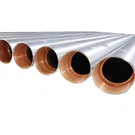


Ensuring the quality of a pup joint during production is a multi - faceted process that demands meticulous attention to detail, adherence to strict standards, and the use of advanced techniques. As a pup joint supplier, we understand the critical importance of delivering high - quality products to our customers, who rely on these components for various applications in industries such as oil and gas, construction, and infrastructure.
Understanding the Pup Joint
A pup joint is a short section of Line Pipe that is used in pipelines, wellbores, and other industrial applications. It serves as a connector or an adjustment piece to ensure the proper fit and alignment of longer pipe sections. Given its role in maintaining the integrity of the entire system, the quality of a pup joint is non - negotiable.
Raw Material Selection
The foundation of a high - quality pup joint lies in the selection of the right raw materials. We source our steel from reputable mills that meet international standards such as API (American Petroleum Institute) specifications. These standards ensure that the steel has the appropriate chemical composition, mechanical properties, and surface finish.
For instance, the carbon content in the steel must be carefully controlled to balance the strength and ductility of the pup joint. A higher carbon content can increase the strength but may also make the material more brittle, while a lower carbon content can improve ductility but may reduce strength. Throughout the sourcing process, we conduct thorough inspections of the incoming raw materials, including checking for any surface defects, such as cracks, pits, or scale. We also perform chemical analysis and mechanical testing to verify the material's properties against the specified requirements.
Precision Machining
Once the raw materials are approved, the machining process begins. Precision machining is crucial for achieving the correct dimensions and surface finish of the pup joint. We utilize state - of - the - art CNC (Computer Numerical Control) machining equipment, which allows for high - accuracy cutting, threading, and shaping operations.
During the machining process, we closely monitor the cutting parameters, such as cutting speed, feed rate, and depth of cut, to ensure consistent quality. For example, when threading the pup joint, the pitch, depth, and profile of the threads must be precisely controlled to ensure a proper fit with D10 Coupling or other connecting components. Any deviation in the thread dimensions can lead to leakage or failure in the pipeline system.
To minimize the risk of machining errors, we have a comprehensive quality control system in place. This includes in - process inspections at various stages of machining, as well as final inspections using advanced measuring tools such as calipers, micrometers, and coordinate measuring machines (CMM). These tools allow us to measure the dimensions of the pup joint with high accuracy and ensure that it meets the specified tolerances.
Heat Treatment
Heat treatment is another critical step in the production of high - quality pup joints. It is used to improve the mechanical properties of the steel, such as hardness, strength, and toughness. The heat treatment process involves heating the pup joint to a specific temperature and then cooling it at a controlled rate.
We use different heat treatment methods depending on the specific requirements of the pup joint. For example, quenching and tempering are commonly used to achieve high strength and toughness. Quenching involves rapidly cooling the heated pup joint in a quenching medium, such as oil or water, to transform the microstructure of the steel into a harder phase. Tempering is then carried out to relieve the internal stresses and improve the ductility of the material.
Throughout the heat treatment process, we closely monitor the temperature and time parameters to ensure consistent and repeatable results. We also perform hardness testing and microstructure analysis after heat treatment to verify that the desired mechanical properties have been achieved.
Coating and Surface Treatment
To protect the pup joint from corrosion and to improve its wear resistance, we apply coatings and surface treatments. The choice of coating depends on the specific application and the environmental conditions in which the pup joint will be used.
Common coating options include epoxy coatings, fusion - bonded epoxy (FBE) coatings, and zinc coatings. These coatings provide a barrier between the steel surface and the surrounding environment, preventing the penetration of moisture, oxygen, and other corrosive agents.
Before applying the coating, we ensure that the surface of the pup joint is properly prepared. This involves cleaning the surface to remove any dirt, oil, or rust, and then roughening the surface to improve the adhesion of the coating. After coating application, we conduct adhesion tests and thickness measurements to ensure the quality of the coating.
Quality Control and Testing
In addition to the in - process inspections during machining and heat treatment, we conduct a series of final testing procedures on the finished pup joints. These tests are designed to verify the mechanical properties, integrity, and performance of the product.
One of the key tests is the hydrostatic test, which involves filling the pup joint with water and pressurizing it to a specified level. This test checks for any leaks or weaknesses in the joint and ensures its ability to withstand the pressure in the pipeline system.
We also perform non - destructive testing (NDT) methods, such as ultrasonic testing (UT), magnetic particle testing (MT), and radiographic testing (RT). These methods can detect internal and surface defects, such as cracks and voids, without damaging the pup joint.
Tensile testing and hardness testing are also carried out to verify the mechanical properties of the pup joint. Tensile testing measures the maximum stress that the pup joint can withstand before breaking, while hardness testing determines the material's resistance to indentation.
Assembly and Compatibility Testing
If the pup joint is part of a larger system, we also conduct assembly and compatibility testing. This involves fitting the pup joint with other components, such as Premium Connection and couplings, to ensure a proper fit and alignment.
We check for any interference or misalignment issues during assembly and verify that all the components work together smoothly. Compatibility testing also includes evaluating the performance of the joint under various operating conditions, such as temperature, pressure, and vibration.


Documentation and Traceability
As a responsible pup joint supplier, we maintain detailed documentation throughout the production process. This includes records of raw material certificates, machining and heat treatment parameters, quality control test results, and assembly reports.
The documentation provides traceability for every pup joint we produce, allowing us to track its history from the raw material stage to the finished product. In the event of any quality issues or customer inquiries, we can quickly access the relevant information and provide accurate and detailed responses.
Relying on Skilled Workforce and Continuous Improvement
Behind all these quality - ensuring processes is our skilled workforce. Our technicians and engineers have years of experience in the field of pup joint production. They are well - trained in operating the advanced machinery and equipment and are knowledgeable about the latest industry standards and best practices.
We also believe in the power of continuous improvement. We regularly review our production processes, quality control measures, and testing procedures to identify areas for improvement. By implementing new technologies and methodologies, we can enhance the quality of our pup joints and increase our production efficiency.
In conclusion, ensuring the quality of a pup joint during production is a complex but essential process. By focusing on raw material selection, precision machining, heat treatment, coating, quality control, and testing, we can produce high - quality pup joints that meet the strict requirements of our customers. If you are looking for a reliable pup joint supplier, we invite you to reach out and start a conversation about your specific needs. We are committed to providing you with the best - quality products and exceptional service.
References
- API Standards for Line Pipe and Tubular Goods
- Machining and Manufacturing Handbook
- Heat Treatment Principles and Practices in Metallurgy