


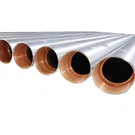


As a supplier of 4" Casing, I often encounter inquiries from customers regarding the feasibility of using 4" Casing in a ceiling. This blog post aims to provide a comprehensive analysis of this topic, exploring the technical, practical, and regulatory aspects to help you make an informed decision.
Technical Considerations
Structural Integrity
The first and foremost consideration when using 4" Casing in a ceiling is its structural integrity. 4" Casing is typically designed for use in oil and gas well applications, where it is subjected to high pressure and stress. In a ceiling application, the primary load on the casing will be its own weight and any additional loads such as lighting fixtures or HVAC ducts.
The structural strength of 4" Casing depends on several factors, including its material composition, wall thickness, and manufacturing process. Most 4" Casing is made of steel, which has excellent strength and durability. However, the specific grade of steel and the wall thickness can vary significantly, affecting the casing's load-bearing capacity.
To determine if 4" Casing can support the required loads in a ceiling application, it is essential to consult a structural engineer. The engineer can perform a detailed analysis of the casing's strength and stiffness, taking into account the specific design requirements and loading conditions.
Fire Resistance
Another important consideration is the fire resistance of 4" Casing. In a ceiling application, the casing may be exposed to fire, and it is crucial to ensure that it can withstand the heat and flames without compromising its structural integrity.
Most 4" Casing is not inherently fire-resistant, as it is designed for use in non-fire-prone environments. However, there are several ways to improve the fire resistance of the casing, such as applying a fireproof coating or using a fire-rated insulation material.
It is important to note that the fire resistance requirements for ceiling applications may vary depending on the building code and the specific use of the space. Therefore, it is essential to consult with a fire protection engineer or a local building department to ensure that the 4" Casing meets the necessary fire safety standards.
Acoustic Performance
In addition to structural and fire considerations, the acoustic performance of 4" Casing in a ceiling application is also important. The casing can act as a sound barrier, reducing the transmission of noise between different areas of the building.
The acoustic performance of 4" Casing depends on several factors, including its material composition, wall thickness, and installation method. Steel casing generally has good sound insulation properties, but the specific performance can vary depending on the design and construction of the ceiling.
To improve the acoustic performance of the 4" Casing, it is recommended to use a sound-absorbing material such as mineral wool or fiberglass insulation. The insulation can be installed between the casing and the ceiling joists to reduce the transmission of sound.


Practical Considerations
Installation
The installation of 4" Casing in a ceiling can be a complex and challenging process, requiring specialized equipment and expertise. The casing must be properly supported and secured to the ceiling joists to ensure its stability and safety.
In addition, the installation process may require cutting and welding the casing, which can be dangerous and should only be performed by qualified professionals. It is important to follow all safety procedures and regulations during the installation process to prevent accidents and injuries.
Maintenance
Once the 4" Casing is installed in the ceiling, it will require regular maintenance to ensure its continued performance and safety. The casing should be inspected periodically for signs of damage or corrosion, and any issues should be addressed promptly.
In addition, the casing may need to be cleaned and painted periodically to prevent rust and corrosion. It is important to use the appropriate cleaning and painting products to avoid damaging the casing.
Cost
The cost of using 4" Casing in a ceiling application can vary depending on several factors, including the material cost, installation cost, and maintenance cost. Steel casing is generally more expensive than other ceiling materials such as drywall or plaster, but it offers several advantages in terms of strength, durability, and fire resistance.
In addition, the cost of installation can be significant, as it requires specialized equipment and expertise. Therefore, it is important to consider the total cost of the project, including the initial investment and the long-term maintenance cost, before deciding to use 4" Casing in a ceiling application.
Regulatory Considerations
Building Codes
The use of 4" Casing in a ceiling application must comply with all applicable building codes and regulations. The building code requirements for ceiling applications may vary depending on the location and the specific use of the space.
It is important to consult with a local building department or a professional engineer to ensure that the 4" Casing meets the necessary building code requirements. Failure to comply with the building code can result in fines, penalties, and even legal liability.
Safety Standards
In addition to building codes, the use of 4" Casing in a ceiling application must also comply with all applicable safety standards. The safety standards for ceiling applications may include requirements for structural integrity, fire resistance, and acoustic performance.
It is important to use high-quality materials and follow all safety procedures and regulations during the installation and maintenance of the 4" Casing. Failure to comply with the safety standards can result in accidents and injuries, which can have serious consequences for the occupants of the building.
Conclusion
In conclusion, the use of 4" Casing in a ceiling application is possible, but it requires careful consideration of several technical, practical, and regulatory factors. The casing must have sufficient structural strength, fire resistance, and acoustic performance to meet the specific design requirements and safety standards.
In addition, the installation and maintenance of the 4" Casing must be performed by qualified professionals, and all applicable building codes and safety standards must be followed. If you are considering using 4" Casing in a ceiling application, I recommend consulting with a structural engineer, a fire protection engineer, and a local building department to ensure that the project is safe and compliant.
As a supplier of 4" Casing, I am committed to providing high-quality products and services to my customers. If you have any questions or need further information about using 4" Casing in a ceiling application, please do not hesitate to contact me. I would be happy to discuss your specific requirements and provide you with a customized solution.
If you are interested in learning more about our 4" Casing products, please visit our website Casing. We also offer a range of related products, such as Coupling and Pup Joint.
If you are considering purchasing 4" Casing for your ceiling project, I encourage you to reach out to us for a detailed quote and to discuss your specific needs. Our team of experts is ready to assist you in making the right decision and ensuring the success of your project.
References
- Building Code Requirements for Structural Concrete (ACI 318-19)
- Fire Resistance Design Guide for Steel-Framed Buildings (AISC)
- Acoustic Design Guide for Buildings (ASHRAE)