


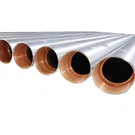


Hydrogen embrittlement is a critical issue in the Oil Country Tubular Goods (OCTG) industry, which can significantly compromise the integrity and performance of tubular products. As an OCTG supplier, we understand the importance of preventing hydrogen embrittlement to ensure the safety and reliability of our products. In this blog, we will explore various strategies to prevent hydrogen embrittlement in OCTG.
Understanding Hydrogen Embrittlement in OCTG
Hydrogen embrittlement occurs when hydrogen atoms diffuse into the metal lattice of OCTG products. This diffusion can be caused by several factors, such as corrosion reactions, electroplating processes, and high - pressure hydrogen environments in oil and gas wells. Once hydrogen atoms are absorbed, they can cause a reduction in the ductility and toughness of the metal, leading to premature cracking and failure.
The consequences of hydrogen embrittlement in OCTG can be severe. In oil and gas operations, it can result in wellbore integrity issues, leakage of hydrocarbons, and even catastrophic failures. These failures not only pose safety risks to personnel but also lead to significant economic losses due to production downtime and the cost of replacing damaged equipment.
Material Selection
One of the fundamental ways to prevent hydrogen embrittlement is through proper material selection. Different grades of steel used in OCTG have varying susceptibilities to hydrogen embrittlement. For example, low - carbon steels generally have better resistance to hydrogen embrittlement compared to high - strength steels. High - strength steels, while offering advantages in terms of mechanical properties, are more prone to hydrogen embrittlement because they have a higher density of internal defects and grain boundaries, which can act as hydrogen traps.
As an OCTG supplier, we offer a wide range of steel grades for different applications. When selecting materials for our customers, we consider the specific service conditions of the well, including the hydrogen partial pressure, temperature, and the presence of corrosive substances. For wells with high hydrogen content, we may recommend using steels with lower carbon content and appropriate alloying elements. Alloying elements such as nickel, chromium, and molybdenum can improve the resistance of steel to hydrogen embrittlement by modifying the microstructure and reducing the diffusivity of hydrogen.
Surface Coating
Surface coatings play a crucial role in preventing hydrogen embrittlement in OCTG. A well - designed coating can act as a barrier between the metal surface and the hydrogen - containing environment, reducing the rate of hydrogen absorption. There are several types of coatings available for OCTG, including organic coatings, inorganic coatings, and metal coatings.
Organic coatings, such as epoxy and polyurethane coatings, are widely used due to their good adhesion and corrosion resistance. These coatings can provide a physical barrier that prevents hydrogen from reaching the metal surface. Inorganic coatings, such as ceramic coatings, offer excellent hardness and chemical stability, which can also effectively block hydrogen diffusion. Metal coatings, such as zinc or nickel coatings, can provide both a physical barrier and a sacrificial anode effect, protecting the underlying steel from corrosion and hydrogen embrittlement.
At our company, we offer a variety of surface coating options for our OCTG products. Our coatings are carefully selected and applied to ensure optimal performance in different environments. For example, in sour gas wells where hydrogen sulfide is present, we may recommend a special anti - corrosion coating that can resist the corrosive effects of hydrogen sulfide and prevent hydrogen uptake.
Heat Treatment
Heat treatment is another important method for preventing hydrogen embrittlement in OCTG. Proper heat treatment can modify the microstructure of the steel, reducing the number of hydrogen traps and improving the hydrogen diffusion rate. There are several heat treatment processes that can be used, including annealing, tempering, and stress relieving.
Annealing is a process that involves heating the steel to a high temperature and then slowly cooling it. This process can reduce the internal stress in the steel and refine the grain structure, making it more resistant to hydrogen embrittlement. Tempering is often used after quenching to improve the toughness of high - strength steels. By tempering the steel at an appropriate temperature, the internal stress can be relieved, and the hydrogen diffusion rate can be increased, reducing the risk of hydrogen embrittlement.
Stress relieving is a heat treatment process that is specifically designed to reduce the residual stress in the steel. Residual stress can act as a driving force for hydrogen diffusion and can also increase the susceptibility of the steel to cracking. By performing stress - relieving heat treatment, we can minimize the residual stress in our OCTG products and improve their resistance to hydrogen embrittlement.
Quality Control and Testing
Quality control and testing are essential steps in preventing hydrogen embrittlement in OCTG. At our company, we have a comprehensive quality control system in place to ensure that all our products meet the highest standards. We conduct a series of tests on our OCTG products, including chemical analysis, mechanical property testing, and non - destructive testing.
Chemical analysis is used to determine the composition of the steel, ensuring that the alloying elements are within the specified range. Mechanical property testing, such as tensile testing and hardness testing, is used to verify the mechanical performance of the steel. Non - destructive testing methods, such as ultrasonic testing and magnetic particle testing, are used to detect any internal defects or cracks in the OCTG products.
In addition to these standard tests, we also conduct hydrogen embrittlement testing on our products. Hydrogen embrittlement testing can be performed using various methods, such as slow - strain - rate testing and constant - load testing. These tests can simulate the service conditions of the OCTG products and evaluate their susceptibility to hydrogen embrittlement. By conducting these tests, we can ensure that our products are suitable for use in hydrogen - containing environments.
Application of Special Couplings
Special couplings can also contribute to preventing hydrogen embrittlement in OCTG. Special Clearance Coupling is designed to provide a better fit and connection between the tubulars, reducing the stress concentration at the coupling interface. Stress concentration can increase the susceptibility of the steel to hydrogen embrittlement, so by using special clearance couplings, we can minimize this risk.
Flow Coupling is another type of coupling that can improve the flow characteristics of the fluid inside the tubulars. A smooth fluid flow can reduce the turbulence and the formation of local high - pressure areas, which can also help to prevent hydrogen embrittlement. Slotted Casing is often used in wells to allow the inflow of fluids while maintaining the structural integrity of the wellbore. The slots in the casing can also act as a pressure - relief mechanism, reducing the risk of hydrogen embrittlement caused by high - pressure differentials.
Operational Considerations
In addition to material selection, surface coating, heat treatment, quality control, and the use of special couplings, operational considerations are also important for preventing hydrogen embrittlement in OCTG. During well construction and operation, proper handling and installation procedures should be followed to minimize the risk of hydrogen embrittlement.
For example, when handling OCTG products, care should be taken to avoid damage to the surface coating. Any damage to the coating can expose the metal surface to the hydrogen - containing environment, increasing the risk of hydrogen absorption. During installation, the tubulars should be properly aligned and tightened to ensure a good connection and to prevent stress concentration.


In well operation, the pressure and temperature should be carefully controlled. High - pressure and high - temperature conditions can increase the hydrogen solubility and diffusion rate, so maintaining stable operating conditions can help to reduce the risk of hydrogen embrittlement. Regular monitoring of the well conditions, including the hydrogen content and the corrosion rate, is also necessary to detect any potential issues early and take appropriate measures.
Conclusion
Preventing hydrogen embrittlement in OCTG is a complex but essential task. As an OCTG supplier, we are committed to providing our customers with high - quality products that are resistant to hydrogen embrittlement. Through proper material selection, surface coating, heat treatment, quality control, and the use of special couplings, we can effectively reduce the risk of hydrogen embrittlement in our OCTG products.
If you are interested in our OCTG products or have any questions about preventing hydrogen embrittlement, please feel free to contact us for procurement and further discussions. We are ready to provide you with professional advice and solutions tailored to your specific needs.
References
- Jones, D. A. (1992). Principles and Prevention of Corrosion. Prentice Hall.
- Fontana, M. G. (1986). Corrosion Engineering. McGraw - Hill.
- ASM Handbook Volume 13A: Corrosion: Fundamentals, Testing, and Protection. ASM International.