



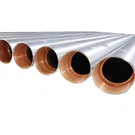


How to Solve the Problems in Using 7" Casing?
As a reliable 7" casing supplier, I understand that encountering problems during the use of 7" casing is not uncommon in the oil and gas industry and various construction projects. These issues can range from installation challenges to long - term operational problems. In this blog, I will delve into some of the common problems associated with using 7" casing and offer practical solutions.
1. Installation - related Problems and Solutions
Alignment Issues
One of the most frequent problems during the installation of 7" casing is misalignment. Poor alignment can lead to difficulties in connecting joints and may cause stress concentrations within the casing, which can compromise its structural integrity over time.
To solve alignment problems, it is essential to utilize advanced surveying and alignment tools before installation. Laser - based alignment systems can provide highly accurate measurements and ensure that the casing is installed along the intended path. Additionally, proper bedding and support structures should be in place. For instance, using sand or gravel bedding can help distribute the weight evenly and prevent the casing from shifting during the installation process.
Joint Connection Difficulties
Connecting the joints of 7" casing can be a tricky task. Thread damage, improper torque application, or the use of incorrect connection types can all lead to connection problems.
To address thread - related issues, it is crucial to inspect the threads carefully before installation. Any signs of damage, such as nicks or burrs, should be repaired or the joint replaced. When it comes to torque application, following the manufacturer's specifications is non - negotiable. Torque wrenches should be calibrated regularly to ensure accurate torque values. Moreover, choosing the right type of coupling is also vital. A Special Clearance Coupling can be a great option in some situations, as it provides a better fit and reduces the risk of connection failure.
2. Corrosion and Erosion Problems in 7" Casing
Corrosion
Corrosion is a major concern for 7" casing, especially in environments where it comes into contact with corrosive substances such as saltwater, acidic fluids, or sulphides. Corrosion can weaken the casing wall, leading to leaks and structural failures.
There are several ways to prevent and mitigate corrosion. One common approach is to use corrosion - resistant materials during the manufacturing process. For example, casing made from stainless steel or alloy steels with high resistance to corrosion can significantly extend the lifespan of the casing. Additionally, applying protective coatings on the casing surface can act as a barrier between the casing and the corrosive environment. Cathodic protection systems can also be installed to reduce the rate of corrosion. These systems work by providing a sacrificial anode that corrodes instead of the casing.
Erosion
Erosion can occur when high - velocity fluids or solids flow around the casing. This can cause the casing wall to wear down over time, reducing its thickness and strength.
To combat erosion, it is important to control the fluid flow rate and direction. Installing flow control devices such as baffles or diffusers can help reduce the impact of high - velocity fluids on the casing. In addition, using erosion - resistant materials or liners inside the casing can provide an extra layer of protection. For example, ceramic liners can offer high resistance to erosion and extend the service life of the casing.


3. Pressure - related Problems
Over - pressure
In some applications, the 7" casing may experience over - pressure conditions. This can be caused by factors such as blockages in the wellbore, sudden changes in fluid flow, or incorrect pressure management. Over - pressure can lead to casing deformation, rupture, or even blowouts.
To handle over - pressure situations, pressure relief valves should be installed at appropriate locations along the casing. These valves are designed to open automatically when the pressure exceeds a predefined safe level, allowing the excess pressure to be released. Regular maintenance and inspection of the pressure relief valves are necessary to ensure their proper functioning. Additionally, performing pressure tests during the installation and commissioning phases can help identify any weak points in the casing and take corrective actions in advance.
Under - pressure
Under - pressure conditions can also pose problems for 7" casing. It can cause the casing to collapse, especially if the external pressure is significantly higher than the internal pressure. This can happen during well - killing operations or when there is a sudden loss of fluid in the wellbore.
To prevent casing collapse due to under - pressure, it is important to maintain a sufficient internal pressure. This can be achieved by injecting fluids into the casing or using pressure - maintaining devices. Monitoring the pressure inside and outside the casing continuously is also crucial. By using pressure sensors and data acquisition systems, operators can detect any under - pressure situations early and take appropriate measures.
4. Compatibility with Other Components
Compatibility with Line Pipe
In many projects, 7" casing needs to be connected with Line Pipe. Compatibility issues can arise due to differences in material properties, dimensions, or connection types.
To ensure compatibility, it is necessary to select line pipes that have similar material properties to the 7" casing. This includes factors such as strength, corrosion resistance, and thermal expansion coefficients. In terms of dimensions, accurate measurements should be taken to ensure a proper fit between the casing and the line pipe. When it comes to connection, using compatible coupling systems and following the correct installation procedures are essential.
Compatibility with Pup Joint
Pup Joints are often used in combination with 7" casing to adjust the length of the casing string. Compatibility problems can occur if the pup joint is not properly matched with the casing in terms of size, thread type, and material.
To address these issues, careful selection of pup joints is required. The pup joint should have the same thread type as the 7" casing to ensure a secure connection. The material of the pup joint should also be compatible with the casing to avoid galvanic corrosion. Additionally, proper handling and installation of the pup joint are necessary to prevent any damage during the connection process.
Conclusion
Using 7" casing in various applications can present a range of problems, but with the right knowledge and solutions, these issues can be effectively addressed. As a 7" casing supplier, I am committed to providing high - quality products and technical support to help our customers overcome these challenges. If you are facing problems in using 7" casing or need to purchase high - quality 7" casing, please feel free to contact me for further discussion and negotiation. We are here to offer you the best solutions tailored to your specific needs.
References
- API (American Petroleum Institute) Standards for Casing and Tubing
- Industry research reports on oil and gas well construction and casing technology
- Manufacturer's technical documentation for 7" casing, line pipes, pup joints, and couplings