


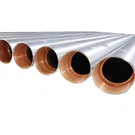


Hey there! As an OCTG (Oil Country Tubular Goods) supplier, I've seen firsthand the unique requirements of exploratory wells and production wells. These two types of wells serve different purposes in the oil and gas industry, and the OCTG used in them has some key differences. Let's dive into what sets them apart.
1. Purpose and Environment
First off, we need to understand the purpose of exploratory and production wells. Exploratory wells are like the detectives of the oil and gas world. They're drilled to find out if there are any hydrocarbon reserves in a particular area. These wells are often drilled in uncharted territories, where the geology is less well - known. The environment can be harsh, with unpredictable rock formations, high pressures, and extreme temperatures.
On the other hand, production wells are drilled after a successful exploration. Their job is to extract the hydrocarbons from the reservoir to the surface. Since the geology is better understood at this stage, the conditions are relatively more predictable compared to exploratory wells.
2. OCTG Design and Specifications
a. Wall Thickness
In exploratory wells, we often use OCTG with thicker walls. This is because the drilling process in these wells is riskier. The drill bit might encounter hard rock formations or unexpected high - pressure zones. Thicker - walled OCTG can withstand these challenges better and reduce the risk of collapse or rupture. For example, if a well is being drilled in a region with a lot of fault lines, the OCTG needs to be strong enough to handle the stress caused by the shifting rocks.
In production wells, the wall thickness can be more optimized. Since the geology is known, we can use OCTG with thinner walls in some cases, which can save costs without sacrificing safety. However, in areas where the reservoir has high - pressure fluids, thicker - walled OCTG might still be required.
b. Thread Design
The thread design of OCTG is crucial for both types of wells, but there are differences. In exploratory wells, we often prefer more robust thread designs. The D10 Coupling is a great example. It has a strong and reliable thread connection that can withstand the vibrations and torque during the drilling process. Exploratory drilling involves a lot of trial - and - error, and the thread needs to hold up under these conditions.
For production wells, the thread design can be more focused on sealing. Since the goal is to extract the hydrocarbons efficiently, a good seal is essential to prevent any leakage. The Special Clearance Coupling is designed to provide a tight seal, which is perfect for production wells.
c. Material Selection
The material used for OCTG also varies between exploratory and production wells. In exploratory wells, we typically use high - strength materials. These materials can handle the extreme conditions and potential damage during the drilling process. For instance, high - grade steel alloys are commonly used because they have excellent mechanical properties and corrosion resistance.
In production wells, the material selection can be more tailored to the specific reservoir conditions. If the reservoir fluid is corrosive, we might use materials with better corrosion resistance. On the other hand, if the pressure is relatively low, we can use less expensive materials without compromising on performance.
3. Quantity and Sizing
a. Quantity
Exploratory wells usually require a smaller quantity of OCTG. Since these wells are mainly for testing and exploration, the drilling depth might not be as deep as production wells in some cases. Also, the exploration process might involve multiple wells in a small area, but each well doesn't need as much OCTG as a full - scale production well.
Production wells, on the other hand, need a large quantity of OCTG. These wells are designed to operate for a long time and extract a significant amount of hydrocarbons. So, we need to supply enough OCTG to line the wellbore from the surface to the reservoir.


b. Sizing
The sizing of OCTG also differs. Exploratory wells often use smaller - diameter OCTG. This is because the drill bit used in exploration is usually smaller, and the wellbore diameter is also relatively small. Smaller - diameter OCTG is easier to handle during the drilling process and can reduce costs.
Production wells can use larger - diameter OCTG. A larger diameter allows for a higher flow rate of hydrocarbons from the reservoir to the surface. For example, Casing with a larger diameter can provide a more efficient pathway for the oil or gas to travel.
4. Cost Considerations
Cost is always a factor in the oil and gas industry. In exploratory wells, the cost of OCTG is a part of the overall exploration budget. Since the outcome of the exploration is uncertain, companies are often more cautious about spending. They want to use high - quality OCTG but also keep the costs under control. We, as suppliers, need to offer solutions that balance performance and cost.
In production wells, the focus is more on long - term cost - effectiveness. Although the initial investment in OCTG for production wells is high due to the large quantity required, the goal is to ensure a reliable and efficient production process over the well's lifespan. Using high - quality OCTG can reduce maintenance costs and increase the overall productivity of the well.
5. Installation and Maintenance
a. Installation
The installation process of OCTG in exploratory and production wells has some differences. In exploratory wells, the installation needs to be relatively quick. The drilling process is time - sensitive, and delays can be costly. So, we need to provide OCTG that is easy to install and can be quickly connected.
In production wells, the installation is more meticulous. The OCTG needs to be installed precisely to ensure a good seal and proper alignment. This is because any issues with the installation can lead to problems during the production phase, such as leakage or reduced flow rate.
b. Maintenance
Maintenance requirements also vary. Exploratory wells usually don't require as much maintenance since they are only in operation for a short period. However, if there are any signs of damage during the exploration process, the OCTG needs to be inspected and repaired or replaced immediately.
Production wells need regular maintenance. Over time, the OCTG can be affected by corrosion, wear, and other factors. Regular inspections and maintenance can help extend the lifespan of the OCTG and ensure the continuous operation of the well.
Wrapping Up and Reaching Out
So, as you can see, there are significant differences between the OCTG used in exploratory wells and production wells. These differences are driven by the unique requirements of each type of well. Whether you're involved in exploration or production, choosing the right OCTG is crucial for the success of your project.
As an experienced OCTG supplier, we have the expertise and products to meet your specific needs. If you're looking for high - quality OCTG for your exploratory or production wells, don't hesitate to reach out. We can provide you with detailed information, technical support, and competitive pricing. Let's work together to ensure the success of your oil and gas projects.
References
- API (American Petroleum Institute) standards on OCTG design and specifications.
- Industry reports on oil and gas exploration and production technologies.