


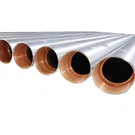


Hey there, folks! I'm an OCTG supplier, and today I wanna chat about the differences between OCTG (Oil Country Tubular Goods) used in onshore and offshore oil fields. It's a topic that's super important in the oil and gas industry, and understanding these differences can really help you make the right choices for your projects.
Environmental Conditions
First off, let's talk about the environmental conditions. Onshore oil fields are typically located on land, and the conditions can vary widely depending on the geographical location. You might have arid deserts, cold tundras, or humid forests. The temperature range on land can be pretty extreme, from scorching hot days in the desert to freezing cold nights in the mountains.


Offshore oil fields, on the other hand, are in the middle of the ocean. The environment there is constantly wet, and the equipment is exposed to saltwater, which is extremely corrosive. The waves, tides, and storms also put a lot of mechanical stress on the OCTG. For example, during a hurricane, the offshore rigs and the OCTG they use have to withstand high - speed winds and massive waves.
When it comes to OCTG, this means that for onshore fields, we might focus more on materials that can handle temperature variations. For instance, in cold regions, we need pipes that are resistant to brittle fracture at low temperatures. In hot and dry areas, we might look for materials that can resist heat - induced degradation.
For offshore fields, corrosion resistance is a top priority. That's where CRA Pipe comes in really handy. CRA stands for Corrosion - Resistant Alloy, and these pipes are specifically designed to withstand the harsh saltwater environment. They're made from materials like stainless steel or nickel - based alloys, which have excellent corrosion resistance properties.
Installation and Accessibility
Another big difference is in the installation and accessibility. Onshore oil fields are generally more accessible. You can use trucks to transport the OCTG directly to the site. The installation process is also relatively straightforward. You can use heavy - duty construction equipment like cranes and bulldozers to dig the wells and install the pipes.
Offshore, it's a whole different ballgame. Transporting OCTG to an offshore rig requires specialized vessels. These vessels have to be able to handle the rough sea conditions and safely deliver the pipes to the rig. The installation process is also more complex. You need to use remote - operated vehicles (ROVs) to install the pipes at great depths. And since the rigs are far from the shore, any maintenance or repair work takes a lot more time and resources.
For onshore projects, we might recommend Cold Rolled Pipe in some cases. Cold - rolled pipes have a smoother surface finish and tighter dimensional tolerances, which can make the installation process a bit easier. They're also more cost - effective in onshore applications where the environmental conditions aren't as extreme.
Well Depth and Pressure
Well depth and pressure are also significant factors. Onshore wells can vary in depth, but generally, they're not as deep as offshore wells. The pressure in onshore wells is also relatively lower compared to offshore ones.
In offshore oil fields, wells can go down to several thousand meters. The high pressure at these depths puts a lot of stress on the OCTG. The pipes need to be able to withstand the internal pressure of the oil and gas flowing through them, as well as the external pressure from the surrounding water and rock formations.
For onshore wells, standard Casing can often do the job. Casing is used to line the wellbore and protect it from collapse. It provides structural support and helps to isolate different layers of the well. In onshore applications, you can use casing with a relatively lower pressure rating.
In offshore applications, we need high - strength casing that can handle the extreme pressures. The casing has to be carefully designed and tested to ensure its integrity at great depths.
Regulatory and Safety Requirements
Regulatory and safety requirements also differ between onshore and offshore oil fields. Onshore oil fields are subject to local and national regulations. These regulations are usually focused on environmental protection, worker safety, and land use.
Offshore, there are additional international regulations. The International Maritime Organization (IMO) and other international bodies set standards for offshore operations. These regulations are more stringent because of the potential environmental impact of an offshore oil spill.
For OCTG, this means that in offshore applications, the pipes have to meet higher safety and quality standards. They need to be tested more rigorously to ensure that they can withstand the harsh conditions without failing. Onshore, while the regulations are still important, they might not be as strict in some cases.
Cost Considerations
Cost is always a factor in any project. Onshore projects are generally more cost - effective. The transportation and installation costs are lower, and the OCTG materials themselves can be less expensive. You can often use more standard materials and simpler installation methods, which saves money.
Offshore projects are much more expensive. The cost of transporting the OCTG to the rig, the specialized installation equipment, and the high - quality materials all add up. However, the potential rewards are also higher because offshore oil fields often have larger reserves.
As an OCTG supplier, I understand that cost is a major concern for my customers. That's why I work closely with them to find the right balance between quality and cost. For onshore projects, I can recommend cost - effective options like cold - rolled pipes and standard casing. For offshore projects, I can help customers select the best CRA pipes and high - strength casing that meet the strict requirements while still being cost - efficient.
Conclusion
In conclusion, there are significant differences between OCTG used in onshore and offshore oil fields. The environmental conditions, installation and accessibility, well depth and pressure, regulatory requirements, and cost all play a role in determining the right type of OCTG for a project.
If you're involved in an oil and gas project, whether it's onshore or offshore, I'd love to help you find the perfect OCTG solution. I have a wide range of products, including CRA Pipe, Cold Rolled Pipe, and Casing. Just reach out to me, and we can have a chat about your specific needs. Let's work together to make your project a success!
References
- API (American Petroleum Institute) standards for OCTG.
- Industry reports on onshore and offshore oil field operations.