


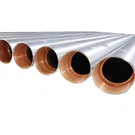


The line pipe industry plays a pivotal role in the global energy infrastructure, serving as the backbone for transporting oil, gas, and other fluids across vast distances. As a line pipe supplier, I've witnessed firsthand the industry's evolution and the challenges and opportunities it faces. In this blog, I'll explore the future prospects for the line pipe industry, considering technological advancements, market trends, and regulatory factors.
Technological Advancements
One of the most significant drivers of change in the line pipe industry is technological innovation. Advancements in materials science, manufacturing processes, and inspection techniques are enabling the production of higher-quality, more durable line pipes. For example, the development of high-strength steels has allowed for the construction of pipelines with thinner walls, reducing material costs and increasing transportation efficiency. Additionally, new coating technologies are improving the corrosion resistance of line pipes, extending their service life and reducing maintenance requirements.
Another area of technological advancement is in the field of pipeline monitoring and inspection. The use of sensors, drones, and other advanced technologies is enabling real-time monitoring of pipeline integrity, allowing for early detection of potential issues and proactive maintenance. This not only improves safety but also reduces the risk of costly downtime and environmental damage.
Market Trends
The demand for line pipes is closely tied to the global energy market, which is constantly evolving. In recent years, the shift towards renewable energy sources such as solar and wind power has led to a decrease in demand for traditional fossil fuels. However, oil and gas will continue to play a significant role in the global energy mix for the foreseeable future, particularly in developing countries. As a result, the demand for line pipes for oil and gas transportation is expected to remain stable in the coming years.
In addition to the energy market, the line pipe industry is also influenced by other factors such as infrastructure development, urbanization, and population growth. The construction of new pipelines for water supply, sewage disposal, and other applications is creating new opportunities for line pipe suppliers. Furthermore, the increasing demand for natural gas as a cleaner alternative to coal and oil is driving the expansion of natural gas pipelines, both domestically and internationally.
Regulatory Factors
The line pipe industry is subject to a wide range of regulations and standards, which are designed to ensure the safety, reliability, and environmental performance of pipelines. These regulations cover everything from material selection and manufacturing processes to pipeline design, construction, and operation. As a line pipe supplier, it's essential to stay up-to-date with the latest regulatory requirements and ensure that our products meet or exceed these standards.


In recent years, there has been an increasing focus on environmental regulations, particularly in relation to greenhouse gas emissions and water pollution. The line pipe industry is no exception, and pipeline operators are under pressure to reduce their environmental impact. This has led to the development of new technologies and practices for reducing emissions, such as the use of renewable energy sources for pipeline operation and the implementation of water management strategies.
Challenges and Opportunities
While the future prospects for the line pipe industry are generally positive, there are also several challenges that need to be addressed. One of the biggest challenges is the increasing competition from low-cost suppliers, particularly from countries such as China and India. These suppliers are able to offer line pipes at lower prices due to their lower labor costs and economies of scale. To remain competitive, line pipe suppliers need to focus on innovation, quality, and customer service.
Another challenge is the volatility of the global energy market, which can have a significant impact on the demand for line pipes. The recent decline in oil prices, for example, has led to a decrease in investment in new oil and gas projects, which has in turn reduced the demand for line pipes. To mitigate this risk, line pipe suppliers need to diversify their product portfolio and target other industries, such as water and wastewater management.
Despite these challenges, there are also several opportunities for growth and expansion in the line pipe industry. The increasing demand for natural gas, particularly in Asia and Europe, is creating new opportunities for line pipe suppliers. The development of new technologies such as shale gas extraction and liquefied natural gas (LNG) is also driving the expansion of natural gas pipelines. Additionally, the growing focus on renewable energy sources such as solar and wind power is creating new opportunities for line pipe suppliers in the construction of power transmission lines and other infrastructure.
Our Product Portfolio
As a line pipe supplier, we offer a wide range of products to meet the needs of our customers. Our product portfolio includes Special Clearance Coupling, Tubing, and CRA Pipe. These products are designed to meet the highest standards of quality and performance, and are suitable for a variety of applications, including oil and gas transportation, water supply, and sewage disposal.
Our Special Clearance Coupling is a high-performance coupling that provides a secure and reliable connection between two pipes. It is designed to withstand high pressure and temperature, and is suitable for use in a variety of applications, including oil and gas pipelines, water pipelines, and industrial piping systems.
Our Tubing is a high-quality product that is used for a variety of applications, including oil and gas production, water injection, and well completion. It is available in a range of sizes and grades, and is designed to meet the specific requirements of our customers.
Our CRA Pipe is a corrosion-resistant alloy pipe that is used in harsh environments where traditional carbon steel pipes are prone to corrosion. It is available in a range of alloys, including stainless steel, duplex stainless steel, and nickel-based alloys, and is suitable for use in a variety of applications, including oil and gas production, chemical processing, and power generation.
Conclusion
In conclusion, the future prospects for the line pipe industry are generally positive, despite the challenges and uncertainties that lie ahead. Technological advancements, market trends, and regulatory factors are all driving the evolution of the industry, creating new opportunities for growth and expansion. As a line pipe supplier, we're committed to staying at the forefront of these changes and providing our customers with the highest-quality products and services.
If you're interested in learning more about our line pipe products or have any questions about the industry, please don't hesitate to contact us. We'd be happy to discuss your specific requirements and provide you with a customized solution.
References
- American Petroleum Institute (API). (2023). API Standards for Line Pipe.
- International Organization for Standardization (ISO). (2023). ISO Standards for Pipeline Systems.
- U.S. Energy Information Administration (EIA). (2023). International Energy Outlook.