


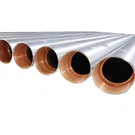


Yo, what's up! I'm an OCTG (Oil Country Tubular Goods) supplier, and today I wanna chat about the international trade regulations for OCTG. It's a topic that's super important for folks in the industry, whether you're a supplier like me or a buyer looking to get the best deals.
First off, let's talk about why these regulations matter. International trade regulations are like the rules of the game in the global market. They ensure fair competition, protect consumers, and maintain the quality and safety of products. For OCTG, which is used in the oil and gas industry, these regulations are even more crucial because the stakes are high. A faulty pipe or coupling can lead to serious accidents and environmental disasters.
One of the key aspects of international trade regulations for OCTG is tariffs. Tariffs are taxes that governments impose on imported goods. They can have a big impact on the cost of OCTG products. For example, if a country raises its tariffs on OCTG imports, it can make it more expensive for buyers in that country to purchase our products. This can affect our sales and profitability. On the other hand, some countries may offer tariff exemptions or preferential treatment for certain types of OCTG products. It's important for us suppliers to stay on top of these tariff changes so we can adjust our pricing and marketing strategies accordingly.
Another important regulation is quality standards. Different countries have different quality standards for OCTG products. These standards cover things like the chemical composition, mechanical properties, and dimensional accuracy of the pipes and couplings. For instance, the American Petroleum Institute (API) has its own set of standards for OCTG, which are widely recognized in the industry. When we export our products to countries that follow API standards, we need to make sure our products meet those requirements. This means conducting rigorous quality control tests during the manufacturing process. We also need to provide detailed documentation to prove that our products meet the standards. Failure to meet the quality standards can result in our products being rejected at the border, which can be a huge loss for us.
In addition to tariffs and quality standards, there are also regulations related to environmental protection. The oil and gas industry is under increasing pressure to reduce its environmental impact. As a result, many countries have introduced regulations to ensure that OCTG products are environmentally friendly. For example, some regulations restrict the use of certain chemicals in the manufacturing process. We need to comply with these regulations to avoid any legal issues and to meet the expectations of our environmentally conscious customers.
Now, let's talk about some of the specific products in the OCTG category. One of the popular products is the Cold Rolled Pipe. Cold rolled pipes are known for their high precision and smooth surface finish. They are often used in applications where tight tolerances are required. However, when trading cold rolled pipes internationally, we need to be aware of the regulations regarding their production and use. Some countries may have restrictions on the import of cold rolled pipes if they are made using certain processes or materials.
Another important product is the D10 Coupling. D10 couplings are used to connect two pipes together. They need to be strong and reliable to ensure the integrity of the pipeline. International trade regulations for D10 couplings focus on their quality and safety. We need to make sure that our D10 couplings are manufactured to the highest standards and that they meet the relevant safety requirements.
And of course, we can't forget about the Coupling in general. Couplings come in different types and sizes, and they play a crucial role in the oil and gas industry. When trading couplings internationally, we need to consider the regulations related to their design, manufacturing, and installation. Some countries may require us to provide installation instructions and training to ensure that the couplings are installed correctly.


As an OCTG supplier, I know that keeping up with all these international trade regulations can be a challenge. But it's also an opportunity. By complying with the regulations, we can build a good reputation in the market and gain the trust of our customers. It also allows us to access new markets and expand our business.
If you're in the market for high-quality OCTG products, I'd love to have a chat with you. Whether you're looking for cold rolled pipes, D10 couplings, or other types of couplings, I can provide you with the best products that meet all the international trade regulations. Feel free to reach out to me to start a conversation about your OCTG needs.
In conclusion, international trade regulations for OCTG are complex but essential. They cover a wide range of aspects, from tariffs and quality standards to environmental protection. As a supplier, I'm committed to staying compliant with these regulations to provide the best products to my customers. If you're interested in working with me, don't hesitate to get in touch. Let's do business and make the most of the global market together.
References
- American Petroleum Institute (API) Standards
- Various international trade agreements and regulations
- Industry reports on OCTG trade and regulations