


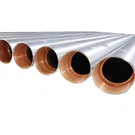


What are the advantages of using CRA Pipe?
In the dynamic landscape of the oil and gas industry, the choice of materials for pipelines is crucial. Corrosion-Resistant Alloy (CRA) pipes have emerged as a game-changer, offering a multitude of advantages that make them a preferred option for many applications. As a reputable CRA pipe supplier, I am well - versed in the benefits these pipes bring to the table.
1. Superior Corrosion Resistance
One of the most significant advantages of CRA pipes is their exceptional corrosion resistance. In the oil and gas industry, pipelines are often exposed to harsh environments, including corrosive fluids such as hydrogen sulfide (H₂S), carbon dioxide (CO₂), and saltwater. Traditional carbon steel pipes are highly susceptible to corrosion in such conditions, which can lead to leaks, reduced flow capacity, and ultimately, pipeline failure.
CRA pipes, on the other hand, are made from alloys that are specifically designed to withstand these corrosive elements. For example, stainless steel CRA pipes contain chromium, which forms a passive oxide layer on the surface of the pipe. This layer acts as a barrier, preventing the underlying metal from coming into contact with corrosive agents. Nickel-based alloys, another type of CRA, offer even higher levels of corrosion resistance, especially in high - temperature and high - pressure environments.
This superior corrosion resistance translates into longer pipeline lifespans. With CRA pipes, operators can expect to reduce maintenance costs significantly as they do not have to replace or repair corroded sections of the pipeline as frequently. In addition, it enhances the safety of the operations by minimizing the risk of leaks and spills, which can have severe environmental and economic consequences.
2. High Strength and Durability
CRA pipes are known for their high strength and durability. These pipes can withstand high internal pressures and external loads, making them suitable for a wide range of applications, from on - shore to off - shore oil and gas production. The high strength of CRA pipes allows for the construction of pipelines with thinner walls compared to traditional carbon steel pipes, while still maintaining the same level of structural integrity.
This not only reduces the weight of the pipeline, which can lead to lower transportation and installation costs, but also allows for more efficient use of materials. For example, in deep - water offshore projects, the reduced weight of CRA pipes is a significant advantage as it eases the installation process and reduces the stress on the supporting structures.
Moreover, the durability of CRA pipes means that they can better withstand the wear and tear associated with the flow of abrasive fluids. In oil and gas production, the fluids often contain sand and other solid particles that can cause erosion in the pipeline. CRA pipes are more resistant to this type of wear, ensuring a longer service life even in abrasive environments.
3. Compatibility with Different Fluids
CRA pipes offer excellent compatibility with a wide variety of fluids. In the oil and gas industry, the composition of the produced fluids can vary greatly depending on the location and the type of reservoir. Some fluids may be highly acidic, while others may contain high levels of dissolved salts.
CRA pipes can handle these different fluid compositions without significant degradation. For instance, in sour gas fields where H₂S is present, CRA pipes made from appropriate alloys can prevent the formation of sulfide stress cracking, which is a major concern for carbon steel pipes. This compatibility allows for greater flexibility in the design and operation of the pipeline systems, as operators do not have to worry about the chemical reactions between the pipe material and the fluids.
4. Reduced Environmental Impact
In today's world, environmental concerns are at the forefront of many industries, including oil and gas. CRA pipes contribute to reducing the environmental impact of pipeline operations. As mentioned earlier, their corrosion resistance reduces the risk of leaks and spills, which can contaminate soil, water, and air.
In addition, the longer lifespan of CRA pipes means that fewer pipes need to be manufactured and transported over time. This reduces the energy consumption and greenhouse gas emissions associated with the production and transportation of new pipes. By choosing CRA pipes, operators can demonstrate their commitment to sustainable development and environmental protection.
5. Improved Flow Efficiency
The smooth inner surface of CRA pipes can improve the flow efficiency of the fluids. In a pipeline, the friction between the fluid and the pipe wall can cause pressure drops, which in turn require more energy to pump the fluid. CRA pipes have a lower roughness coefficient compared to carbon steel pipes, which means less friction and lower pressure drops.
This results in reduced energy consumption for pumping, leading to cost savings for the operators. In large - scale pipeline systems, even a small improvement in flow efficiency can translate into significant savings over the long term.
Applications of CRA Pipes
CRA pipes find extensive applications in the oil and gas industry. They are commonly used in Casing and Tubing applications. In casing, CRA pipes provide a protective barrier around the wellbore, preventing the collapse of the surrounding rock and protecting the well from corrosion. As tubing, they are used to transport the oil and gas from the reservoir to the surface.
Another important application is in subsea pipelines. Subsea environments are extremely harsh, with high pressures, low temperatures, and corrosive seawater. CRA pipes are well - suited for these conditions, ensuring the reliable operation of the subsea pipeline systems. Additionally, CRA pipes are also used in refineries and petrochemical plants, where they are exposed to various corrosive chemicals and high - temperature processes.


In some cases, CRA pipes are used in combination with other components such as D10 Coupling. These couplings are designed to connect the CRA pipes securely, ensuring a leak - free and reliable connection.
Conclusion
In conclusion, the advantages of using CRA pipes are numerous and significant. From superior corrosion resistance and high strength to reduced environmental impact and improved flow efficiency, CRA pipes offer a comprehensive solution for the oil and gas industry. As a CRA pipe supplier, I understand the importance of providing high - quality products that meet the specific needs of our customers.
If you are in the market for CRA pipes or are interested in learning more about how they can benefit your operations, I encourage you to reach out for a procurement discussion. Our team of experts is ready to assist you in selecting the right CRA pipes for your project and providing you with the best possible solutions.
References
- “Corrosion in the Oil and Gas Industry,” NACE International, 2018.
- “Materials Selection for Oil and Gas Pipelines,” ASME, 2020.
- “Advances in Corrosion - Resistant Alloys for the Oil and Gas Sector,” Journal of Materials Science, 2021.