


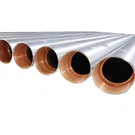


What are the magnetic properties of 7" casing?
As a trusted supplier of 7" casing, I often encounter inquiries regarding the magnetic properties of our products. These properties are not only crucial for understanding the behavior of the casing in various applications but also play a significant role in the oil and gas industry, where 7" casing is widely used.
Basics of Magnetic Properties
Magnetism is a fundamental property of matter, arising from the movement of electric charges. In the context of 7" casing, the magnetic properties are mainly determined by the material composition and the manufacturing process. Most 7" casings are made from steel, which is a ferromagnetic material. Ferromagnetic materials have a strong magnetic response and can be magnetized when exposed to an external magnetic field.
The magnetic properties of 7" casing can be characterized by several parameters, including magnetic permeability, coercivity, and remanence. Magnetic permeability measures how easily a material can be magnetized. A high magnetic permeability indicates that the material can be magnetized more readily. Coercivity, on the other hand, is the amount of magnetic field required to demagnetize a magnetized material. Remanence refers to the residual magnetization that remains in a material after the external magnetic field is removed.
Impact on Downhole Applications
In downhole applications, the magnetic properties of 7" casing have several implications. One of the primary concerns is magnetic interference. When drilling operations are carried out, magnetic logging tools are often used to measure the properties of the surrounding rock formations. The magnetic field generated by the 7" casing can interfere with these measurements, leading to inaccurate data. Therefore, it is essential to control the magnetic properties of the casing to minimize this interference.
Another important aspect is the use of magnetic casings in directional drilling. In directional drilling, the ability to accurately measure the orientation and position of the wellbore is crucial. Magnetic casings can be used to create a magnetic reference point, which helps in guiding the drill bit along the desired path. By carefully controlling the magnetic properties of the casing, we can ensure that it provides a reliable and stable magnetic reference.
Factors Affecting Magnetic Properties
The magnetic properties of 7" casing are influenced by several factors. The chemical composition of the steel is one of the most significant factors. Elements such as carbon, manganese, and nickel can have a profound impact on the magnetic behavior of the material. For example, increasing the carbon content can generally increase the coercivity of the steel, making it more difficult to demagnetize.
The manufacturing process also plays a crucial role in determining the magnetic properties. Heat treatment, for instance, can significantly alter the microstructure of the steel, which in turn affects its magnetic properties. Quenching and tempering processes can be used to optimize the magnetic characteristics of the casing. Additionally, cold working can introduce internal stresses in the material, which can also influence its magnetic behavior.
Controlling Magnetic Properties
As a supplier, we take several measures to control the magnetic properties of our 7" casing. We carefully select the raw materials to ensure that they have the desired chemical composition. Our quality control team conducts rigorous testing to verify the magnetic properties of the steel before it is used in the manufacturing process.
During the manufacturing process, we use advanced heat treatment techniques to optimize the magnetic characteristics of the casing. We also employ non - destructive testing methods, such as magnetic particle inspection and eddy current testing, to detect any potential magnetic anomalies in the finished products.
Comparison with Other Types of Casing
When compared to other types of casing, such as Premium Connection, CRA Pipe, and Slotted Casing, the magnetic properties of 7" casing have their own unique features. Premium Connection casings are designed to provide superior sealing performance, and their magnetic properties are often engineered to meet specific downhole requirements. CRA Pipe, which is made from corrosion - resistant alloys, may have different magnetic properties compared to traditional steel casings. Slotted Casing, with its slotted design, may also exhibit different magnetic behavior due to the altered geometry.
Importance of Consistent Magnetic Properties
Consistency in magnetic properties is of utmost importance in the oil and gas industry. Inaccurate or inconsistent magnetic properties can lead to significant problems during drilling and production operations. For example, if the magnetic field of the casing varies along its length, it can cause errors in magnetic logging measurements, making it difficult to accurately evaluate the reservoir.
As a supplier, we are committed to providing 7" casing with consistent magnetic properties. Our state - of - the - art manufacturing facilities and strict quality control processes ensure that each piece of casing meets the highest standards of magnetic performance.
Future Trends in Magnetic Casing Technology
The demand for more accurate and reliable downhole measurements is driving the development of new technologies related to magnetic casings. Researchers are exploring new materials and manufacturing processes to further optimize the magnetic properties of 7" casing. For example, the use of nanomaterials and advanced alloying techniques may offer new possibilities for improving the magnetic performance and reducing magnetic interference.
In addition, the integration of smart sensors into the casing is also an emerging trend. These sensors can monitor the magnetic properties of the casing in real - time, providing valuable information about its condition and performance. This data can be used to optimize drilling operations and ensure the safety and efficiency of the well.


Conclusion
The magnetic properties of 7" casing are a complex and important aspect of its performance in the oil and gas industry. Understanding these properties and how to control them is essential for ensuring accurate downhole measurements, reliable directional drilling, and overall operational success. As a leading supplier of 7" casing, we are dedicated to providing high - quality products with consistent magnetic properties.
If you are interested in purchasing 7" casing for your oil and gas projects, I encourage you to reach out to us for a detailed discussion. We have a team of experts who can provide you with the technical support and guidance you need to make the right choice.
References
- ASM Handbook, Volume 1: Properties and Selection: Irons, Steels, and High - Performance Alloys. ASM International.
- "Magnetic Properties of Ferromagnetic Materials" by C. Kittel. John Wiley & Sons.
- Technical reports on oil and gas casing materials and applications from industry research institutions.