


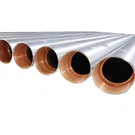


As a SAW OCTG supplier, I've been in the thick of the industry for quite some time. And let me tell you, improving the performance of SAW OCTG is a topic that's always on our radar. SAW (Submerged Arc Welded) OCTG (Oil Country Tubular Goods) plays a crucial role in the oil and gas industry, and enhancing its performance can lead to better efficiency, durability, and overall cost - effectiveness. So, let's dive into some methods to boost the performance of SAW OCTG.
1. Material Selection
The first step in improving the performance of SAW OCTG is choosing the right materials. High - quality steel is a must. We need to look for steels with good strength, toughness, and corrosion resistance. For instance, alloy steels can offer better performance in harsh environments. They can withstand high pressures and temperatures, which are common in oil and gas wells.
When it comes to specific types of SAW OCTG, like CRA Pipe, the material selection becomes even more critical. CRA (Corrosion Resistant Alloy) pipes are designed to resist corrosion in aggressive environments. By using the appropriate CRA materials, we can ensure that the pipes last longer and perform better. This not only reduces the need for frequent replacements but also improves the overall safety of the oil and gas operations.
2. Welding Process Optimization
The welding process is a key factor in the performance of SAW OCTG. A well - optimized welding process can result in stronger and more reliable welds. We need to pay attention to several aspects of the welding process.
First, the welding parameters such as welding current, voltage, and speed need to be carefully adjusted. These parameters can affect the quality of the weld, including its strength and integrity. For example, if the welding current is too high, it can cause excessive heat input, leading to weld defects such as porosity and cracking. On the other hand, if the current is too low, the weld may not be fully penetrated, resulting in a weak joint.
Second, the use of high - quality welding consumables is essential. The welding wire and flux should be selected based on the type of steel being welded and the specific requirements of the application. For instance, some welding consumables are designed to provide better corrosion resistance, which is crucial for SAW OCTG used in corrosive environments.
3. Quality Control
Quality control is an ongoing process that starts from the raw material stage and continues throughout the manufacturing process. At our company, we have a strict quality control system in place.
We conduct various tests on the raw materials to ensure their quality. This includes chemical analysis to check the composition of the steel and mechanical tests to evaluate its strength and toughness. During the manufacturing process, we perform non - destructive testing (NDT) on the welded pipes. NDT methods such as ultrasonic testing, magnetic particle testing, and radiographic testing can detect internal and surface defects in the pipes.
By implementing a comprehensive quality control system, we can ensure that the SAW OCTG we supply meets the highest standards. This not only improves the performance of the pipes but also builds trust with our customers.
4. Design Considerations
The design of SAW OCTG can also have a significant impact on its performance. For example, the wall thickness of the pipes needs to be carefully designed based on the operating conditions. In high - pressure applications, thicker walls may be required to withstand the pressure.
Another design aspect is the connection type. Premium Connection is a popular choice for SAW OCTG. Premium connections offer better sealing performance and higher torque capacity compared to standard connections. They can prevent leakage and ensure a more reliable connection between the pipes, which is crucial for the safe and efficient operation of oil and gas wells.
5. Surface Treatment
Surface treatment is an effective way to improve the performance of SAW OCTG. Coating the pipes with a protective layer can enhance their corrosion resistance. There are various types of coatings available, such as epoxy coatings and zinc coatings.
Epoxy coatings can provide a barrier against corrosion by preventing the contact between the steel and the corrosive environment. Zinc coatings, on the other hand, can act as a sacrificial anode, protecting the steel from corrosion. By applying the appropriate surface treatment, we can extend the service life of the SAW OCTG and reduce the maintenance costs.
6. Research and Development
Staying ahead in the industry requires continuous research and development. We invest a significant amount of time and resources in R & D to explore new materials, welding techniques, and design concepts.
For example, we are constantly looking for new alloys that can offer better performance in extreme environments. We also experiment with new welding processes to improve the quality and efficiency of the welds. By keeping up with the latest technological advancements, we can provide our customers with SAW OCTG that meets their evolving needs.
7. Training and Education
Our employees play a crucial role in ensuring the high - performance of SAW OCTG. That's why we provide regular training and education to our staff.
We train our welders on the latest welding techniques and quality control procedures. We also educate our sales and customer service teams about the features and benefits of our products. By having a well - trained workforce, we can ensure that every aspect of our business, from manufacturing to customer support, is of the highest quality.
8. Collaboration with Customers
Collaborating with our customers is essential for improving the performance of SAW OCTG. We work closely with our customers to understand their specific requirements and challenges.
For example, if a customer is operating in a highly corrosive environment, we can recommend the appropriate CRA Pipe and surface treatment. By working together, we can develop customized solutions that meet the customer's needs and improve the overall performance of the SAW OCTG in their operations.
9. Monitoring and Maintenance
Once the SAW OCTG is installed, it's important to monitor its performance and conduct regular maintenance. We can use various monitoring techniques, such as acoustic emission monitoring and corrosion monitoring, to detect any potential problems early.
Regular maintenance, such as cleaning and inspection, can also help to ensure the long - term performance of the pipes. By taking a proactive approach to monitoring and maintenance, we can prevent costly breakdowns and extend the service life of the SAW OCTG.
10. Use of Slotted Casing
Slotted casing is a type of SAW OCTG that can be used in specific applications. It has slots or perforations along its length, which allow for the flow of fluids. This can be beneficial in situations where fluid flow needs to be controlled or enhanced.
For example, in oil and gas wells, slotted casing can be used to control the inflow of fluids into the wellbore. By adjusting the size and spacing of the slots, we can optimize the fluid flow and improve the production efficiency.
In conclusion, improving the performance of SAW OCTG requires a comprehensive approach that includes material selection, welding process optimization, quality control, design considerations, surface treatment, research and development, training and education, collaboration with customers, monitoring and maintenance, and the use of specialized products like slotted casing.
If you're in the market for high - performance SAW OCTG, we'd love to have a chat with you. We're confident that our products and services can meet your needs and help you achieve better results in your oil and gas operations. Contact us to start a procurement discussion and find out how we can work together to improve your projects.
References
- Industry standards and guidelines for SAW OCTG manufacturing.
- Technical papers on materials science and welding technology.
- Case studies of successful SAW OCTG applications in the oil and gas industry.