


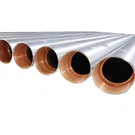


Hey there! As an OCTG API supplier, I often get asked about the performance indicators for evaluating OCTG API products. Well, let's dive right into it and break down what you need to know.
1. Mechanical Properties
- Tensile Strength: This is a biggie. Tensile strength measures the maximum stress a pipe can withstand while being stretched or pulled before it breaks. For OCTG API products, a high tensile strength is crucial, especially in oil and gas drilling operations. These pipes are often subjected to intense pulling forces as they're lowered into deep wells. A pipe with low tensile strength might snap under the pressure, leading to costly downtime and potential safety hazards.
- Yield Strength: Yield strength indicates the stress at which a material begins to deform plastically. In simpler terms, it's the point where the pipe will start to change shape permanently. When evaluating OCTG API products, you want a pipe with a well - defined yield strength. This helps in ensuring that the pipe can handle the expected loads without getting permanently damaged during normal use.
- Elongation: Elongation measures the percentage increase in length of a pipe specimen when it's pulled to failure. A good amount of elongation is important because it shows that the pipe has some ductility. In the harsh environment of oil and gas extraction, pipes may encounter various stresses and strains. A ductile pipe can better withstand these forces without brittle failure.
2. Corrosion Resistance
- Corrosion in Oil and Gas Environments: Oil and gas wells are often filled with corrosive substances like hydrogen sulfide, carbon dioxide, and saltwater. These can eat away at the pipes over time, reducing their integrity. That's why corrosion resistance is a key performance indicator for OCTG API products.
- CRA Pipe: One way to combat corrosion is by using CRA Pipe. CRA stands for Corrosion - Resistant Alloy. These pipes are made from materials like stainless steel or nickel - based alloys that are highly resistant to corrosion. When choosing OCTG API products, considering CRA pipes can significantly extend the lifespan of the pipes in corrosive environments.
3. Thread Connection Performance
- Thread Integrity: The threads on OCTG pipes are like the joints that hold everything together. They need to be precise and well - made. A poor thread connection can lead to leaks, which are not only a waste of resources but can also be dangerous. The threads should have the right pitch, angle, and surface finish to ensure a tight and secure connection.
- Coupling: Coupling is an important part of the thread connection system. It's used to join two pipes together. A good coupling should be able to maintain a strong connection even under high pressure and vibration. Special attention should be paid to the material and manufacturing quality of the coupling to ensure its performance.
- Special Clearance Coupling: In some cases, Special Clearance Coupling may be required. These couplings are designed to provide a specific amount of clearance, which can be useful in certain applications. For example, in wells with high - temperature or high - pressure conditions, special clearance couplings can help prevent over - tightening and damage to the threads.
4. Dimensional Accuracy
- Outer Diameter (OD) and Wall Thickness: The outer diameter and wall thickness of OCTG API pipes need to be within strict tolerances. An incorrect OD can cause problems with the fit of other components in the well system, while inconsistent wall thickness can lead to uneven stress distribution in the pipe. This can increase the risk of failure under load.
- Length: The length of the pipes also matters. Pipes need to be cut to the right length to fit the specific requirements of the well. Inaccurate lengths can lead to installation difficulties and may require additional cutting or welding on - site, which can compromise the integrity of the pipe.
5. Hydrostatic Testing
- Testing for Leaks: Hydrostatic testing is a common method used to evaluate the integrity of OCTG API pipes. In this test, the pipe is filled with water and pressurized to a specified level. The pressure is then maintained for a certain period of time to check for any leaks. This test helps ensure that the pipe can withstand the internal pressure it will encounter in the well without leaking.
- Pressure Rating: The pressure rating obtained from hydrostatic testing is an important performance indicator. It tells you the maximum pressure the pipe can handle safely. When selecting OCTG API products, make sure the pressure rating meets or exceeds the requirements of your specific application.
6. Impact Resistance
- Harsh Drilling Conditions: In the oil and gas industry, pipes are often subjected to impact forces during drilling operations. For example, when the drill string hits a hard rock formation, it can cause a sudden impact on the pipes. Impact resistance is crucial to prevent the pipes from cracking or breaking under these conditions.
- Testing for Impact Resistance: There are various tests available to measure the impact resistance of OCTG API products, such as the Charpy impact test. This test involves striking a notched specimen with a pendulum and measuring the energy absorbed during the fracture. A higher energy absorption indicates better impact resistance.
7. Fatigue Resistance
- Repeated Loading: Pipes in oil and gas wells are often subjected to repeated loading and unloading cycles. This can cause fatigue failure over time. Fatigue resistance is the ability of the pipe to withstand these repeated loads without cracking or failing.
- Factors Affecting Fatigue Resistance: The material properties, surface finish, and stress concentration factors all affect the fatigue resistance of OCTG API products. For example, a smooth surface finish can reduce stress concentrations and improve fatigue resistance.
Why These Indicators Matter to You
As a customer, understanding these performance indicators is essential. You want to make sure that the OCTG API products you purchase are of high quality and can meet the demands of your specific application. Whether you're involved in on - shore or off - shore drilling, these indicators can help you make an informed decision.


If you're in the market for OCTG API products and want to learn more about how our products measure up against these performance indicators, don't hesitate to reach out. We're here to help you find the right solutions for your oil and gas operations. Contact us to start a procurement discussion and see how we can meet your needs.
References
- API Standards for OCTG Products. American Petroleum Institute.
- Corrosion and Protection in Oil and Gas Production. Industry research reports.
- Mechanical Testing of Metals. ASTM International.