


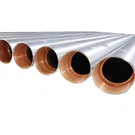


Hey there! As a supplier of CRA (Corrosion-Resistant Alloy) Pipe, I often get asked about the pressure ratings of CRA Pipe. So, let's dive right into it and break down what you need to know.
First off, what exactly is CRA Pipe? Well, CRA Pipe is made from corrosion-resistant alloys, which are super important in industries where pipes are exposed to harsh environments. These alloys can handle a lot more than your regular pipes when it comes to corrosion from things like chemicals, saltwater, and even high temperatures. That's why they're so popular in oil and gas, chemical processing, and offshore applications.
Now, let's talk about pressure ratings. The pressure rating of a pipe is basically the maximum pressure it can safely handle without failing. For CRA Pipe, this rating depends on several factors. One of the most important is the material of the pipe. Different alloys have different strength properties, and these directly affect how much pressure the pipe can take.
For instance, some of the common CRA materials include stainless steels like 304 and 316, and nickel-based alloys such as Inconel and Hastelloy. Stainless steel CRA pipes are great for general corrosion resistance and can handle moderate pressures. But if you're dealing with extremely corrosive environments and high pressures, nickel-based alloys are the way to go. They have excellent strength and corrosion resistance, allowing them to withstand much higher pressures.
Another factor that influences the pressure rating is the pipe's wall thickness. Logically, a thicker-walled pipe can handle more pressure than a thinner one. The manufacturing process also plays a role. Pipes that are made with high-quality manufacturing techniques are likely to have more consistent wall thickness and better overall quality, which in turn increases their pressure rating.
The diameter of the pipe is also a consideration. Generally, smaller diameter pipes can handle higher pressures compared to larger ones. This is because the stress distribution within the pipe is different depending on its size.
When it comes to the actual numbers, the pressure rating of CRA Pipe can vary widely. In some low-pressure applications, a CRA Pipe might have a pressure rating of around 1000 psi (pounds per square inch). But in high-pressure situations, especially in the oil and gas industry, you can find CRA Pipes with pressure ratings of 10,000 psi or even higher.
Let's take a look at some specific scenarios. In an onshore oil well, the pressure in the production tubing can be pretty high. You might need CRA Pipes with a pressure rating of 5000 - 7000 psi to ensure the safe and efficient flow of oil and gas. On the other hand, in a chemical processing plant, the pressure requirements could be different depending on the specific process. Some processes might involve relatively low pressures, while others could need pipes that can handle 3000 - 5000 psi.
Now, it's important to note that the pressure rating isn't just about the pipe itself. The Premium Connection used to join the pipes together also has a significant impact. A high-quality Premium Connection ensures a tight and leak-free joint, which is crucial for maintaining the overall pressure integrity of the pipeline. If the connection fails, it can lead to leaks and potentially dangerous situations.
Similarly, the Coupling and Flow Coupling used in the pipeline system need to be able to handle the same pressure as the pipes. These components are designed to connect different sections of the pipe and allow for the smooth flow of fluids. If they can't handle the pressure, it can cause problems in the entire system.
When you're choosing CRA Pipe for your project, it's essential to consider all these factors. You need to know the exact pressure requirements of your application, the environment the pipes will be in, and the type of connections you'll be using. This will help you select the right CRA Pipe with the appropriate pressure rating.
As a CRA Pipe supplier, I've seen firsthand how important it is to get the pressure rating right. A pipe that's underrated for the pressure it has to handle can lead to failures, which can be costly in terms of repairs, downtime, and even safety. On the other hand, overrating the pipe can also be a waste of money.
So, if you're in the market for CRA Pipe and need to figure out the right pressure rating for your project, don't hesitate to reach out. I've got the expertise and the wide range of CRA Pipes to meet your specific needs. Whether you're in the oil and gas industry, chemical processing, or any other field that requires corrosion-resistant pipes, I can help you make the right choice.
Let's work together to ensure your project runs smoothly and safely. Contact me to start the conversation about your CRA Pipe requirements and let's find the perfect solution for you.
References
- Industry standards and guidelines for CRA Pipe manufacturing and pressure ratings.
- Technical literature from alloy manufacturers regarding the properties of different CRA materials.