


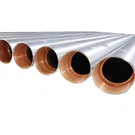


Hey there! As an OCTG (Oil Country Tubular Goods) supplier, I often get asked about the connection types of OCTG. It's a pretty important topic, especially if you're in the oil and gas industry. So, let's dive right in and explore the different connection types of OCTG.
First off, what exactly is OCTG? Well, it's basically a category of pipes used in the oil and gas industry for drilling and production. There are three main types of OCTG: Casing, Tubing, and Coupling. Each type has its own specific use and connection requirements.
Threaded Connections
One of the most common connection types for OCTG is the threaded connection. Threaded connections are pretty straightforward. You've got male threads on one end of the pipe and female threads on the other end, or in a coupling. When you screw them together, they form a tight seal.
There are different types of threaded connections, such as API (American Petroleum Institute) threads. API threads are standardized, which means they follow a set of specifications established by the API. This makes it easier to ensure compatibility between different pipes and couplings. For example, the API 8-round thread is a widely used thread type. It's relatively simple to manufacture and provides a decent seal.
Another type of threaded connection is the premium thread. Premium threads are designed to offer better performance than API threads. They often have more complex geometries and are made with higher-quality materials. Premium threads can provide better gas and liquid sealing, as well as higher torque resistance. This makes them ideal for high-pressure and high-temperature applications.
Welded Connections
Welded connections are another option for joining OCTG pipes. With welded connections, the ends of the pipes are welded together to form a continuous piece. Welding can provide a very strong and leak - tight connection.
There are different welding methods used in the OCTG industry. One common method is the electric resistance welding (ERW). In ERW, an electric current is passed through the pipe ends, heating them up until they melt and fuse together. ERW is a relatively fast and cost - effective welding method.
Another welding method is the submerged arc welding (SAW). SAW is often used for larger - diameter pipes. In SAW, an arc is created between an electrode and the pipe surface, and a layer of granular flux is used to protect the weld from the atmosphere. This results in a high - quality weld with good mechanical properties.
Mechanical Connections
Mechanical connections are also used for OCTG. These connections rely on mechanical components to hold the pipes together. One example of a mechanical connection is the clamp - type connection. In a clamp - type connection, a clamp is used to squeeze the pipes together. This type of connection is relatively easy to install and can be disassembled if needed.
Another mechanical connection is the bolted flange connection. Flanges are attached to the ends of the pipes, and then bolts are used to connect the flanges together. Bolted flange connections are commonly used in applications where disassembly and maintenance are required.
Factors Affecting Connection Type Selection
When it comes to choosing the right connection type for OCTG, there are several factors to consider.
Pressure and Temperature
If you're dealing with high - pressure and high - temperature environments, premium threaded connections or welded connections might be the best choice. These connection types can better withstand the extreme conditions. For example, in deep - water oil wells, where the pressure and temperature can be very high, premium threads or welded pipes are often used.
Cost
Cost is always a factor. Threaded connections are generally less expensive to manufacture and install compared to welded connections. Premium threads, on the other hand, are more expensive than API threads. So, if cost is a major concern, you might opt for API threaded connections or a more cost - effective welding method like ERW.
Installation and Maintenance
The ease of installation and maintenance also plays a role. Mechanical connections like clamp - type or bolted flange connections are easier to install and disassemble compared to welded connections. This can be an advantage if you need to make frequent changes or repairs to your pipeline system.
Compatibility
Compatibility between pipes and couplings is crucial. As mentioned earlier, API - standard threaded connections ensure compatibility between different components. When using non - standard or premium connections, you need to make sure that all the parts are designed to work together.
Importance of Choosing the Right Connection Type
Choosing the right connection type for OCTG is extremely important. A proper connection ensures the integrity of the pipeline system. A leaky connection can lead to loss of oil or gas, which is not only a waste of resources but can also pose a safety hazard.
In addition, a good connection can improve the overall efficiency of the oil and gas production process. For example, a well - sealed connection can prevent the loss of valuable fluids, which can increase production rates.
As an OCTG supplier, I've seen firsthand the impact of choosing the wrong connection type. It can lead to costly repairs, downtime, and even safety issues. That's why it's so important to work with an experienced supplier who can help you select the right connection type for your specific application.
Conclusion
In conclusion, there are several connection types available for OCTG, including threaded connections (API and premium), welded connections (ERW and SAW), and mechanical connections (clamp - type and bolted flange). Each connection type has its own advantages and disadvantages, and the choice depends on factors such as pressure, temperature, cost, installation, and compatibility.


If you're in the market for OCTG and need help with choosing the right connection type for your project, don't hesitate to reach out. I'm here to assist you in finding the best solutions for your oil and gas needs. Whether you're looking for Casing, Tubing, or Coupling, we've got you covered. Let's have a chat and see how we can work together to ensure the success of your project.
References
- API Standards for Oil Country Tubular Goods
- Industry Publications on Oil and Gas Pipeline Technology
- Technical Manuals from OCTG Manufacturers