


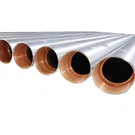


As a supplier of 7" casing, I am often asked about the manufacturing process behind this essential product in the oil and gas industry. In this blog post, I will take you through the detailed steps involved in producing high - quality 7" casing, from raw materials to the final product.
Raw Material Selection
The first and most crucial step in manufacturing 7" casing is the selection of raw materials. We typically use high - grade steel, which is chosen for its strength, durability, and resistance to corrosion. The steel must meet strict industry standards and specifications. The chemical composition of the steel is carefully analyzed to ensure it contains the right balance of elements such as carbon, manganese, sulfur, and phosphorus. These elements play a vital role in determining the mechanical properties of the casing, such as its tensile strength, yield strength, and hardness.
We source our steel from reputable suppliers who have a proven track record of providing high - quality materials. Before using the steel, we conduct a series of quality control tests, including ultrasonic testing, magnetic particle inspection, and chemical analysis. These tests help us identify any potential defects or impurities in the raw material, ensuring that only the best steel is used in the manufacturing process.
Steel Making
Once the raw materials are selected, the steel - making process begins. There are two main methods of steel making: the basic oxygen furnace (BOF) method and the electric arc furnace (EAF) method. In our manufacturing process, we often use the EAF method, which is more energy - efficient and allows for greater control over the chemical composition of the steel.
In the EAF method, scrap steel is melted in an electric arc furnace using high - intensity electric arcs. The furnace is charged with scrap steel, and electrodes are lowered into the furnace to create an electric arc that generates intense heat, melting the steel. As the steel melts, various alloying elements are added to adjust the chemical composition of the steel to meet the specific requirements of the 7" casing.
After the steel has been melted and its composition has been adjusted, it is refined to remove any remaining impurities. This is done through a process called ladle refining, where the molten steel is transferred to a ladle and treated with various fluxes and additives to remove sulfur, phosphorus, and other impurities. The refined steel is then ready for the next stage of the manufacturing process.
Tube Making
The next step is to transform the molten steel into tubes. This is typically done using the seamless tube - making process. In the seamless tube - making process, a solid steel billet is heated to a high temperature and then pierced with a mandrel to create a hollow tube. The pierced tube is then rolled and stretched to the desired diameter and wall thickness.
There are several types of rolling mills used in the seamless tube - making process, including the piercing mill, the elongator mill, the reducing mill, and the sizing mill. Each mill plays a specific role in shaping the tube and ensuring its dimensional accuracy. For example, the piercing mill creates the initial hole in the billet, while the sizing mill ensures that the tube has the correct outer diameter and wall thickness.
During the tube - making process, strict quality control measures are in place to ensure that each tube meets the required specifications. Non - destructive testing methods such as ultrasonic testing and eddy current testing are used to detect any internal or surface defects in the tubes. Any tubes that do not meet the quality standards are rejected and recycled.
Heat Treatment
After the tubes have been formed, they undergo a heat treatment process to improve their mechanical properties. Heat treatment involves heating the tubes to a specific temperature and then cooling them at a controlled rate. This process helps to relieve internal stresses, improve the hardness and toughness of the steel, and enhance its resistance to corrosion.
There are several types of heat treatment processes that can be used for 7" casing, including annealing, normalizing, quenching, and tempering. The specific heat treatment process used depends on the type of steel and the intended application of the casing. For example, quenching and tempering are often used to produce high - strength casings that are suitable for use in deep - well drilling applications.
During the heat treatment process, the tubes are carefully monitored to ensure that they are heated and cooled at the correct rates. Any deviations from the specified heat treatment parameters can result in a decrease in the mechanical properties of the casing, so strict quality control measures are in place to ensure that the heat treatment process is carried out accurately.
Threading and Coupling
Once the tubes have been heat - treated, they are ready for threading and coupling. Threading is the process of cutting threads on the ends of the tubes to allow them to be connected together. The threads must be cut to precise specifications to ensure a proper fit and a leak - tight connection.
There are several types of thread profiles that can be used for 7" casing, including API (American Petroleum Institute) threads and proprietary threads. API threads are the most commonly used thread profiles in the oil and gas industry and are standardized to ensure compatibility between different manufacturers' products.
After the threads have been cut, couplings are attached to the ends of the tubes. Couplings are short sections of tube with internal threads that are used to connect two tubes together. We offer a variety of couplings, including Coupling and Special Clearance Coupling, which are designed to meet the specific needs of our customers. The couplings are carefully selected and installed to ensure a secure and reliable connection between the tubes.


Quality Control and Testing
Throughout the manufacturing process, strict quality control measures are in place to ensure that the 7" casing meets the highest standards of quality and reliability. In addition to the non - destructive testing methods used during the tube - making process, a variety of other tests are conducted on the finished casings.
These tests include mechanical testing, such as tensile testing, yield testing, and hardness testing, to ensure that the casing has the required mechanical properties. Chemical analysis is also performed to verify the chemical composition of the steel. In addition, pressure testing is carried out to ensure that the casing can withstand the high pressures encountered in oil and gas wells.
We also conduct visual inspections of the casings to check for any surface defects, such as scratches, dents, or cracks. Any casings that do not pass the quality control tests are rejected and either reworked or recycled.
Coating and Finishing
Once the casings have passed all the quality control tests, they are ready for coating and finishing. Coating the casings helps to protect them from corrosion and wear, extending their service life. There are several types of coatings that can be applied to 7" casings, including epoxy coatings, polyethylene coatings, and fusion - bonded epoxy (FBE) coatings.
In our manufacturing process, we often use FBE coatings, which provide excellent corrosion resistance and adhesion. The FBE coating process involves applying a powder coating to the surface of the casing and then heating the casing to melt the powder and form a continuous coating. The coated casing is then cooled and inspected to ensure that the coating is of high quality.
After the coating has been applied, the casings are finished by adding markings and labels. These markings include information such as the size, grade, and manufacturing date of the casing, as well as any other relevant information. The finished casings are then ready for shipment to our customers.
Conclusion
The manufacturing process of 7" casing is a complex and highly controlled process that involves several stages, from raw material selection to the final coating and finishing. At our company, we are committed to producing high - quality 7" casings that meet the strictest industry standards. We use the latest technology and manufacturing techniques to ensure that our casings are of the highest quality and reliability.
If you are in the market for 7" casing, we invite you to contact us to discuss your specific requirements. Our team of experts is ready to assist you in selecting the right casing for your application and providing you with the best possible service. Whether you need Tubing or 7" casing, we have the products and expertise to meet your needs. Contact us today to start the procurement process and take advantage of our high - quality products and services.
References
- "Oil and Gas Pipelines: Design, Construction, and Integrity Management" by Shashi K. Agarwal
- "Handbook of Steel Pipe Technology" by J. S. Collier
- API Standards for OCTG (Oil Country Tubular Goods)