


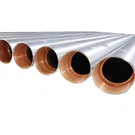


Hey there! As a line pipe supplier, I often get asked about the manufacturing process of line pipes. So, I thought I'd break it down for you in this blog post.
Raw Material Selection
The first step in making line pipes is picking the right raw materials. We usually use steel, and the quality of this steel is super important. It needs to have the right strength, toughness, and corrosion - resistance. We source high - grade steel from reliable mills. These mills test the steel to make sure it meets all the industry standards. The steel comes in the form of large sheets or billets. Depending on the type of line pipe we're making, we choose the appropriate steel composition. For example, if the pipe is going to be used in a harsh environment with a lot of moisture, we'll pick a steel that has better anti - corrosion properties.
Forming the Pipe
Once we have the raw steel, it's time to start shaping it into a pipe. There are two main methods for this: seamless and welded.
Seamless Pipe Manufacturing
Seamless pipes are made from a solid steel billet. First, the billet is heated until it's red - hot and malleable. Then, a piercing rod is pushed through the center of the billet to create a hollow tube. This process is called piercing. After that, the tube is rolled and stretched to the desired size and thickness. Seamless pipes are great because they have no weld seams, which makes them stronger and more reliable in high - pressure applications. They're often used in the oil and gas industry for transporting fluids over long distances.
Welded Pipe Manufacturing
Welded pipes, on the other hand, are made from flat steel sheets. The sheet is first rolled into a cylindrical shape. Then, the edges are welded together. There are different welding methods, like electric resistance welding (ERW) and submerged arc welding (SAW).
- ERW: In ERW, the edges of the rolled - up steel sheet are heated using an electric current until they're hot enough to fuse together. This method is fast and efficient, and it's commonly used for making smaller - diameter line pipes.
- SAW: SAW is used for larger - diameter pipes. A layer of granular flux is placed over the weld area. An electric arc is then created between the electrode and the steel, melting the edges and the flux. The flux helps to protect the weld from oxidation and impurities, resulting in a high - quality weld.
Heat Treatment
After the pipe is formed, it often goes through heat treatment. This process helps to improve the mechanical properties of the pipe, like its strength and ductility. There are different types of heat treatment, such as annealing, normalizing, and quenching and tempering.
- Annealing: The pipe is heated to a specific temperature and then slowly cooled. This relieves internal stresses in the pipe and makes it more ductile.
- Normalizing: Similar to annealing, but the cooling process is faster. Normalizing helps to refine the grain structure of the steel, improving its strength and toughness.
- Quenching and Tempering: The pipe is heated and then rapidly cooled (quenched) in a liquid like water or oil. After that, it's reheated to a lower temperature (tempered). This process gives the pipe high strength and good toughness.
Sizing and Straightening
Once the heat treatment is done, the pipe needs to be sized and straightened. Sizing is done to make sure the pipe has the correct diameter and wall thickness. We use special sizing machines to achieve this. Straightening is also crucial because a straight pipe is easier to install and ensures a better flow of fluids. There are different straightening methods, like roller straightening and press straightening.
Surface Treatment
The surface of the line pipe needs to be treated to protect it from corrosion. One common method is coating. We can apply different types of coatings, such as epoxy, polyethylene, or zinc.
- Epoxy Coating: Epoxy coatings provide excellent corrosion protection. They're applied to the inner and outer surfaces of the pipe using a spraying or dipping process.
- Polyethylene Coating: Polyethylene coatings are durable and offer good abrasion resistance. They're often used in pipes that will be buried underground.
- Zinc Coating: Zinc coating, also known as galvanizing, is a cost - effective way to protect the pipe from rust. The pipe is dipped in a bath of molten zinc, which forms a protective layer on the surface.
Quality Control
Throughout the entire manufacturing process, quality control is a top priority. We have a team of inspectors who use various testing methods to make sure the line pipes meet all the required standards.
- Visual Inspection: Inspectors look for any visible defects on the surface of the pipe, like cracks, scratches, or uneven welds.
- Non - Destructive Testing (NDT): This includes methods like ultrasonic testing, magnetic particle testing, and radiographic testing. These tests can detect internal defects in the pipe without damaging it.
- Hydrostatic Testing: The pipe is filled with water and pressurized to a specific level to check for leaks and to ensure its pressure - bearing capacity.
Finishing and Packaging
Once the pipes pass all the quality control tests, they're ready for finishing and packaging. We cut the pipes to the desired lengths and add markings on the surface, like the pipe size, grade, and manufacturing date. Then, the pipes are bundled together and wrapped in protective materials to prevent damage during transportation.
Conclusion
So, that's the whole manufacturing process of line pipes in a nutshell. From selecting the right raw materials to the final packaging, each step is crucial to ensure the quality and performance of the pipes. If you're in the market for high - quality line pipes, you know that we've got you covered. We've got a wide range of Line Pipe options to meet your specific needs. And if you're also interested in Tubing or Special Clearance Coupling, we can help with that too.
If you're thinking about a purchase, don't hesitate to reach out. We're here to have a chat about your requirements and offer the best solutions for your projects. Whether it's a small - scale job or a large - scale industrial project, we're ready to work with you.
References
- ASME Boiler and Pressure Vessel Code
- API (American Petroleum Institute) Standards
- ASTM (American Society for Testing and Materials) Standards