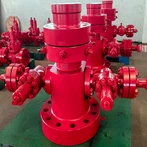
Packing elements-the specialized elastomeric and composite seals used in packers, blowout preventers (BOPs), and wellhead assemblies-are the last line of defense against uncontrolled hydrocarbon release. With the global BOP market valued at USD 2.12 billion in 2025 and annular BOP packing elements alone representing USD 385.4 million in 2026, the performance requirements for these critical seals are intensifying. Operators are demanding packing elements that can withstand 260°C temperatures, 15,000 psi differential pressures, and aggressive chemical environments including sour gas, acid treatments, and high-salinity brines. How can modern material science meet these extreme demands?
Market Scale and Segmentation
The annular BOP packing element market is projected to grow from USD 385.4 million in 2026 to USD 587.71 million by 2035, at a CAGR of 4.8%. Rubber-based elastomers currently dominate, capturing 65% of market revenue at USD 780.06 million in 2025, followed by composite elements at 24.97% and metal-reinforced hybrids at 10.03%. Onshore drilling applications account for 60.3% of demand, with offshore applications representing 39.7%. North America leads regional demand with 40.2% of the ram BOP rubber market, driven by strict API 16A certification requirements and BSEE well-control mandates. The Asia Pacific region follows at 26.76%, buoyed by expanding offshore exploration and deepwater investments across China and Southeast Asia.
Material Science: From HNBR to AFLAS
Modern packing elements employ a range of advanced elastomer compounds engineered for specific operating envelopes. Vertex H 19 (HNBR) offers excellent oil resistance and high-temperature performance up to 175°C, making it suitable for general oil and gas service. Vertex H 17 (HNBR Low Temperature) maintains flexibility at subzero conditions for Arctic operations. Vertex FC 04 (FKM/fluoroelastomer) provides superior chemical resistance against aggressive acid treatments and H₂S, while Vertex A 01 (AFLAS) delivers exceptional sour gas resistance at temperatures reaching 260°C. For the most demanding applications, metal-reinforced elastomer hybrids incorporating precision-machined steel inserts achieve 15,000 psi sealing performance in Brazil's pre-salt fields, collapsing the performance gap between annular and ram-type BOP sealing.
HNBR elements: 175°C continuous service, ideal for oil/gas with NACE MR0175 compliance
FKM elements: Superior chemical resistance for acid stimulation and high-CO₂ environments
AFLAS elements: 260°C HPHT capability for deepwater and sour gas applications
Vigor's Packing Element Product Range
Vigor offers four distinct packing element technologies addressing different wellbore conditions. The Expansion Packing Element features a repeatedly settable spring-shouldered design with excellent retraction performance, eliminating pipe-stuck risks. It achieves reliable sealing at 150°C and 10,000 psi, repeatable up to 10 times, and is available in 4.5-inch, 5.5-inch, and 7-inch sizes. The HTHP Air-Sealed Compression Packing Element achieves V0 gas-seal grade certification per ISO 14310, with reliable sealing at 204°C and 10,000 psi in sizes up to 9-5/8 inches. The HTHP Open Hole Compression Packing Element maximizes sealing in ovalized wellbores at 150–260°C and 10,000 psi, running with specialized backup rings and anti-extrusion devices. The Water and Oil Expansion Packing Element uses swelling rubber technology with greater than 1,000% volume expansion in fresh water and greater than 600% in diesel, with self-repairing capability for minor seal damage.
Condition-Based Maintenance and Digital Monitoring
The industry is shifting from fixed-interval packing element replacement toward condition-based maintenance using acoustic emission and ultrasonic testing. Inspection contractors in the Gulf of Mexico and North Sea are deploying these techniques to document element degradation between wells, triggering replacement only when performance thresholds breach. This approach extends element service life by 30–50% in moderate conditions while ensuring safety-critical performance is never compromised. Digital twin integration with real-time pressure monitoring algorithms enables predictive maintenance, reducing unplanned BOP stack pulls by an estimated 20% for deepwater operators.
Regulatory Compliance and Certification
API 16A remains the governing standard for BOP packing elements, with the latest revision tightening certification thresholds for HPHT service. NORSOK D-010 in Norway and BSEE regulations in the US Gulf of Mexico mandate specific test frequencies and material traceability documentation. Operators specifying packing elements must verify full elastomer compound certification, temperature/pressure ratings, and gas-seal testing (V0/V1/V2 per ISO 14310) to ensure compliance. With the global blowout preventer market projected to reach USD 3.18 billion by 2032 and regulatory divergence across basins, selecting the right packing element material and configuration has become a strategic decision impacting both safety performance and operational cost over a well's lifecycle.
For more information, please contact China Vigor at info@vigorpetroleum.com or call +0086 29 81161513.