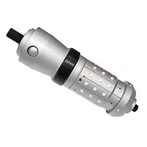
In oil and gas field development, drilling is just the first step. The secret to a well's long-term, safe, and efficient production-its "longevity code"-lies in the subsequent Well Completion process. Today, we'll delve into this systematic project that transforms a raw wellbore into a functional producer, revealing how to build the optimal "life channel" for production.
1. Well Completion: The Lifeline Project from "Rough" to "Finished"
Well completion is the entire process undertaken after drilling to convert an open hole into a safe, controllable, and efficient production conduit. Its core purpose is to establish a rational connection between the reservoir and the wellbore, tailored to the geological characteristics of the pay zone and technical development requirements.
2. Core Procedures: Building the Foundation for Production
- Casing: Running multiple layers of steel casing into the well to isolate different formations, support the wellbore, and provide pressure barriers.
- Cementing: Pumping cement slurry into the annular space between the casing and the formation. Once set, it permanently fixes the casing and isolates the formations.
- Perforating: Using a perforating gun to create channels through the casing and cement sheath at the target zone, establishing pathways for hydrocarbons to flow from the reservoir into the wellbore.
- Stimulation (e.g., Hydraulic Fracturing): Especially essential for unconventional resources like shale oil and gas with extremely low permeability. This involves pumping fracturing fluid at high pressure to create a complex network of artificial fractures in the reservoir, which are propped open with agents (like quartz sand) to create high-conductivity flow channels.
3. The Goal: Selecting the Optimal Completion Method
The choice of completion method is a critical decision, influenced by factors like reservoir type and formation properties. The aim is to select the most suitable method to extend well life and maximize economic returns. An ideal completion should strive to:
- Minimize formation damage and maximize connectivity between the reservoir and the wellbore.
- Effectively isolate oil, gas, and water zones to prevent cross-flow and interference.
- Control sand production and prevent wellbore collapse for sustained long-term production.
- Facilitate future operations like zonal injection, stimulation (e.g., fracturing, acidizing), and artificial lift.
Be as simple and cost-effective as possible.
4. Major Completion Methods: Tools for the Task
Various completion methods exist, each with specific applications and limitations. The most common include:
- Perforated Completion (Most Common, ~90%):
- Process: Casing is run through the reservoir and cemented. The reservoir is then accessed by perforating the casing, cement, and formation.
- Advantages: Allows selective perforation of different zones, enabling effective zonal isolation and management (e.g., avoiding gas/water zones), and facilitates subsequent zonal treatments.
- Types: Includes Cased Hole Perforated Completionand the more economical Liner Perforated Completion.
- Open Hole Completion:
- Process: The reservoir section is left uncased, completely exposed to the wellbore.
- Advantage: Provides the maximum possible inflow area ("hydrodynamically perfect well"), leading to high productivity.
- Limitation: Has very limited application. It is unsuitable for formations requiring stimulation (like most sandstones) or prone to collapse. Primarily used in stable, consolidated formations like some carbonate reservoirs.
- Sand Control Completions (For Unconsolidated Formations): This category aims to prevent or mitigate sand production. Key methods include:
- Slotted Liner / Screen Completion: A pipe with slots or a screen (e.g., wire-wrapped) is placed across the reservoir to mechanically filter sand while allowing fluid flow. Wire-wrapped screens offer finer filtration (gaps as small as 0.12mm).
- Gravel Pack Completion: A more robust method where gravel (specially sized sand) is pumped to fill the annulus between a screen and the formation or casing, creating a multi-layered filter. It requires careful gravel size selection and placement but offers high success rates and long service life.
- Chemical Sand Consolidation: Chemical agents (like resins) are injected into the formation to bind the sand grains together. Suitable for thin zones but can be limited by formation thickness and potential permeability damage.
- Combined (Mechanical & Chemical) Sand Control: Integrates both mechanical barriers and chemical consolidation for enhanced reliability in challenging environments.
Conclusion:
Well completion is a decisive phase that determines the long-term performance and value of an oil or gas well. There is no one-size-fits-all solution. The "longevity" of a well is engineered by meticulously matching the reservoir's specific geology and the development plan with the most appropriate completion technique-whether it's the versatile perforated completion, the high-productivity but niche open hole, or the various sophisticated sand control methods. Understanding this full spectrum of technologies is the first step towards designing a well that is not only productive but also built to last. For more detailed information, please don't hesitate to contact Vigor team for more detailed product information.