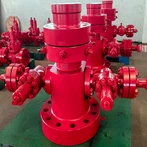
Swivel joints, also known as rotary joints or rotating unions, are essential components in various industrial applications. These devices enable fluid, gas, or electrical signals to be transferred between stationary and rotating equipment.
Single Swivel joint
Single swivel joints, also referred to as single-pass or one-way flow joints, are the most basic and common type. They are designed to transfer a single fluid or gas in one direction through a rotating interface.
In a single joint, the fluid enters from one end of the joint and exits from the other. The rotor, connected to the rotating equipment (such as a drum or a hose reel), rotates within the stationary housing. The seals ensure a leak-free operation while allowing rotation.
◆Advantages:
① Simple design and construction
②Cost-effective solution for single-media transfer
③Easy maintenance and repair
④Compact size, suitable for space-constrained applications
Double Swivel joint
Double swivel joints, also known as dual-pass or two-way flow joints, are designed to allow the simultaneous transfer of two separate fluids or gases through a single rotating interface. These joints are more complex than single joints and offer greater functionality for applications requiring bidirectional flow or the transfer of two different media.
◆Types:
a) Fixed Internal Pipe Joint:
In this design, an internal pipe is fixed to its housing using threads. The fluid enters and exits through a single type. The outer part of the joint (rotor) rotates with the equipment, while the internal pipe remains stationary.
b) Rotating Internal Pipe Joint:
In this configuration, the internal pipe is fixed relative to the rotating equipment (e.g., a drum) and rotates with it. The fluid still enters and exits through a single joint, but both the internal and external components rotate together.
◆Advantages:
①Ability to transfer two different fluids simultaneously
②Compact solution for applications requiring dual media transfer
③Reduced complexity compared to using two separate single joints
Cardan Joint
A Cardan joint, also known as a universal joint or U-joint, is not a traditional joint for fluid transfer but rather a mechanical coupling that allows for angular misalignment between two shafts. While it doesn't directly handle fluid transfer, cardan joints are often used in conjunction with swivel joints in complex rotating systems. Understanding cardan joints is essential for many applications where both rotational motion and fluid transfer are required.
◆Advantages:
① Allows for angular misalignment between shafts
②Transmits rotational motion across non-aligned axes
③Compact and reliable design
④Can handle high torque loads
Vigor as a reliable solution provider
Vigor stands out as a reliable solution provider for your joint needs among the various swivel joint manufacturers.
1. Extensive product range: Vigor offers a wide selection , including single, double, and multi-passage configurations, catering to various industry requirements.
2. The company's engineering team has the capability to collaborate closely with customers to develop tailored joint solutions for unique or challenging applications.
3. Quality assurance: Vigor adheres to strict quality control processes and international standards to ensure the reliability and performance of their products.
To explore how Vigor can provide a reliable swivel joint solution for your specific needs, please contact their team at info@vigorpetroleum.com.