




Can 4" Casing be used in a particle accelerator facility?
Particle accelerators are complex and highly specialized scientific instruments that play a crucial role in various fields, including physics research, medical applications, and industrial processes. These facilities require components that can withstand extreme conditions, including high vacuum, radiation, and precise alignment. As a supplier of 4" casing, I often receive inquiries about the suitability of our product for use in particle accelerator facilities. In this blog post, I will explore the potential use of 4" casing in particle accelerator facilities and discuss the factors that need to be considered.
Understanding 4" Casing
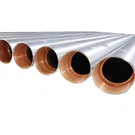
Before delving into its potential use in particle accelerator facilities, it's important to understand what 4" casing is. Casing is a type of tubular product used in the oil and gas industry to line the wellbore and provide structural support. The "4"" refers to the nominal outside diameter of the casing, which is approximately 4 inches. Our 4" casing is made from high-quality steel and is available in various grades and specifications to meet the specific requirements of different applications.


Requirements of Particle Accelerator Facilities
Particle accelerator facilities have several unique requirements that must be met by the components used in their construction. These requirements include:
- High Vacuum: Particle accelerators operate in a high-vacuum environment to minimize the interaction of particles with gas molecules. Components used in these facilities must be able to maintain a high vacuum and have low outgassing rates to prevent contamination of the accelerator beam.
- Radiation Resistance: Particle accelerators generate high levels of radiation, which can cause damage to materials over time. Components used in these facilities must be able to withstand radiation exposure without significant degradation of their mechanical and electrical properties.
- Precise Alignment: Particle accelerators require precise alignment of their components to ensure the proper functioning of the accelerator beam. Components used in these facilities must be manufactured to tight tolerances and be able to maintain their alignment under various operating conditions.
- Mechanical Strength: Particle accelerators are subject to mechanical stresses, including vibration, thermal expansion, and seismic activity. Components used in these facilities must have sufficient mechanical strength to withstand these stresses without failure.
Potential Use of 4" Casing in Particle Accelerator Facilities
Based on the requirements of particle accelerator facilities, 4" casing may have several potential applications in these facilities. Some of these applications include:
- Vacuum Chambers: 4" casing can be used to construct vacuum chambers in particle accelerator facilities. The high-quality steel used in our 4" casing has low outgassing rates and can maintain a high vacuum, making it suitable for use in vacuum chambers. Additionally, the tubular shape of the casing provides a convenient and cost-effective way to construct vacuum chambers of various sizes and shapes.
- Beam Pipe: 4" casing can also be used as a beam pipe in particle accelerator facilities. The smooth inner surface of the casing can minimize the interaction of particles with the pipe wall, reducing the loss of particles and improving the efficiency of the accelerator beam. Additionally, the high mechanical strength of the casing can withstand the mechanical stresses associated with the accelerator beam.
- Support Structures: 4" casing can be used to construct support structures in particle accelerator facilities. The tubular shape of the casing provides a strong and rigid structure that can support the weight of the accelerator components and withstand the mechanical stresses associated with the operation of the accelerator. Additionally, the casing can be easily welded or bolted together to form complex support structures.
Factors to Consider
While 4" casing has several potential applications in particle accelerator facilities, there are several factors that need to be considered before using it in these facilities. These factors include:
- Material Compatibility: The material used in the 4" casing must be compatible with the other materials used in the particle accelerator facility. Incompatible materials can cause corrosion, contamination, and other problems that can affect the performance and reliability of the accelerator.
- Surface Finish: The surface finish of the 4" casing must be smooth and free of defects to minimize the interaction of particles with the pipe wall. A rough or defective surface can cause the particles to scatter, reducing the efficiency of the accelerator beam.
- Manufacturing Tolerances: The 4" casing must be manufactured to tight tolerances to ensure the proper alignment of the accelerator components. Any deviation from the specified tolerances can cause misalignment of the accelerator beam, which can affect the performance and reliability of the accelerator.
- Certification and Testing: The 4" casing must be certified and tested to meet the specific requirements of the particle accelerator facility. Certification and testing can ensure that the casing meets the required standards for material quality, mechanical strength, and vacuum performance.
Conclusion
In conclusion, 4" casing has several potential applications in particle accelerator facilities, including vacuum chambers, beam pipes, and support structures. However, before using 4" casing in these facilities, it is important to consider the factors discussed above to ensure that the casing meets the specific requirements of the facility. As a supplier of 4" casing, we have the expertise and experience to provide high-quality casing that meets the requirements of particle accelerator facilities. If you are interested in using our 4" casing in your particle accelerator facility, please [contact us] to discuss your specific requirements and to learn more about our products and services.
References
- "Particle Accelerators: Principles and Applications" by Simon M. S. Livingstone
- "High-Vacuum Technology: Fundamentals and Applications" by John F. O'Hanlon
- "Radiation Effects in Materials" by John W. Farley
Note: [contact us] is a placeholder. In a real - world scenario, it would be replaced with the appropriate way to reach out to the supplier, such as a link to a contact form on the company's website or an email address. Also, the links to the provided web pages can be inserted as follows:
For instance, when talking about related components: "Our 4" casing can be combined with other essential parts like Flow Coupling, Tubing, and Pup Joint to create a comprehensive solution for your project." This can be placed at an appropriate position in the blog where it makes sense to mention these related products.