




In the realm of language and engineering materials, two seemingly disparate concepts can intersect in unexpected ways. One such intriguing question is whether incorrect casing can change the pronunciation of a word. As a casing supplier, I've spent a great deal of time immersed in the world of various types of casings, from Slotted Casing to Cold Rolled Pipe and Tubing. While dealing with these products on a daily basis, I've also pondered the impact of casing in a linguistic sense.
Linguistic Impact of Casing on Pronunciation
Let's first delve into the linguistic aspect. In the English language, casing, mainly in the form of capitalization, serves multiple purposes. It can indicate the beginning of a sentence, proper nouns, and titles. However, does it have an effect on how we pronounce words?
In most cases, changing the casing of a word does not alter its pronunciation. For example, the word "apple" pronounced as /ˈæpl/ remains the same whether it's written as "apple" or "APPLE". The pronunciation is determined by the phonetic rules of the language, which are not directly influenced by capitalization.
However, there are some exceptions. Consider the word "Polish." When it's capitalized, it refers to the people, language, or things related to Poland, and is pronounced /ˈpəʊlɪʃ/. But when it's in lowercase, "polish" as a verb meaning to make something smooth and shiny is pronounced /ˈpɒlɪʃ/. Here, the change in casing signals a shift in the word's part of speech and meaning, which in turn affects its pronunciation.
Another example is the word "Invalid." Capitalized, it might be a proper name or part of a title, with the pronunciation /ˈɪnvəlɪd/. In lowercase, it can mean not valid, and is pronounced /ɪnˈvælɪd/. So, in these instances, incorrect casing could potentially lead to mispronunciation if one is not aware of the context.
Casing in the Engineering and Supply Industry
Now, let's shift our focus to the casing I deal with as a supplier. In the engineering and manufacturing sectors, casings are essential components. Slotted Casing is widely used in the oil and gas industry. It has slots along its length, which allow for the flow of fluids while preventing the entry of large particles. The design and quality of slotted casing are crucial for the efficient operation of wells and other fluid - handling systems.
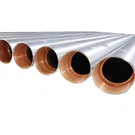
Cold Rolled Pipe is another important product. Cold rolling is a process that improves the surface finish, dimensional accuracy, and mechanical properties of the pipe. These pipes are used in a variety of applications, from automotive manufacturing to construction.
Tubing also plays a vital role. Tubing comes in different sizes and materials, and is used for transporting fluids, gases, or as structural elements. The proper selection and installation of tubing are critical for the safety and functionality of a system.
In this industry, "casing" has a very specific and well - defined meaning. There is no room for confusion similar to the linguistic examples above. The term refers to a physical product, and its pronunciation remains consistent regardless of how it's written in technical documents or communication.


Importance of Correct Usage in Both Contexts
In the linguistic realm, correct casing is important for clear communication. Misusing capitalization can not only lead to mispronunciation but also to misunderstandings about the meaning of a sentence. For example, if someone writes "I live in the united states," the incorrect lowercase "united states" might cause confusion, as it doesn't follow the standard rule of capitalizing proper nouns.
In the casing supply business, correct usage and specification are equally crucial. Incorrectly specifying the type of casing, such as using the wrong size or material for Slotted Casing, can lead to inefficiencies, safety hazards, and increased costs. For instance, if a cold - rolled pipe is used in an application where a different type of pipe with higher heat resistance is required, it could result in pipe failure and system breakdown.
The Role of Education and Awareness
To avoid issues related to both linguistic and industrial casing, education and awareness are key. In language learning, students should be taught the rules of capitalization and how it can affect pronunciation and meaning. In the engineering and supply industry, professionals need to have a deep understanding of the different types of casings and their applications.
As a casing supplier, I make it a point to educate my clients about the various products I offer. I provide detailed information about the specifications, advantages, and limitations of Slotted Casing, Cold Rolled Pipe, and Tubing. This helps them make informed decisions and ensures that they get the right product for their needs.
Conclusion and Call to Action
In conclusion, while in most cases incorrect casing does not change the pronunciation of a word, there are notable exceptions in the English language. In the casing supply industry, however, the term "casing" has a consistent meaning and pronunciation, but correct usage and specification are of utmost importance.
If you're in need of high - quality casings for your projects, whether it's Slotted Casing, Cold Rolled Pipe, or Tubing, I'm here to assist you. I can provide you with the best products that meet your specific requirements. Don't hesitate to reach out for a detailed discussion about your casing needs and to start the procurement process.
References
- Crystal, David. The Cambridge Encyclopedia of the English Language. Cambridge University Press, 2003.
- Engineering textbooks on oil and gas equipment and manufacturing processes.