


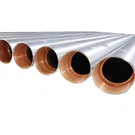


The oil and gas industry heavily relies on Oil Country Tubular Goods (OCTG) for its operations. These tubular products, which include casing, tubing, and drill pipes, are subjected to harsh environments, including corrosive fluids, high pressures, and extreme temperatures. One effective way to enhance the durability and performance of OCTG is through the application of coatings. As an OCTG supplier, I've witnessed firsthand how coatings can significantly impact the corrosion resistance of these essential components.
Understanding Corrosion in OCTG
Corrosion is a natural process that occurs when metals react with their environment. In the context of OCTG, corrosion can be accelerated by the presence of various factors, such as water, oxygen, hydrogen sulfide (H₂S), and carbon dioxide (CO₂). These corrosive agents are commonly found in oil and gas wells, where they can cause pitting, cracking, and general thinning of the tubular walls. If left unchecked, corrosion can lead to equipment failure, leaks, and costly downtime.
There are several types of corrosion that OCTG can experience. Uniform corrosion is the most common type, where the metal surface deteriorates evenly over time. Pitting corrosion, on the other hand, results in the formation of small holes or pits on the metal surface, which can penetrate deep into the material and cause structural damage. Galvanic corrosion occurs when two different metals are in contact in the presence of an electrolyte, leading to accelerated corrosion of the more reactive metal. Additionally, stress corrosion cracking can occur when a combination of tensile stress and a corrosive environment causes cracks to form and propagate in the metal.


Role of Coatings in Corrosion Resistance
Coatings act as a barrier between the metal surface of the OCTG and the corrosive environment. They prevent direct contact between the metal and the corrosive agents, thereby reducing the rate of corrosion. There are different types of coatings available for OCTG, each with its own unique properties and applications.
Epoxy coatings are widely used in the oil and gas industry due to their excellent chemical resistance and adhesion properties. They can provide a tough, protective layer that can withstand the harsh conditions in oil and gas wells. Epoxy coatings can also be formulated to have specific properties, such as high temperature resistance or resistance to abrasion.
Polyurethane coatings are another popular choice for OCTG. They are known for their high flexibility, which allows them to withstand mechanical stresses without cracking. Polyurethane coatings also have good resistance to UV radiation, making them suitable for outdoor applications.
Zinc-rich coatings are an effective way to protect metal surfaces from corrosion through a process called galvanization. Zinc is more reactive than steel, so when a zinc-rich coating is applied to the surface of the OCTG, it sacrificially corrodes in preference to the steel, providing cathodic protection.
Factors Affecting Coating Performance
The performance of the coating on OCTG depends on several factors. The quality of the coating material itself is crucial. High-quality coatings are formulated to have the right balance of properties, such as adhesion, hardness, and chemical resistance. Inferior coatings may not provide adequate protection and may fail prematurely.
Surface preparation is another critical factor. Before applying a coating, the surface of the OCTG must be properly cleaned and treated to remove any contaminants, such as rust, oil, and dirt. A clean and properly prepared surface ensures good adhesion of the coating, which is essential for long-term corrosion protection.
The application method also plays a significant role in coating performance. Coatings can be applied using various techniques, such as spraying, dipping, or brushing. Each method has its own advantages and disadvantages, and the choice of application method depends on the type of coating, the shape and size of the OCTG, and the specific requirements of the application.
Environmental conditions can also affect the performance of the coating. For example, high temperatures, high humidity, and exposure to harsh chemicals can degrade the coating over time. Therefore, it's important to select a coating that is suitable for the specific environmental conditions in which the OCTG will be used.
Case Studies: Coating Impact on Corrosion Resistance
To illustrate the impact of coatings on the corrosion resistance of OCTG, let's look at some real-world case studies. In a recent project, a customer was experiencing severe corrosion in their oil wells due to the presence of high levels of H₂S and CO₂. The OCTG without coatings was corroding rapidly, leading to frequent pipe replacements and costly downtime.
After consulting with our team, the customer decided to use OCTG with epoxy coatings. The epoxy coatings provided a strong barrier against the corrosive gases, significantly reducing the rate of corrosion. As a result, the lifespan of the OCTG increased, and the number of pipe replacements decreased, leading to substantial cost savings for the customer.
Another case involved a project in a marine environment, where the OCTG was exposed to saltwater and high humidity. The initially used uncoated OCTG was prone to pitting corrosion, which was a major concern for the integrity of the well. By switching to OCTG with polyurethane coatings, the corrosion rate was significantly reduced. The flexibility of the polyurethane coatings allowed them to withstand the mechanical stresses caused by wave action and vessel movement, while the UV resistance ensured long-term protection against the outdoor elements.
Application of Coated OCTG in Oil and Gas Operations
Coated OCTG finds widespread application in various aspects of oil and gas operations. In casing applications, the coating can protect the casing from corrosion caused by the surrounding formation fluids. This is particularly important in wells with high salinity or aggressive chemical compositions. The Premium Connection of coated OCTG can also benefit from the corrosion protection, ensuring a tight seal and preventing leaks.
Tubing is another critical component in oil and gas production, and coatings can enhance its corrosion resistance during the transport of oil and gas. The coating helps to prevent internal corrosion caused by the fluids flowing through the tubing, such as crude oil, natural gas, and produced water. This not only extends the lifespan of the tubing but also improves the efficiency of the production process.
Pup Joint are short sections of pipe used to make up the required length of the OCTG string. Coating the pup joints can provide additional corrosion protection, especially in areas where there may be a higher risk of corrosion, such as near the wellhead or in areas with poor ventilation.
Slotted Casing is used in wells to allow the inflow of fluids from the surrounding formation. The coating on slotted casing can prevent corrosion while still allowing the slots to function effectively. This helps to maintain the integrity of the well and ensures efficient production.
Considering Coatings for Your OCTG Needs
When choosing coatings for OCTG, it's essential to consider the specific requirements of your operations. Factors such as the type of corrosive agents present, the temperature and pressure conditions, and the mechanical stresses the OCTG will be subjected to should all be taken into account.
As an OCTG supplier, we have the expertise and experience to help you select the most suitable coatings for your needs. We work closely with our customers to understand their challenges and provide customized solutions that offer optimal corrosion protection.
If you're in the market for OCTG, I encourage you to explore the benefits of coated products. Our team is ready to assist you in making the right choice and can provide detailed information on the performance and application of different coatings. Whether you're involved in onshore or offshore oil and gas production, we can help you find the OCTG solutions that will enhance the reliability and longevity of your operations. Contact us today to start a conversation about your procurement needs and let's discuss how our coated OCTG can add value to your projects.
References
- Jones, D. A. (1996). Principles and Prevention of Corrosion. Prentice Hall.
- Uhlig, H. H., & Revie, R. W. (1985). Corrosion and Corrosion Control: An Introduction to Corrosion Science and Engineering. Wiley.
- Schweitzer, P. A. (2004). Corrosion Resistance Tables. McGraw-Hill.