


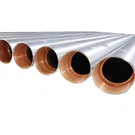


As a SAW (Submerged Arc Welded) OCTG (Oil Country Tubular Goods) supplier, I understand the critical importance of proper storage to prevent rusting and maintain the quality of our products. SAW OCTG, which includes items like Flow Coupling, Slotted Casing, and Premium Connection, is widely used in the oil and gas industry. Rust can significantly degrade the performance and lifespan of these tubular goods, leading to costly replacements and potential safety hazards. In this blog, I will discuss the key requirements for the storage environment of SAW OCTG to prevent rusting.
Temperature Control
Temperature plays a crucial role in the rusting process. High temperatures can accelerate the chemical reactions that cause rust, while low temperatures can lead to condensation, which also promotes rust formation. Therefore, it is essential to store SAW OCTG in an environment with a stable temperature.
The ideal temperature range for storing SAW OCTG is between 10°C and 30°C (50°F and 86°F). This range helps to minimize the risk of both accelerated rusting and condensation. In regions with extreme temperatures, climate - controlled storage facilities may be necessary. For example, in hot desert areas, where temperatures can soar above 40°C (104°F), storing OCTG in a warehouse with air - conditioning can prevent the rapid degradation of the steel due to high - temperature oxidation.
On the other hand, in cold climates, especially during winter, the temperature can drop well below freezing. In such cases, heating systems may be required to maintain the storage temperature within the recommended range. Additionally, it is important to avoid sudden temperature changes, as these can cause moisture to condense on the surface of the OCTG, providing a conducive environment for rust.
Humidity Management
Humidity is one of the most significant factors contributing to rusting. When the relative humidity (RH) in the storage environment exceeds 60%, the risk of rusting increases significantly. This is because water vapor in the air can react with the iron in the steel to form iron oxide (rust).
To prevent rusting, it is crucial to keep the relative humidity in the storage area below 60%. Dehumidifiers can be used in enclosed storage facilities to reduce the humidity level. In open - air storage yards, proper ventilation is essential to allow moisture to escape. For example, installing vents or fans can help to circulate the air and prevent the buildup of humid air around the OCTG.
Another effective way to manage humidity is to use desiccants. Silica gel packets are commonly used desiccants that can absorb moisture from the surrounding air. Placing these packets near the OCTG can help to keep the immediate environment dry. Regularly checking and replacing the desiccants is necessary to ensure their effectiveness.
Ventilation
Good ventilation is vital for preventing rusting in SAW OCTG storage. Stagnant air can trap moisture and pollutants, increasing the likelihood of rust formation. Proper ventilation helps to remove humid air, prevent the buildup of corrosive gases, and maintain a uniform temperature throughout the storage area.
In indoor storage facilities, mechanical ventilation systems can be installed. These systems can draw in fresh air and expel stale, humid air. The ventilation rate should be sufficient to ensure that the air in the storage area is completely replaced every few hours. For open - air storage, the layout of the storage yard should allow for natural air circulation. The OCTG should be stacked in a way that allows air to flow freely between the pipes. Avoid over - crowding the storage area, as this can impede air movement.
Protection from the Elements
SAW OCTG should be protected from direct exposure to rain, snow, and sunlight. Rain and snow can introduce large amounts of moisture to the surface of the pipes, leading to rapid rusting. Sunlight, especially in combination with high temperatures, can also accelerate the rusting process.
In outdoor storage, the OCTG should be covered with waterproof tarps or stored under shelters. The tarps should be securely fastened to prevent them from being blown away by wind and to ensure that no water can seep in. Shelters should be designed to provide adequate protection from all directions.
For long - term storage, it may be beneficial to coat the OCTG with a protective layer. Anti - rust coatings can provide an additional barrier against moisture and oxygen, reducing the risk of rusting. There are various types of anti - rust coatings available, including oil - based, epoxy - based, and zinc - rich coatings. The choice of coating depends on the specific storage conditions and the expected duration of storage.
Surface Cleaning and Inspection
Before storage, the SAW OCTG should be thoroughly cleaned to remove any dirt, dust, or debris. These contaminants can hold moisture against the surface of the steel, promoting rusting. Cleaning can be done using brushes, high - pressure water jets, or chemical cleaners.
Regular inspection of the stored OCTG is also essential. Inspections should be carried out at least once a month to check for any signs of rust, damage, or coating degradation. If rust is detected, it should be removed immediately using appropriate methods, such as sandblasting or wire brushing. After rust removal, the affected area should be re - coated to prevent further rusting.
Stacking and Support
Proper stacking and support of SAW OCTG are important to prevent physical damage and rusting. The OCTG should be stacked in a stable and organized manner to avoid any bending or deformation. When stacking, it is advisable to use wooden or plastic spacers between the layers of pipes. These spacers not only provide support but also allow for air circulation between the pipes.
The supports used to hold the OCTG should be made of non - corrosive materials. Metal supports can transfer rust to the pipes if they are corroded. Additionally, the supports should be evenly spaced to distribute the weight of the pipes evenly. Uneven support can cause stress points on the pipes, which may lead to cracking or increased susceptibility to rusting.
Protection from Chemicals and Pollutants
SAW OCTG can be damaged by exposure to various chemicals and pollutants. Industrial pollutants, such as sulfur dioxide, nitrogen oxides, and particulate matter, can react with the steel and cause corrosion. In areas near industrial plants or heavy traffic, special precautions should be taken to protect the OCTG.
Storing the OCTG in a sealed or well - protected environment can help to reduce the exposure to these pollutants. If the storage area is close to a source of chemical pollution, air filtration systems can be installed to remove the harmful substances from the air. Additionally, avoiding contact with chemicals such as acids, alkalis, and salts is essential. If the OCTG comes into contact with these chemicals, it should be washed immediately to prevent corrosion.
Conclusion
Proper storage of SAW OCTG is essential to prevent rusting and maintain the quality of the products. Temperature control, humidity management, ventilation, protection from the elements, surface cleaning and inspection, proper stacking and support, and protection from chemicals and pollutants are all key requirements for a suitable storage environment.
As a SAW OCTG supplier, we are committed to providing high - quality products and ensuring that they reach our customers in optimal condition. By following these storage requirements, we can minimize the risk of rusting and extend the lifespan of our OCTG.
If you are in the market for SAW OCTG, we invite you to contact us for a detailed discussion about your specific needs. Our team of experts is ready to assist you in selecting the right products and providing the best storage and maintenance advice.


References
- ASTM International. (Year). Standard practices for the storage of steel products.
- API (American Petroleum Institute). (Year). Recommended practices for the handling, storage, and installation of oil country tubular goods.