


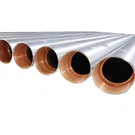


What is the thickness of 4" Casing?
As a dedicated supplier of 4" casing, I often encounter inquiries regarding the thickness of this essential oilfield component. Understanding casing thickness is crucial for ensuring the integrity and efficiency of oil and gas wells. In this blog, we'll delve into the intricacies of 4" casing thickness, exploring its significance, factors influencing it, and the various standards that govern it.
The Significance of Casing Thickness
Casing serves as a protective barrier within oil and gas wells, preventing the collapse of the wellbore, isolating different geological formations, and providing a conduit for the extraction of hydrocarbons. The thickness of the casing plays a pivotal role in its ability to perform these functions effectively.


Adequate casing thickness is essential for withstanding the high pressures and stresses encountered in the wellbore. It provides structural support to prevent the wellbore from collapsing under the weight of the surrounding rock and fluid pressures. Additionally, the casing must be thick enough to resist corrosion and erosion caused by the harsh chemicals and abrasive materials present in the well.
Factors Influencing 4" Casing Thickness
Several factors influence the required thickness of 4" casing. These include the depth of the well, the geological conditions, the type of drilling fluid used, and the anticipated production pressures.
- Well Depth: Deeper wells typically require thicker casing to withstand the higher pressures and stresses associated with greater depths. As the well penetrates deeper into the earth, the weight of the overlying rock and fluid increases, exerting greater pressure on the casing.
- Geological Conditions: The type of rock formations encountered during drilling can also impact the required casing thickness. Hard, abrasive rocks may require thicker casing to resist wear and tear, while soft or unstable formations may require additional support to prevent collapse.
- Drilling Fluid: The properties of the drilling fluid, such as its density and chemical composition, can affect the corrosion and erosion rates of the casing. Aggressive drilling fluids may require thicker casing or special coatings to protect against corrosion.
- Production Pressures: The anticipated production pressures in the well also play a role in determining the casing thickness. Higher production pressures require thicker casing to prevent leaks and ensure the safe and efficient extraction of hydrocarbons.
Industry Standards for 4" Casing Thickness
The oil and gas industry has established a number of standards and specifications for casing thickness to ensure the safety and reliability of wells. These standards are developed by organizations such as the American Petroleum Institute (API) and the International Organization for Standardization (ISO).
API Spec 5CT is the most widely recognized standard for casing and tubing used in the oil and gas industry. It provides detailed specifications for the dimensions, mechanical properties, and testing requirements of casing, including 4" casing. According to API Spec 5CT, the wall thickness of 4" casing can vary depending on the grade and weight of the casing.
For example, a common grade of 4" casing is J-55, which has a specified minimum yield strength of 55,000 psi. The wall thickness of J-55 4" casing can range from approximately 0.216 inches to 0.368 inches, depending on the specific weight of the casing.
In addition to API standards, many countries and regions have their own regulatory requirements for casing thickness. It is important for operators and suppliers to comply with these standards to ensure the safety and environmental compliance of their wells.
Our Product Offerings
As a leading supplier of 4" casing, we offer a wide range of products to meet the diverse needs of our customers. Our casing is manufactured to the highest quality standards and is available in a variety of grades, weights, and wall thicknesses.
We also offer CRA Pipe for applications where corrosion resistance is a critical requirement. Our CRA pipe is made from high-performance alloys that provide excellent resistance to corrosion and erosion in harsh environments.
In addition to casing and CRA pipe, we also supply Tubing and Pup Joint to complete the wellbore system. Our tubing is designed to transport hydrocarbons from the reservoir to the surface, while our pup joints are used to connect sections of casing and tubing.
Contact Us for Your 4" Casing Needs
If you are in need of high-quality 4" casing or other OCTG products, we invite you to contact us for a consultation. Our team of experts can help you select the right casing for your specific application, taking into account factors such as well depth, geological conditions, and production pressures.
We are committed to providing our customers with the highest level of service and support. Whether you are a small independent operator or a large multinational corporation, we have the products and expertise to meet your needs.
Don't compromise on the quality and reliability of your wellbore system. Contact us today to learn more about our 4" casing and other OCTG products.
References
- American Petroleum Institute (API). API Spec 5CT - Specification for Casing and Tubing.
- International Organization for Standardization (ISO). ISO 11960 - Petroleum and natural gas industries -- Steel pipes for use as casing or tubing for wells.