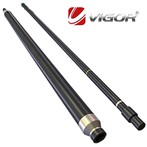
How can operators ensure reliable zonal isolation and packer setting success when casing surfaces are contaminated with cement sheath, perforation burrs, rust, scale, and paraffin deposits? The global casing scraper market, valued at USD 520.46 million in 2025 and projected to reach USD 725.06 million by 2032 at a compound annual growth rate of 4.85 percent, underscores the critical importance of wellbore cleaning in modern oil and gas operations. Rotating casing scrapers accounted for USD 321.99 million of this market in 2025, reflecting the industry's preference for mechanical debris removal that can handle the toughest downhole deposits.
Rising Well Complexity Demands Superior Scraping Technology
As horizontal and multilateral wells become the norm in unconventional plays from the Permian Basin to the Middle East, operators face increasingly challenging debris profiles. Wellbore cleaning tools-a broader category valued at USD 3.51 billion in 2026 and forecast to reach USD 4.3 billion by 2030 at a 5.2 percent CAGR-must remove multiple contaminant types in a single pass. Modern casing scrapers employ staggered blade designs with hardened steel inserts that provide 360-degree coverage, effectively reaching into corrosion pits and coupling recesses where traditional tools fail. The Drilling and Completion segment represented 69.85 percent of casing scraper applications in 2025, generating USD 363.54 million in revenue, while Well Intervention and Workover contributed USD 156.92 million at 30.15 percent.
The wellbore cleaning tool market is expanding at 5.2% CAGR, driven by deepwater and ultra-deepwater drilling activities
Rotating scrapers dominate with USD 321.99 million market share in 2025, preferred for aggressive debris removal
API Q1 Tenth Edition now mandates cyclic life testing for casing scrapers, raising qualification barriers
Material Science and Blade Geometry Drive Performance Gains
The latest generation of casing scrapers incorporates advanced metallurgy and precision blade geometry to extend tool life and improve cleaning efficiency. Casing scraper blades manufactured with case-hardening depths of 0.3–0.5 millimeters per SAE J403 specifications achieve surface hardness exceeding 58 HRC, enabling them to maintain cutting edges through multiple runs. Tool designs now feature adjustable blade diameters that accommodate multi-weight casing strings ranging from 4.5 inches to 13.375 inches, reducing the number of trips required per well. Rising U.S. steel prices from the USD 800-per-ton range in mid-2025 to approximately USD 1,000 per ton in early 2026, driven by tariffs and supply chain dynamics, have added procurement pressure, yet operators continue investing in premium scraper designs to avoid costly NPT events.
Well Intervention Applications Drive Steady Replacement Demand
The Well Intervention and Workover segment, accounting for USD 156.92 million in 2025, provides a recurring revenue base for casing scraper manufacturers. Aging wells in mature basins such as the North Sea, Permian Basin, and onshore China require periodic casing cleaning before packer setting, remedial cementing, or plug-and-abandonment operations. Field data indicates that the average casing scraper replacement cycle has shortened to 2.1 years in markets with rigorous casing integrity management programs, reflecting a proactive maintenance posture. Global casing scraper usage in completion phases reached 286,000 sets in 2026, a 12.3 percent increase from 2024, with Middle East procurement surging 15.8 percent year-over-year driven by large-scale gas field development projects in Saudi Arabia, UAE, and Qatar.
Regulatory Evolution and Market Consolidation Shape the Landscape
The regulatory environment for downhole wellbore cleaning tools has tightened considerably. ISO 21457-2025 introduced revised cleanliness specifications for downhole tools, including stricter limits on blade material residue and debris control. China's GB/T 40832-2026, effective February 2026, standardized casing scraper model designation and performance testing methods, pushing domestic localization rates beyond 70 percent. Concurrently, the global market has consolidated significantly: the top five manufacturers now control 66 percent of market share, up from 58 percent in 2023, while approximately 14 smaller players exited or were acquired between 2025 and 2026. Industry gross margins remain near 41 percent, though sustained raw material cost volatility is pressuring pricing power among mid-tier suppliers.
Conclusion
The casing scraper market continues to evolve in response to deeper wells, stricter regulations, and rising operational complexity. Operators that invest in high-quality, certified scraping tools with documented cyclic life performance and optimized blade geometry will benefit from reduced NPT, improved packer-setting success rates, and lower overall well construction costs.
For more information, please contact China Vigor at info@vigorpetroleum.com or call +0086 29 81161513.