
Casing plays a vital role in oil and gas drilling and production.
1. Definition and role of casing
Petroleum casing is a protective barrier used in wellbores to ensure the efficient extraction of hydrocarbons from the earth's subsurface. It is used to line the borehole and provide structural support to prevent the borehole from caving in, while isolating the different geological formations and controlling the flow of fluids to maintain well integrity.
Casing is a series of metal tubes that are installed in a newly drilled well bore. The primary role is to provide structural integrity to the wellbore, preventing it from collapsing and ensuring the safety of drilling operations. Casing also acts as a barrier between the formation and the drilling fluid and is made of high-strength materials (e.g., steel) capable of withstanding the forces and pressures encountered during drilling.
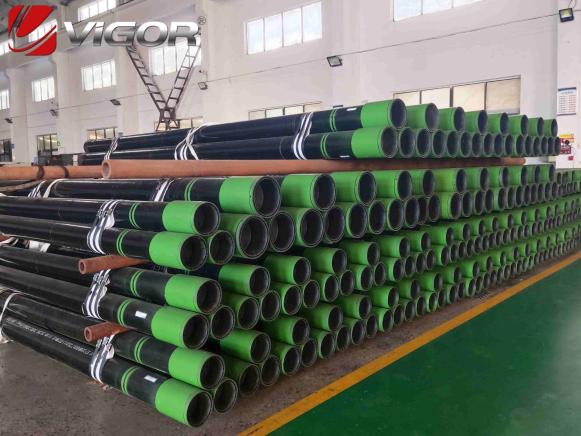
vigor petroleum casing material characteristics
Casing type:
① Guide Bush: Mainly used in offshore and desert drilling to isolate seawater and sand, ensuring smooth drilling operations. Common sizes are 30" x 1.0", 30" x 0.75".
② Surface Casing for oil and gas: Used for initial spudding through shallow, unconsolidated formations down to bedrock. It isolates these zones to prevent caving. Common sizes are 20", 16", 13-3/8", 10-3/4", 9-5/8". Setting depth depends on the shallow formation depth, typically 80-1500m. Lower grades like K55 or N80 are commonly used due to limited load requirements.
③ Intermediate Casing for oil and gas: Run to case off troublesome formations like collapsed zones, oil/gas/water zones, lost circulation zones, salt sections, etc. during the drilling process. Deep or complex wells may require multiple intermediate strings with stringent mechanical properties and sealing requirements, using higher grades like N80, and P110. Some deep wells even use non-API grades higher than Q125 like V150. Common sizes are 13-3/8", 10-3/4", 9-5/8", 8-5/8", 7-5/8", 7".
④ Production OCTG oil string: The final oil string is set across the reservoir (oil/gas) zone and isolates all exposed formations above. The production zone is located inside. it is set at the maximum depth with the most stringent requirements for mechanical properties and sealing integrity. Grades like K55, N80, P110, Q125, V150 are used. Common sizes are 7", 6-5/8", 5-1/2", 5", 4-1/2".
|
|
|
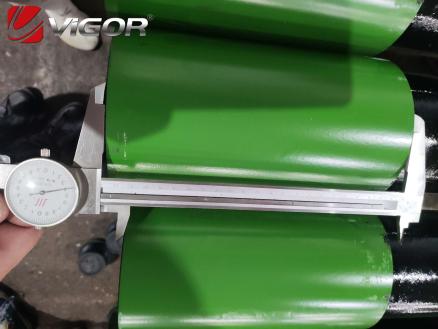

API Standards:
Specifically, API 5CT casing follows strict standards set by the American Petroleum Institute (API), which ensure that casing meets specific requirements for strength, corrosion resistance and other performance characteristics.
Types and Selection: Different types of casing, such as surface casing, intermediate casing and production casing, are used in different stages of the drilling process. Proper selection, installation and maintenance of well casing is critical to successful oil and gas production.
3. Petroleum casing application areas
Petroleum casing has a variety of important applications in the oil and gas industry and the following are some of the key application areas:
Structural Integrity and Wellbore Support: Petroleum casing provides structural support to the wellbore, preventing it from collapsing under the intense pressure exerted by the surrounding rock formations. This is critical to maintaining well stability and safeguarding the recovery process.
Controlling Formation Pressure: Oil casing creates an isolation layer through cementing operations, controlling formation pressure and ensuring normal production from the well. This is important to prevent accidents such as bottoming out or blowouts.
Preventing fluid leakage at the bottom of the well: Oil casing can prevent fluid leakage at the bottom of the well, avoiding pollution and loss of the oil well environment. By isolating the fluids at the bottom of the well through cementing technology, it is impossible for them to leak to the surface, thus protecting the environment and resources.
Hydraulic fracturing operations: Oil casing acts as a barrier between the borehole and surrounding geological formations in hydraulic fracturing, preventing the unintended migration of fluids and gases, protecting groundwater resources and mitigating environmental risks. It also helps to optimise the hydraulic fracturing process and increase the effectiveness of producing shale reservoirs.
Borehole monitoring and control: By incorporating sensors and control devices into the casing design, operators can monitor well conditions in real time and make adjustments to optimise production and ensure safety. This level of control is critical in high-pressure and high-temperature environments where well integrity and operational efficiency are critical.
Isolating Different Geological Formations: Oil casing installed with multiple layers of casing at different depths allows engineers to prevent fluid migration between different reservoirs or aquifers, minimising the risk of cross contamination and maintaining the integrity of each geological zone within the well.
Well Production Enhancement and Hydraulic Fracturing Operations: Oil casing columns are designed to withstand high-pressure and high-temperature conditions, making them ideally suited for use in hydraulic fracturing to increase well production. By providing a conduit for injecting fracturing fluids and proppant into reservoirs, oil casing facilitates the creation of fractures in rock formations for efficient extraction of oil and gas.
Geothermal Energy Production: Petroleum casing technology is being repurposed to support geothermal wells, providing a cost-effective and sustainable solution for utilising renewable energy. By retrofitting existing oil casing infrastructure for geothermal use, industries can reduce their dependence on fossil fuels and transition to cleaner energy sources.
4.Importance of choosing vigor casing:
Casing plays a vital role in oil well drilling, providing protection, structural support and enabling efficient oil and gas recovery. Understanding the importance of oil well casing is critical to ensuring the safety and productivity of oil and gas fields.
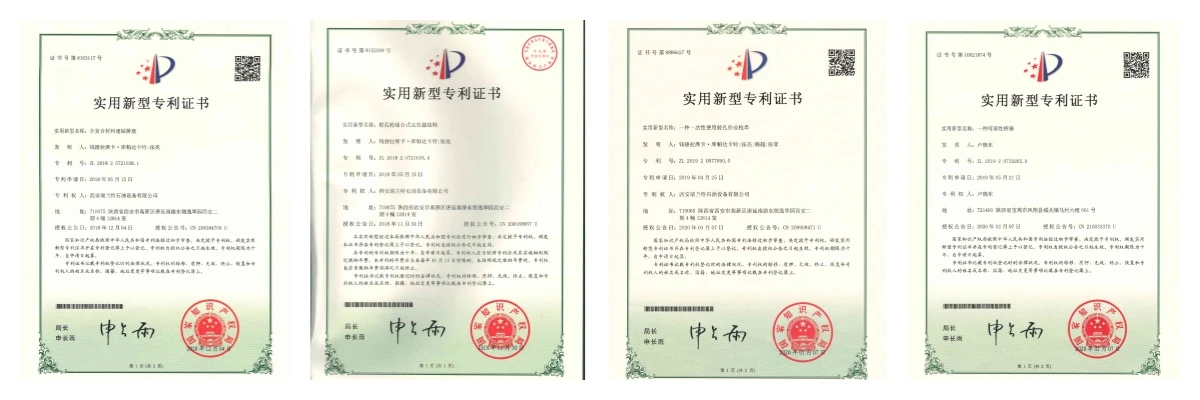
Vigor takes the mission of constantly advancing the development of energy industry all over the world with high quality and innovative model, with the strong technical team and the mastery of industry-leading resources, it has made a number of breakthroughs in the field of new materials and High-tech products have made a number of breakthroughs, developed and manufactured a variety of products, and obtained a number of national utility patents and invention patents.
For more information, please contact us at 0086 029 81161513 or info@vigorpetroleum.com.


