In sour gas fields where hydrogen sulfide concentrations routinely exceed 5–20%, conventional production logging tools fail within weeks due to sulfide stress cracking (SSCC) and hydrogen embrittlement (HE). With the global H2S analyzer market valued at $2.31 billion in 2025 and projected to reach $3.26 billion by 2034 at a 3.9% CAGR, and the number of sour gas developments rising steadily across the Middle East, North America, and Asia-Pacific, the industry urgently needs logging tools that survive prolonged exposure to highly corrosive downhole environments. For wireline-deployed production logging strings, material selection is no longer a design option - it is an operational and safety imperative.
The Scale of the Sour Gas Challenge in Global Production Surveillance
More than 40% of the world's remaining gas reserves contain H2S, with fields in the Middle East averaging 5–30% H2S content and some UAE reservoirs exceeding 30% in certain production zones. At concentrations above 100 ppm, H2S is lethal to personnel within minutes, and at levels above 5%, conventional carbon steel logging tools experience crack propagation rates of 0.5–2.0 mm per hour under tensile stress. The oil and gas segment accounts for 45.8% of total H2S analyzer demand ($268.3 million in 2025), reflecting the industry's massive investment in sour gas monitoring infrastructure. NACE MR0175/ISO 15156 standards mandate specific material hardness limits - HRC 22 maximum for sour service - and require that all downhole components exposed to wet H2S environments pass rigorous NACE TM0177 and TM0284 corrosion testing before deployment. Failure rates for non-compliant tools in sour wells exceed 35% within the first six months of service.
Material Innovation: 17-4PH Stainless and Complete Corrosion-Proof Design
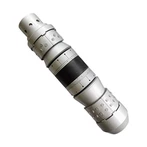
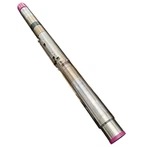
Vigor H2S-resistant Production Logging Tool (VHSR) addresses these challenges through comprehensive material engineering. All metallic components, non-metallic seals, and elastomers undergo H2S and CO2 corrosion testing certified to NACE MR0175 standards. The complete tool string operates stably in well conditions containing up to 20% H2S or 10% CO2, with temperature ratings reaching 200°C (392°F) and pressure ratings up to 140 MPa (20,300 psi). The VHSR series offers four OD options - 32 mm, 35 mm, 38 mm, and 43 mm - accommodating tubing sizes from 2-3/8 to 4-1/2 inches. The comprehensive sensor suite includes memory subs, telemetry with AMI code communication, CCL, gamma ray, quartz pressure gauge with 0.01 psi resolution, tuning-fork density sensor, water holdup, continuous flowmeter, inline flowmeter, full borehole flowmeter, tension-compression sub, XY caliper, and tracer injection capability - enabling full production profiling in the most corrosive downhole environments without compromising data quality.
Case Application: Real-Time Surveillance in High-H2S Wells
A 2026 SPE case study documented the use of distributed fiber optic sensing (DAS/DTS) deployed via capillary tubing, combined with H2S-rated downhole tools, to detect a 5 psi surface casing vent leak containing 8,000 ppm H2S - a leak entirely missed by conventional production logging methods. The China Vigor MARS system identified behind-casing gas migration in a well producing since 2023, demonstrating that sour-service-rated surveillance tools can detect integrity threats long before they escalate to catastrophic well control events. The VHSR tool string, with its 175–200°C operating envelope and dual communication modes (memory and real-time AMI code), is specifically engineered for this class of high-consequence sour wells, where tool retrieval failure is not an option and every logging run carries safety implications for personnel and the environment.
Economic Impact of Corrosion-Resistant PLT Deployment Strategies
Operators switching from conventional carbon steel PLT strings to fully H2S-rated tools report a 60–80% reduction in fishing events caused by corrosion-induced tool failure. With a single sour-well fishing operation costing $200,000–$500,000 - including lost production valued at $50–$100 per barrel during 5–10 days of intervention - the incremental investment in corrosion-resistant materials (typically 20–30% premium over standard tools) pays for itself within 2–3 logging runs. The global production logging market, valued at $2.8 billion in 2025 and growing at 6.2% annually, is driven by aging well stock and increasingly stringent regulatory requirements for zonal allocation in mature sour fields. In the Middle East alone, over 1,200 sour gas wells require annual production logging, creating sustained demand for H2S-rated tools at a replacement cycle of 18–24 months per tool string.
Conclusion
H2S-resistant production logging tools are no longer a niche specification - they are a baseline requirement for any operator working in sour gas environments. The combination of certified corrosion-resistant materials, high-temperature-rated electronics, and comprehensive sensor suites enables safe, reliable production surveillance in the industry's most chemically aggressive wells.
For more information, please contact China Vigor at info@vigorpetroleum.com or call +0086 29 81161513.