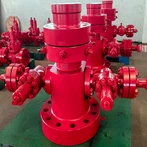
A sucker rod guide is a non-metallic or metal-reinforced centralizer installed along the sucker rod string to prevent rod-on-tubing contact during reciprocation, reducing friction, wear, and fatigue failures in rod-pumped wells. Rod guides are among the most cost-critical accessories in a sucker rod lift system, directly influencing run life, energy efficiency, and the frequency of costly pulling jobs. With over 90 percent of artificially lifted wells worldwide relying on rod pumping, the material and design quality of rod guides has a measurable impact on lifting cost and production uptime.
Industry Context
The global sucker rod market is projected to grow steadily through 2035, driven by increasing investment in mature oilfield rejuvenation and the expansion of artificial lift systems in unconventional reservoirs. According to Global Growth Insights, the sucker rod pump market is witnessing significant growth due to enhanced artificial lift technologies and a greater emphasis on efficient well performance. The sucker rod guide segment, as an integral component of the rod string, benefits directly from this trend - particularly in deviated and horizontal wells where rod-on-tubing contact is most severe. As operators seek to extend pump run time from 12 months toward 24 months or longer, premium rod guide technology has become a standard specification rather than an optional add-on.
Technical Overview
Rod guides are manufactured from materials such as nylon (PA6, PA66), ultra-high-molecular-weight polyethylene (UHMWPE), and glass-filled epoxy composites. Key performance metrics include abrasion resistance (tested per ASTM G99), coefficient of friction (target below 0.15 against L-80 tubing), and thermal stability up to 150°C. Guides are available in molded-on, snap-on, and field-installable configurations. Molded-on guides offer the best bonding integrity and are preferred for high-cycle reciprocating applications, while snap-on guides provide flexibility for retrofitting existing rod strings. Proper rod guide spacing - typically 3 to 5 guides per rod - is critical to avoid buckling and ensure centralizer effectiveness in deviated wellbores.
Field Applications
In the Permian Basin, operators retrofitting horizontal rod-pumped wells with advanced molded-on rod guides reported a 60 percent reduction in tubing leaks and a 35 percent extension in pump run time over 18 months of operation. In West Texas waterflood projects, glass-filled nylon rod guides have demonstrated superior wear resistance in high-water-cut environments where conventional nylon guides showed accelerated abrasion. For thermal recovery operations in the San Joaquin Valley, rod guides with carbon-fiber reinforcement have maintained dimensional stability at operating temperatures exceeding 160°C, reducing rod string failures by 45 percent compared to standard PA6 guides.
Conclusion
China Vigor supplies a comprehensive range of sucker rod guides tailored to different well conditions - from standard snap-on guides for vertical wells to high-temperature molded-on guides for steamflood and thermal EOR applications. Each guide is manufactured under rigorous quality control to ensure consistent dimensions, material properties, and bonding strength. By selecting the right rod guide material and spacing configuration, China Vigor helps operators maximize rod pump efficiency, minimize workover frequency, and achieve lower lifting costs across the life of the well.
*For inquiries, contact info@vigorpetroleum.com*
About China Vigor
China Vigor Drilling Oil Tools And Equipment Co., Ltd. (https://www.vigordrilling.com/) is a leading manufacturer and supplier of high-quality oil & gas downhole and completion tools. Established in 2008, Vigor holds API Q1, API 7-1, API 5B, API 11D1 certifications and ISO 9001, SGS, and NACE MR0175/ISO 15156 standards.