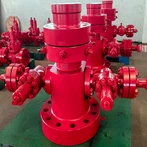
This chart provides a structured overview of the essential components of well control equipment, emphasizing their roles and importance in maintaining safe and efficient drilling operations.
|
Component |
Description |
Primary Function |
|
Blowout Preventer (BOP) |
A high-pressure valve system was installed at the wellhead. |
Seals the wellbore to control kicks and prevent blowouts. |
|
Choke Manifold |
A series of valves and chokes are designed to manage well pressure. |
Diverts and regulates well flow to control pressure. |
|
Accumulator Unit |
Hydraulic system that powers the BOP and other well control equipment. |
Provides quick and reliable activation of the BOP. |
|
Mud Gas Separator |
A device that separates gas from drilling mud during a kick. |
Prevents gas from reaching the surface. |
|
Drill String Float Valve |
A valve was installed in the drill string to prevent backflow of fluids. |
Stops wellbore fluids from flowing back into the drill pipe. |
|
Pressure Gauges and Sensors |
Instruments to monitor wellbore pressure and flow rates. |
Provides real-time data for early anomaly detection. |
|
Safety Valves |
Installed in the drill string to control fluid flow during emergencies. |
Blocks fluid flow in case of a kick. |
|
Kill Line |
A high-pressure line is connected to the BOP. |
Allows fluid injection to balance well pressure. |
|
Rotating Control Device (RCD) |
A sealing device that allows for controlled circulation while drilling. |
Maintains pressure control during dynamic operations. |
Importance of Well Control Equipment
- Preventing Blowouts : Well control equipment, such as blowout preventers (BOPs) , plays a crucial role in preventing uncontrolled releases of oil, gas, or drilling fluid. Blowouts can result in catastrophic environmental damage, economic losses, and threats to human safety.
- Ensuring Safety of Personnel : Proper well control equipment ensures the safety of the rig crew and surrounding personnel by maintaining control over high-pressure formations encountered during drilling.
- Protecting the Environment : By containing hydrocarbons and preventing their release, well control equipment minimizes the risk of oil spills and environmental contamination, safeguarding marine and terrestrial ecosystems.
- Regulatory Compliance : Using well control equipment is a legal requirement in most jurisdictions. Compliance with these regulations avoids legal penalties and enhances a company's reputation.
- Preserving Equipment Integrity : Effective well control minimizes the risk of damage to drilling rigs, pipes, and other equipment. This reduces repair and replacement costs, ensuring uninterrupted operations.
- Maintaining Pressure Balance : Equipment like mud systems and annular preventers helps maintain the balance between formation pressure and drilling fluid pressure, ensuring operational stability.
- Reducing Non-Productive Time (NPT) : Controlling well pressure quickly and efficiently prevents downtime associated with well control incidents, which can significantly affect project timelines and budgets.
- Facilitating Emergency Response : Well control equipment is designed to act as a first line of defense during emergencies. Automated and manual controls allow rapid response to unexpected situations.
- Enhancing Operational Efficiency : Reliable well control equipment enables precise pressure management, improving the efficiency and safety of drilling, completion, and production operations.
- Protecting Investments : Oil and gas exploration and production involve significant financial investments. Well control equipment protects these investments by mitigating risks associated with well pressure control.
- Maintenance and Inspection of Well Control Equipment
- This chart provides a concise overview of essential maintenance and inspection practices, emphasizing their roles in ensuring the reliability and safety of well control equipment
|
Activity |
Description |
Benefit |
|
Pressure Testing |
Regular testing of BOPs, choke manifolds, and associated equipment under operational pressure conditions. |
Verifies integrity and readiness to handle high-pressure scenarios. |
|
Visual Inspections |
Thorough examination of equipment for visible wear, corrosion, cracks, or damage. |
Early detection of potential issues, preventing failures. |
|
Seal and Gasket Replacement |
Periodic replacement of worn-out seals and gaskets in BOPs and valves. |
Ensures leak-proof operation and optimal performance. |
|
Sensor Calibration |
Adjustment and testing of pressure and flow sensors for accuracy. |
Provides reliable data for real-time monitoring. |
|
Hydraulic Fluid Check |
Inspection and replenishment of hydraulic fluid in accumulator systems. |
Maintains proper operation of hydraulic-powered equipment. |
|
Functional Testing |
Simulating equipment operation to confirm responsiveness, such as activating the BOP. |
Ensures systems perform as expected during emergencies. |
|
Valve Greasing |
Lubrication of moving parts, including chokes and safety valves. |
Reduces wear and extends equipment life. |
|
Component Replacement |
Scheduled replacement of high-wear components, such as ram blocks in BOPs. |
Prevents unexpected downtime and maintains safety. |
|
Training Drills |
Regularsimulation exercises for personnel to operate well control systems for effective drilling process. |
Improves response time and competency during actual events. |
|
Documentation and Auditing |
Keeping records of maintenance schedules, tests, and inspections for compliance. |
Ensures adherence to industry regulations and standards. |
For more information, you can write to our mailbox info@vigorpetroleum.com & marketing@vigordrilling.com