


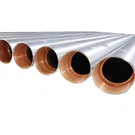


Hey there! I'm an OCTG (Oil Country Tubular Goods) supplier, and one of the major headaches in the oil and gas industry is stress corrosion cracking (SCC) in OCTG. It's a real pain in the neck because it can cause serious damage and even lead to costly failures. So, in this blog post, I'm gonna share some tips on how to prevent stress corrosion cracking in OCTG.
Understanding Stress Corrosion Cracking
First things first, let's talk about what stress corrosion cracking is. SCC is a type of corrosion that occurs when three factors come together: tensile stress, a corrosive environment, and a susceptible material. In the case of OCTG, the tensile stress can come from things like installation, operation, or thermal expansion and contraction. The corrosive environment often contains substances like hydrogen sulfide (H₂S), carbon dioxide (CO₂), and chlorides. And most of the commonly used materials in OCTG, such as carbon steel and some stainless steels, are susceptible to SCC under certain conditions.
When these three factors align, tiny cracks start to form on the surface of the OCTG. Over time, these cracks grow and can eventually lead to the failure of the tubular goods. This can result in leaks, spills, and production downtime, which are all bad news for oil and gas operators.
Material Selection
One of the most effective ways to prevent SCC is to choose the right materials for your OCTG. As an OCTG supplier, I always recommend selecting materials that are resistant to the specific corrosive environment they'll be exposed to.
For example, if the well has a high concentration of H₂S, you might want to consider using corrosion-resistant alloys (CRAs) like duplex stainless steel or nickel-based alloys. These materials have a much higher resistance to SCC in sour environments compared to carbon steel.
However, it's important to note that CRAs are usually more expensive than carbon steel. So, it's a trade-off between cost and performance. You need to carefully evaluate the severity of the corrosive environment and the expected service life of the OCTG before making a decision.
Coating and Linings
Another way to protect OCTG from SCC is to apply coatings or linings. Coatings can act as a barrier between the metal surface and the corrosive environment, preventing the contact that leads to corrosion.
There are different types of coatings available, such as epoxy coatings, fusion-bonded epoxy (FBE) coatings, and zinc-rich coatings. Each type has its own advantages and disadvantages, and the choice depends on factors like the application environment, the type of OCTG, and the expected service life.
Linings, on the other hand, are usually made of materials like plastic or rubber and are applied inside the OCTG. They can also provide excellent protection against SCC, especially in applications where the corrosion is likely to occur on the inner surface of the tubulars. For instance, if you're dealing with acidic fluids flowing inside the Casing, a lining can help prevent the acid from coming into contact with the metal.
Stress Management
Since tensile stress is one of the key factors in SCC, managing stress in OCTG is crucial. During installation, it's important to follow proper procedures to minimize the introduction of residual stress. This includes things like using the right installation equipment, ensuring proper alignment, and avoiding over-tightening of Coupling.
In addition, during operation, it's important to monitor the stress levels in the OCTG. If the stress levels are too high, measures can be taken to reduce them. For example, if thermal stress is a problem, you can use expansion joints or other devices to absorb the thermal expansion and contraction.
Environmental Control
Controlling the corrosive environment is also an important part of preventing SCC. In the oil and gas industry, this often involves treating the produced fluids to remove or reduce the concentration of corrosive substances.
For example, if the produced fluid contains a high concentration of H₂S, you can use a process called sweetening to remove the H₂S. This can be done using chemical scavengers or by using a gas treatment unit. Similarly, if the fluid contains a high concentration of chlorides, you can use a desalination process to reduce the chloride content.
Inspection and Monitoring
Regular inspection and monitoring of OCTG are essential for detecting SCC at an early stage. There are different non-destructive testing (NDT) methods available, such as ultrasonic testing, magnetic particle testing, and radiographic testing. These methods can be used to detect cracks and other defects in the OCTG without damaging the tubulars.
In addition to NDT, it's also a good idea to monitor the corrosion rate and the environmental conditions in the well. This can be done using corrosion coupons, corrosion probes, and other monitoring devices. By continuously monitoring these parameters, you can detect any changes in the corrosion behavior and take appropriate action before serious damage occurs.


Conclusion
Preventing stress corrosion cracking in OCTG is a complex task that requires a combination of material selection, coating and linings, stress management, environmental control, and inspection and monitoring. As an OCTG supplier, I'm always here to help you find the best solutions for your specific needs.
If you're in the market for high-quality OCTG and need advice on how to prevent SCC, don't hesitate to reach out. We can work together to ensure that your OCTG performs well and lasts for a long time in the challenging oil and gas environment. Whether you're looking for Slotted Casing, Casing, or other OCTG products, we've got you covered. Let's have a chat and start making your oil and gas operations more reliable and cost-effective.
References
- "Corrosion Control in the Oil and Gas Industry" - A comprehensive guide on corrosion prevention in the oil and gas sector.
- "Materials Selection for Oil and Gas Applications" - A book that provides in - depth information on choosing the right materials for OCTG.
- "Non - Destructive Testing Techniques for Oil Country Tubular Goods" - A research paper discussing various NDT methods for detecting defects in OCTG.