


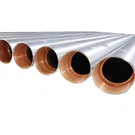


In the oil and gas industry, Oil Country Tubular Goods (OCTG) play a pivotal role in ensuring the efficient extraction and transportation of hydrocarbons. As an OCTG supplier, I understand the critical importance of adhering to strict standards for various parameters, including the external diameter tolerance of OCTG. This blog post aims to delve into the standards for the external diameter tolerance of OCTG, shedding light on why they matter and how they impact the overall performance of these tubular products.
Understanding OCTG and Its Types
Before we dive into the external diameter tolerance standards, it's essential to have a basic understanding of OCTG and its different types. OCTG encompasses a wide range of tubular products used in oil and gas wells, including Pup Joint, CRA Pipe, and Casing. Each type of OCTG serves a specific purpose in the well construction and production process.
- Pup Joint: These are short lengths of pipe that are used to connect different sections of casing or tubing. Pup joints are typically less than 20 feet in length and are used to adjust the overall length of the tubular string.
- CRA Pipe: Corrosion-resistant alloy (CRA) pipes are designed to withstand harsh environments, such as those with high levels of hydrogen sulfide or carbon dioxide. CRA pipes are commonly used in sour gas wells and other corrosive applications.
- Casing: Casing is a large-diameter pipe that is installed in the wellbore to provide structural support and prevent the collapse of the well. Casing also helps to isolate different formations and prevent the migration of fluids between them.
Importance of External Diameter Tolerance
The external diameter (OD) of OCTG is a critical dimension that affects the performance and compatibility of these tubular products. The OD tolerance refers to the allowable deviation from the specified nominal OD. Maintaining tight OD tolerances is essential for several reasons:


- Compatibility: OCTG components need to be compatible with each other and with other wellbore equipment. Tight OD tolerances ensure that the pipes can be easily connected and installed without any issues.
- Hydraulic Performance: The OD of the pipe affects the flow of fluids through the wellbore. Deviations from the specified OD can lead to changes in the hydraulic properties of the pipe, such as pressure drop and flow rate.
- Structural Integrity: The OD of the pipe also plays a role in its structural integrity. Pipes with inconsistent OD may be more prone to failure under high pressure or other loading conditions.
Standards for External Diameter Tolerance
The standards for the external diameter tolerance of OCTG are defined by various international organizations, including the American Petroleum Institute (API) and the International Organization for Standardization (ISO). These standards provide guidelines for the manufacturing, testing, and inspection of OCTG to ensure their quality and performance.
API Standards
The API has developed a series of standards for OCTG, including API 5CT for casing and tubing and API 5L for line pipe. These standards specify the requirements for the chemical composition, mechanical properties, and dimensional tolerances of OCTG.
- API 5CT: This standard covers the requirements for casing and tubing used in oil and gas wells. It specifies the OD tolerances for different sizes and grades of casing and tubing. For example, for casing with a nominal OD of less than 4 1/2 inches, the OD tolerance is typically ±0.062 inches. For larger-diameter casing, the OD tolerance may be slightly larger.
- API 5L: This standard covers the requirements for line pipe used in the transportation of oil, gas, and other fluids. It also specifies the OD tolerances for different sizes and grades of line pipe. The OD tolerances for line pipe are generally similar to those for casing and tubing.
ISO Standards
The ISO has also developed a series of standards for OCTG, including ISO 11960 for casing and tubing and ISO 3183 for line pipe. These standards are similar to the API standards and provide additional requirements for the manufacturing and testing of OCTG.
- ISO 11960: This standard covers the requirements for casing and tubing used in oil and gas wells. It specifies the OD tolerances for different sizes and grades of casing and tubing. The OD tolerances specified in ISO 11960 are generally similar to those in API 5CT.
- ISO 3183: This standard covers the requirements for line pipe used in the transportation of oil, gas, and other fluids. It also specifies the OD tolerances for different sizes and grades of line pipe. The OD tolerances specified in ISO 3183 are generally similar to those in API 5L.
Factors Affecting External Diameter Tolerance
Several factors can affect the external diameter tolerance of OCTG, including the manufacturing process, the type of material, and the size of the pipe.
- Manufacturing Process: The manufacturing process used to produce OCTG can have a significant impact on the OD tolerance. For example, pipes produced by seamless manufacturing processes tend to have tighter OD tolerances than those produced by welded manufacturing processes.
- Type of Material: The type of material used to produce OCTG can also affect the OD tolerance. Different materials have different thermal expansion coefficients, which can cause the pipe to expand or contract during the manufacturing process. This can lead to variations in the OD of the pipe.
- Size of the Pipe: The size of the pipe can also affect the OD tolerance. Larger-diameter pipes tend to have larger OD tolerances than smaller-diameter pipes. This is because it is more difficult to control the OD of larger pipes during the manufacturing process.
Quality Control and Inspection
To ensure that the external diameter tolerance of OCTG meets the specified standards, it is essential to implement a rigorous quality control and inspection program. This program should include the following steps:
- Raw Material Inspection: The raw materials used to produce OCTG should be inspected to ensure that they meet the specified requirements. This includes checking the chemical composition, mechanical properties, and dimensional tolerances of the raw materials.
- Manufacturing Process Control: The manufacturing process should be carefully monitored and controlled to ensure that the OD tolerance of the pipe is within the specified limits. This may involve using advanced manufacturing techniques, such as laser measurement systems, to measure the OD of the pipe during the manufacturing process.
- Final Inspection: The finished OCTG products should be inspected to ensure that they meet the specified requirements. This includes checking the OD tolerance, as well as other dimensional and mechanical properties of the pipe.
Conclusion
In conclusion, the external diameter tolerance of OCTG is a critical parameter that affects the performance and compatibility of these tubular products. Maintaining tight OD tolerances is essential for ensuring the quality and reliability of OCTG in oil and gas applications. By adhering to the standards set by international organizations, such as the API and the ISO, and implementing a rigorous quality control and inspection program, OCTG suppliers can ensure that their products meet the highest standards of quality and performance.
If you are in the market for high-quality OCTG products, I invite you to contact us to discuss your specific requirements. Our team of experts can provide you with the guidance and support you need to select the right OCTG products for your application. We look forward to the opportunity to work with you and help you achieve your goals in the oil and gas industry.
References
- American Petroleum Institute (API). API 5CT - Specification for Casing and Tubing.
- American Petroleum Institute (API). API 5L - Specification for Line Pipe.
- International Organization for Standardization (ISO). ISO 11960 - Petroleum and natural gas industries - Casing and tubing.
- International Organization for Standardization (ISO). ISO 3183 - Petroleum and natural gas industries - Steel pipe for pipeline transportation systems.