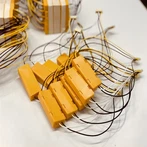
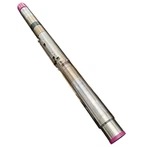
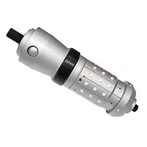
Temporary zonal isolation becomes more demanding as bottom-hole temperature and differential pressure increase. A bridge plug must be conveyed to the intended depth, set with its slips properly engaged, energize its sealing element against the casing, and maintain isolation for the duration defined by the completion program. China Vigor lists the Vigor Ultron Composite Bridge Plug (High Temperature And High Pressure Type) in its Perforation & Completion Tools portfolio. The exact casing range, pressure rating, temperature limit, setting method, and drill-out procedure must be verified in the current product documentation; high-temperature and high-pressure are application descriptors, not a substitute for a qualified operating envelope.
Isolation Depends on Several Interfaces
A bridge plug seals through a combination of mechanical anchoring and elastomeric compression. Slips engage the casing wall, cones transmit setting force, and the sealing element expands radially to close the annulus. The effectiveness of the assembly depends on casing condition, internal diameter, scale, debris, temperature, pressure direction, and the setting stroke actually delivered. A gauge ring or drift run can identify a restriction, but it cannot by itself demonstrate that the casing surface will provide a reliable sealing interface.
In HPHT planning, pressure and temperature are coupled concerns. Temperature can alter elastomer response and can influence pressure-test interpretation as fluids stabilize. A 100 psi pressure movement during a test may have several explanations, including thermal effects, trapped volume, gauge resolution, or leakage. The job procedure should define the test medium, target pressure, hold time, acceptance criteria, and escalation path before the plug is run.
Composite Materials Change the Removal Strategy
Composite bridge plugs are commonly selected when post-isolation removal by milling or drilling is part of the plan. Composite components can be engineered to break into smaller cuttings than a fully metallic barrier, yet removal performance still depends on the specific design, milling assembly, circulation rate, debris-management plan, and downhole conditions. It should not be assumed that every composite component behaves the same way in every well.
Review the planned removal sequence with the selected mill, junk basket, circulation system, and contingency tools before setting the plug.
Confirm that the expected debris can pass through the narrowest downstream restriction, not only through the nominal casing size.
Setting Quality Is an Operational Variable
The setting tool, adapter kit, and bridge plug must form a compatible mechanical system. Incorrect connections, damaged threads, incomplete make-up, or a mismatch between the setting tool stroke and the plug's requirements can compromise the result. At surface, crews should inspect connection condition, verify the device configuration, and check the tally against the program. The plug should be handled as a pressure-barrier component, with clear identification and traceability from receipt through installation.
Depth control is equally important. A difference of 5 feet may be significant near perforations, a casing shoe, a liner top, or another completion restriction. Correlation practices may combine wireline depth, tubing tally, casing-collar data, and well-specific references. The chosen reference must be recorded consistently so that the later pressure test, perforating sequence, or retrieval plan uses the same depth basis.
HPHT Testing Needs Defined Evidence
A pressure test is strongest when it is a planned measurement rather than a last-minute confirmation. The program should state whether pressure is applied from above or below, how the opposite side is monitored, how long the hold is maintained, and which readings are recorded. A staged test might record 500 psi, 1,000 psi, and 1,500 psi only when those levels are within the confirmed barrier and pressure-control ratings. A 30-minute hold can produce useful evidence only when the test conditions, temperature behavior, and gauge accuracy are understood. It does not establish suitability beyond the approved product rating.
Where two barriers are required by the well program, each barrier's role, verification method, and failure response should be explicit. Personnel should also distinguish a tested barrier from a barrier that is merely installed. This distinction supports clear decisions before perforating, stimulating, or moving to the next completion phase.
Removal Planning Starts Before Deployment
The future intervention should influence the original plug selection. The team should consider the anticipated milling direction, available weight and torque, fluid capacity, returns path, and the risk that debris could accumulate above a restriction. A pre-job review can also assign decision points: for example, whether to continue milling after 1 unexpected pressure trend, when to circulate, and when to deploy a contingency fishing tool.
China Vigor can provide current documentation for the Vigor Ultron Composite Bridge Plug (High Temperature And High Pressure Type). Operators should rely on the confirmed product manual, qualified personnel, and the approved well program when setting, testing, or removing a pressure barrier.
*Contact China Vigor: info@vigorpetroleum.com | +86 21 81161513*