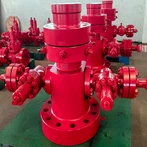
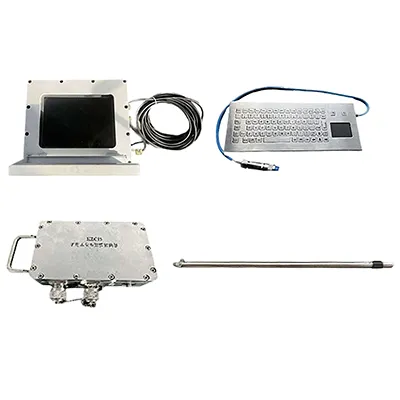
In deepwater and HPHT completions, an isolation valve positioned above the packer must hold a live reservoir at full-rated pressure while the upper completion is run, and later open on command without wireline, coiled tubing, or a pressure surge that could damage sealing surfaces and shock the string. If the closure member shifts against a large differential, the sudden flow can erode seats, hammer the tubing, and compromise the barrier it was installed to protect. The global subsurface safety valve market is projected to expand from USD 4.77 billion in 2025 to USD 7.59 billion by 2035, with interventionless designs capturing an increasing share as operators move toward rig-time-efficient completions. Engineering effort therefore concentrates on two fundamentals: controlled pressure equalization before opening, and a sealing system that stays gas-tight through repeated load cycles.
Equalization Sequence Prevents Opening Surge
Before the ball is rotated, pressure across the closure member must converge to avoid a differential-opening event. The Remote-open Bi-directional Downhole Barrier Valve from China Vigor integrates an internal equalization passage that opens first, letting tubing pressure and wellbore pressure communicate while the main sealing element remains firmly seated. This staged sequence unloads the sealing surfaces before the ball travels, protecting both the valve and the completion above it. Field-proven versions of this architecture hold full working pressure during the equalization step, then shift open smoothly once the differential has collapsed.
Equalization occurs at a controlled pressure threshold, typically a fraction of the rated 15,000 psi working pressure
The staged design is qualified for repeated open-close duty, with factory acceptance covering 50 actuation cycles at rated pressure
Ball Geometry and Bi-Directional Sealing
The closure mechanism relies on a precision-ground ball matched to a seat machined from high-temperature PEEK sealing material, a combination selected for chemical resistance and stable elastic behavior across a wide thermal band. Because the seat must seal against pressure arriving from above or below, the contact line between ball and seat is designed to maintain a continuous, load-sensitive seal regardless of the direction of applied force. The arrangement delivers bi-directional isolation rated to the valve's full working pressure of 15,000 psi and operating temperatures extending to 175 degrees Celsius (347 degrees Fahrenheit), with the elastomeric system remaining functional from minus 30 degrees Fahrenheit upward. A large internal flow area keeps the pressure drop across the open valve low, supporting high-volume operations such as well testing or stimulation returns without excessive friction loss.
Actuation Redundancy for Interventionless Operation
Remote actuation is engineered as a dual-path system rather than a single point of failure. The primary mode is hydraulic remote opening, triggered by 3 to 5 tubing pressure cycles that can each be verified from surface; if the control path is damaged or the pressure signature cannot be delivered, a mechanical backup accepts standard shifting tools so the ball can still be opened. This redundancy is essential in deepwater, where a second intervention trip can cost days of rig time. Some variants add onboard instrumentation to record pressure and temperature during the deployment, providing retrievable data for post-job barrier verification without additional logging runs.
Primary hydraulic activation uses verifiable tubing pressure cycles
Mechanical shifting backup preserves a functional path if the hydraulic line is compromised
Optional onboard pressure and temperature memory supports barrier integrity review after retrieval
Qualification Testing and Regulatory Compliance
Bi-directional isolation claims are only meaningful if validated under realistic loads, and the valve is qualified to API 14A and ISO 28781 requirements, including V0 gas-tight validation that demonstrates zero detectable leakage under bi-directional differential pressure. The design also addresses the newer GB/T 46582-2025 standard issued in China for formation isolation valves, which mandates rigorous bidirectional pressure testing and gas-tight validation before deployment. Each valve completes 50 open-close cycles at rated pressure prior to shipment, with documentation controlled under API Q1 quality practices. Debris tolerance is another qualification point: the actuation sleeve is positioned so that solids settling above the closure do not block the operating mechanism, a failure mode that historically affects flapper-type designs in long suspended wells.
Conclusion
Reliable downhole barrier valves turn a critical completion step into a repeatable, interventionless operation: equalization protects the sealing system, bi-directional ball-and-PEEK sealing holds full working pressure from either direction, and redundant actuation preserves the ability to open even when the primary control path fails. For operators planning deepwater, HPHT, or suspended-well completions, these design choices translate directly into fewer intervention trips and a more predictable barrier envelope. Choosing a qualified valve with documented V0 performance and multi-cycle acceptance testing is a practical step toward lowering completion risk.
For more information, please contact China Vigor at info@vigorpetroleum.com or call +0086 29 81161513.